Institut Cochin, Université de Paris, INSERM U1016, CNRS UMR 8104, Paris, France.
IAME, Université de Paris, INSERM U1137, Université Sorbonne Paris Nord, Paris, France.
mBio. 2022 Apr 26;13(2):e0038522. doi: 10.1128/mbio.00385-22. Epub 2022 Apr 4.
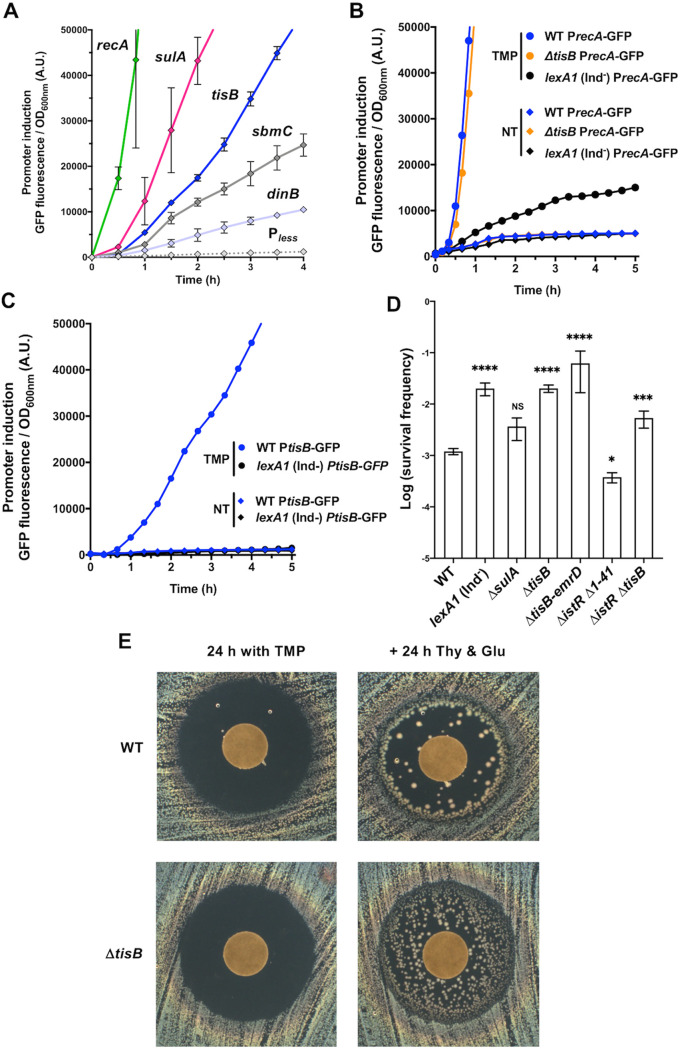
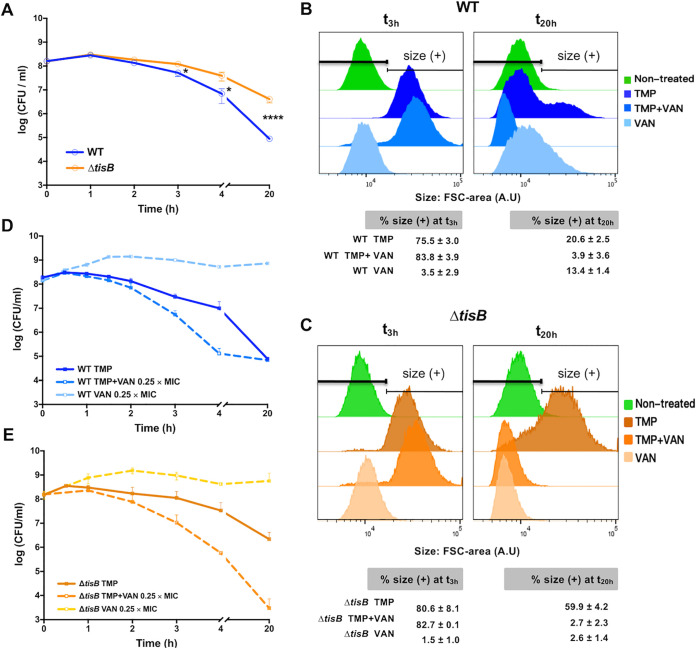
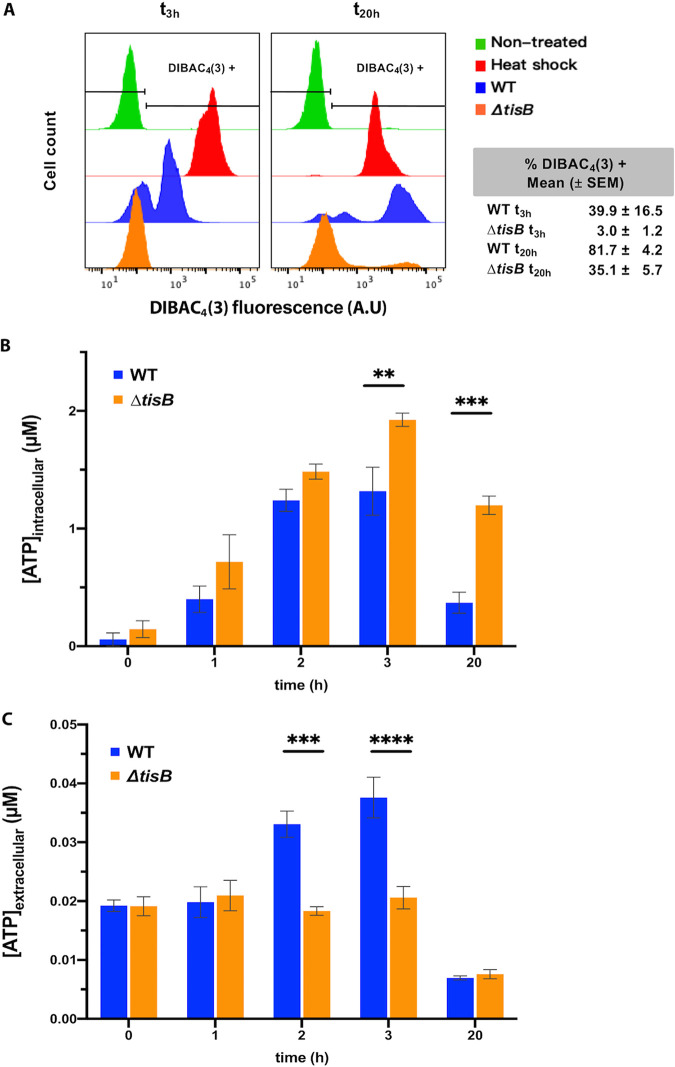
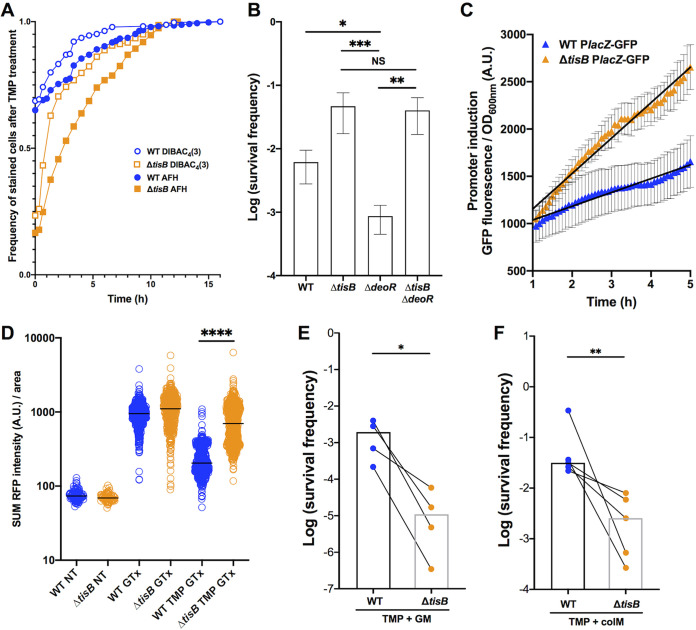
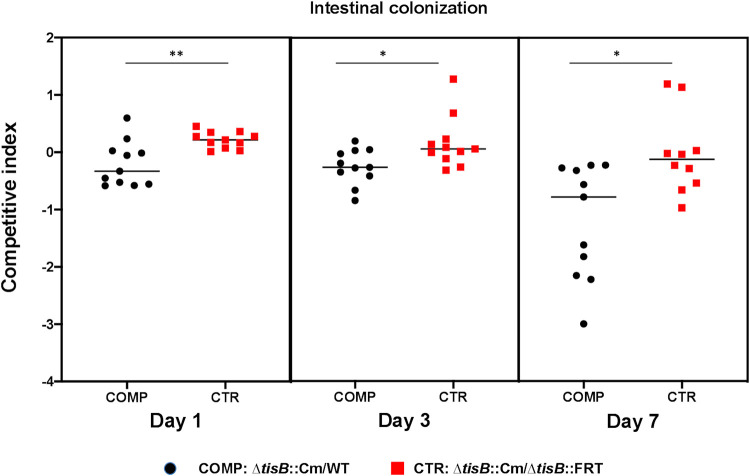
Toxin-antitoxin systems are genetic elements that are widespread in prokaryotes. Although molecular mode of action of many of these toxins has been identified, their biological functions are mostly unknown. We investigated the functional integration of the TisB/IstR toxin-antitoxin system in the Escherichia coli SOS genotoxic stress response network. We showed that the gene is induced in cells exposed to high doses of the genotoxic antibiotic trimethoprim. However, we also found that TisB contributes to trimethoprim-induced lethality. This is a consequence of the TisB-induced drop in the proton motive force (PMF), which results in blocking the thymine import and therefore the functioning of the pyrimidine salvage pathway. Conversely, a TisB-induced PMF drop protects cells by preventing the import of some other toxic compounds, like the aminoglycoside antibiotic gentamicin and colicin M, in the SOS-induced cells. Colicins are cytotoxic molecules produced by when they are exposed to strong genotoxic stresses in order to compete with other microbiota members. We indeed found that TisB contributes to E. coli fitness during mouse gut colonization. Based on the results obtained here, we propose that the primary biological role of the TisB toxin is to increase the probability of survival and maintenance in the mammalian gut of their bacterial hosts when they have to simultaneously deal with massive DNA damages and a fierce chemical warfare with other microbiota members. The contribution of toxin-antitoxin systems to the persistence of bacteria to antibiotics has been intensively studied. This is also the case with the E. coli TisB/IstR toxin-antitoxin system, but the contribution of TisB to the persistence to antibiotics turned out to be not as straightforward as anticipated. In this study, we show that TisB can decrease, but also increase, cytotoxicity of different antibiotics. This inconsistency has a common origin, i.e., TisB-induced collapse of the PMF, which impacts the import and the action of different antibiotics. By taking into account the natural habitat of TisB bacterial hosts, the facts that this toxin-antitoxin system is integrated into the genotoxic stress response regulon SOS and that both SOS regulon and TisB are required for E. coli to colonize the host intestine, and the phenotypic consequences of the collapse of the PMF, we propose that TisB protects its hosts from cytotoxic molecules produced by competing intestinal bacteria.
毒素-抗毒素系统是广泛存在于原核生物中的遗传元件。尽管许多毒素的分子作用模式已被确定,但它们的生物学功能大多未知。我们研究了 TisB/IstR 毒素-抗毒素系统在大肠杆菌 SOS 基因毒性应激反应网络中的功能整合。我们表明,在暴露于高剂量基因毒性抗生素甲氧苄啶的细胞中, 基因被诱导。然而,我们还发现 TisB 有助于甲氧苄啶诱导的细胞死亡。这是 TisB 诱导的质子动势 (PMF) 下降的结果,导致胸腺嘧啶输入受阻,从而阻断嘧啶补救途径的功能。相反,TisB 诱导的 PMF 下降通过阻止某些其他有毒化合物(如氨基糖苷类抗生素庆大霉素和 colicin M)在 SOS 诱导的细胞中的进入,从而保护细胞。当大肠杆菌受到强烈的基因毒性应激时,会产生 colicins 等细胞毒性分子,以与其他微生物群成员竞争。我们确实发现 TisB 有助于大肠杆菌在小鼠肠道定植期间的适应性。基于这里获得的结果,我们提出 TisB 毒素的主要生物学作用是增加其细菌宿主在哺乳动物肠道中的存活和维持概率,当它们必须同时应对大量 DNA 损伤和与其他微生物群成员进行激烈的化学战时。毒素-抗毒素系统对细菌对抗生素的持久性的贡献已得到深入研究。大肠杆菌 TisB/IstR 毒素-抗毒素系统也是如此,但 TisB 对对抗生素的持久性的贡献并不像预期的那样简单。在这项研究中,我们表明 TisB 可以降低,但也可以增加不同抗生素的细胞毒性。这种不一致性有一个共同的起源,即 TisB 诱导的 PMF 崩溃,这会影响不同抗生素的输入和作用。考虑到 TisB 细菌宿主的自然栖息地、该毒素-抗毒素系统整合到基因毒性应激反应调控子 SOS 中以及 SOS 调控子和 TisB 都需要大肠杆菌定植宿主肠道的事实,以及 PMF 崩溃的表型后果,我们提出 TisB 可以保护其宿主免受来自竞争肠道细菌的细胞毒性分子的侵害。