UCLA Department of Psychology, University of California, 1285 Franz Hall, Los Angeles, CA, 90095-1563, USA.
Learn Behav. 2022 Sep;50(3):405-416. doi: 10.3758/s13420-022-00521-9. Epub 2022 Apr 4.
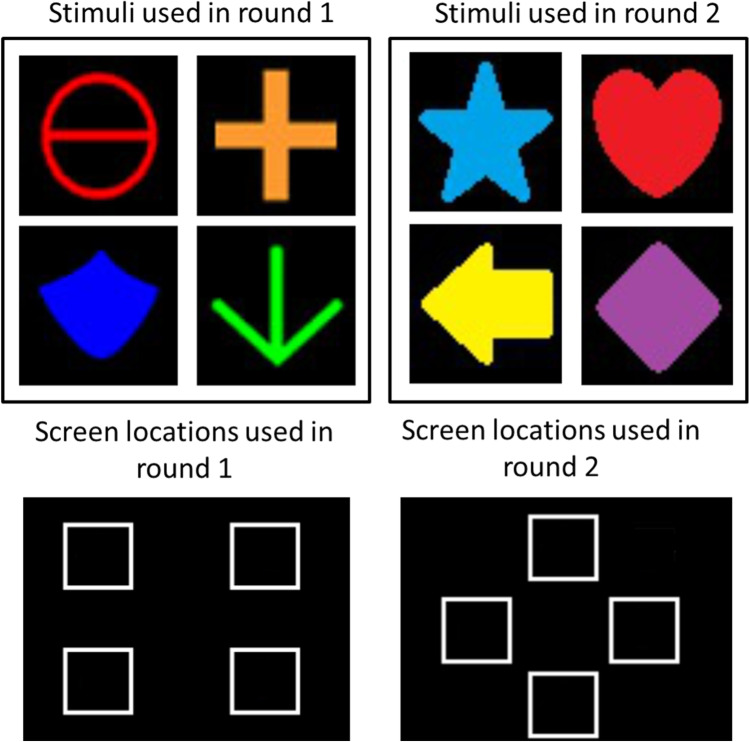
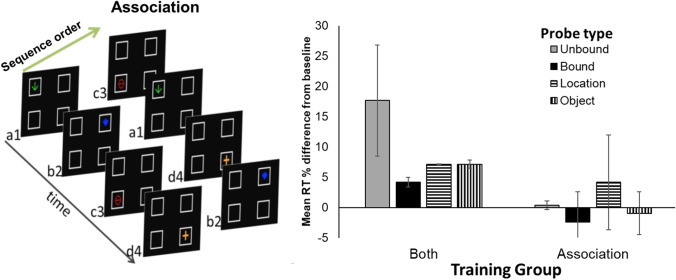
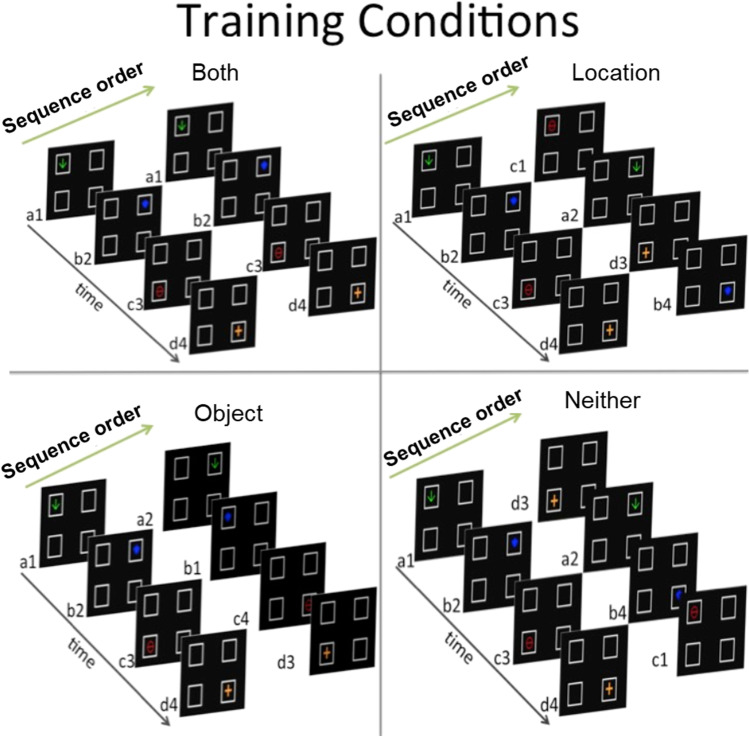
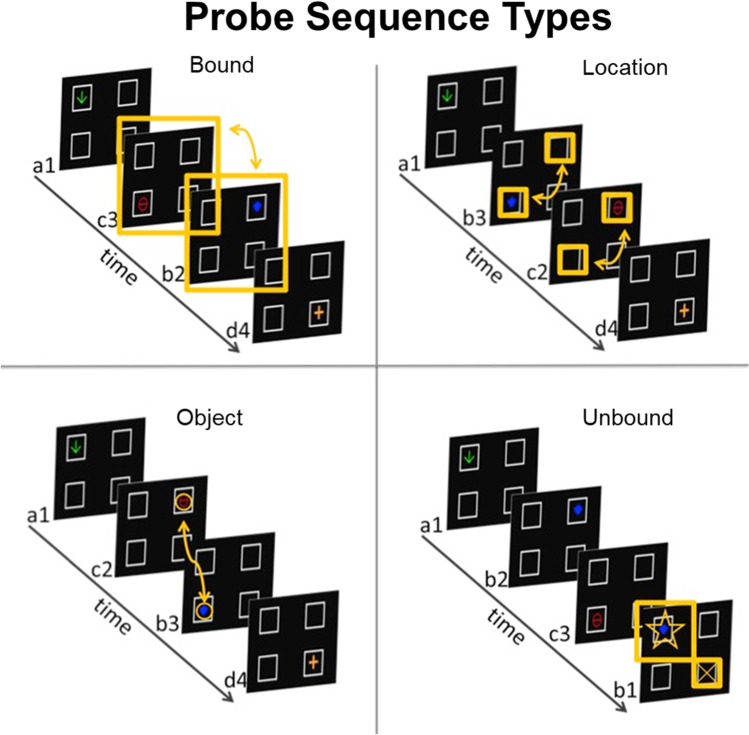
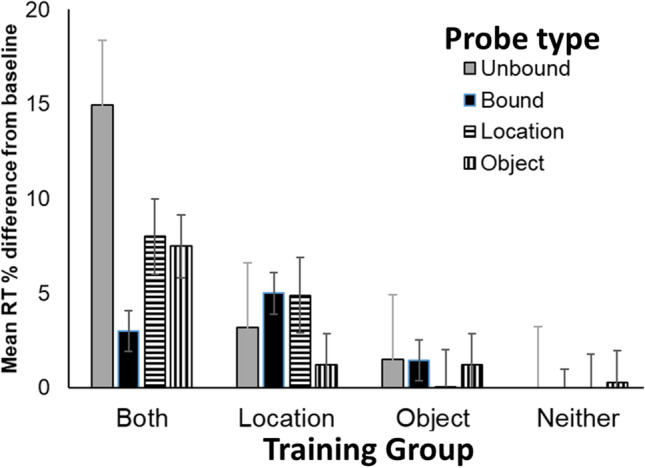
We studied object-location binding in pigeons using a sequence learning procedure. A sequence of four objects was presented, one at a time at one of four locations on a touchscreen. A single peck at the object ended the trial, and food reinforcement was delivered intermittently. In Experiment 1, a between-subjects design was used to present objects, locations, or both in a regular sequence or randomly. Response time costs on nonreinforced probe tests on which object order, location order, or both were disrupted revealed sequence learning effects. Pigeons encoded location order when it was consistent, but not object order when it alone was consistent. When both were consistent, pigeons encoded both, and showed evidence of object-location binding. In Experiment 2, two groups of pigeons received training on sequences where the same object always appeared at the same location. For some pigeons a consistent sequence was used while for others sequence order was randomized. Only when sequence order was consistent was object-location binding found. These experiments are the first demonstrations of strong and lasting feature binding in pigeons and are consistent with a functional account of learning.
我们使用序列学习程序研究了鸽子的目标定位绑定。一次呈现四个目标,一次在触摸屏上的四个位置之一。单点啄一下目标就结束了试验,并且间歇性地提供食物强化。在实验 1 中,使用了一个被试间设计来以规则顺序或随机顺序呈现对象、位置或两者。在非强化探针测试中,当打乱目标顺序、位置顺序或两者时,反应时间成本揭示了序列学习效应。当位置顺序一致时,鸽子编码位置顺序,但当只有对象顺序一致时,鸽子不编码对象顺序。当两者一致时,鸽子同时编码两者,并显示出目标-位置绑定的证据。在实验 2 中,两组鸽子接受了在相同位置始终出现相同对象的序列训练。对于一些鸽子,使用了一致的序列,而对于另一些鸽子,序列顺序是随机的。只有当序列顺序一致时,才发现了目标-位置绑定。这些实验首次证明了鸽子中强烈而持久的特征绑定,并与学习的功能解释一致。