Department of Urology, European Institute of Oncology, IRCCS, Milan 20141, Italy.
Department of Oncology and Hemato-Oncology, University of Milan, Milan 20122, Italy.
Asian J Androl. 2022 Nov-Dec;24(6):579-583. doi: 10.4103/aja2021132.
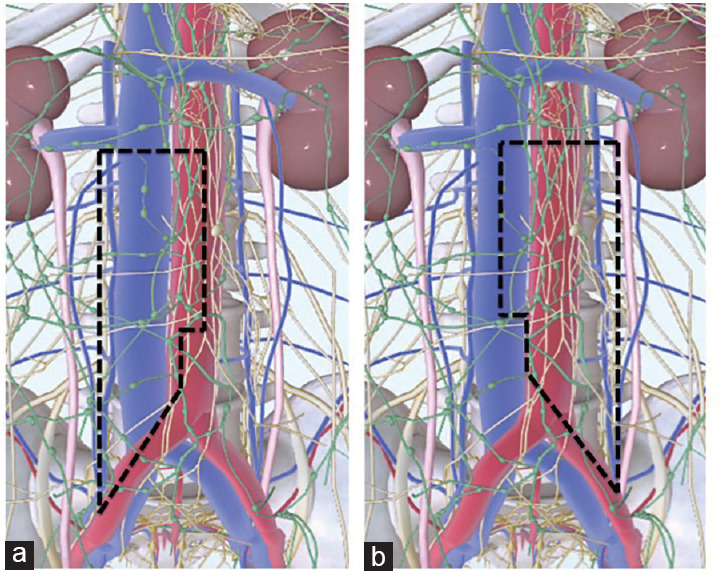
Sexual disorders following retroperitoneal pelvic lymph node dissection (RPLND) for testis tumor can affect the quality of life of patients. The aim of the current study was to investigate several different andrological outcomes, which may be influenced by robot-assisted (RA) RPLND. From January 2012 to March 2020, 32 patients underwent RA-RPLND for stage I nonseminomatous testis cancer or postchemotherapy (PC) residual mass. Modified unilateral RPLND nerve-sparing template was always used. Major variables of interest were erectile dysfunction (ED), premature ejaculation (PE), dry ejaculation (DE), or orgasm alteration. Finally, fertility as well as the fecundation process (sexual intercourse or medically assisted procreation [MAP]) was investigated. Ten patients (31.3%) presented an andrological disorder of any type after RA-RPLND. Hypospermia was present in 4 (12.5%) patients, DE (International Index of Erectile Function-5 [IIEF-5] <25) in 3 (9.4%) patients, and ED in 3 (9.4%) patients. No PE or orgasmic alterations were described. Similar median age at surgery, body mass index (BMI), number of nodes removed, scholar status, and preoperative risk factor rates were identified between groups. Of all these 10 patients, 6 (60.0%) were treated at the beginning of our robotic experience (2012-2016). Of all 32 patients, 5 (15.6%) attempted to have a child after RA-RPLND. All of these 5 patients have successfully fathered children, but 2 (40.0%) required a MAP. In conclusion, a nonnegligible number of andrological complications occurred after RA-RPLND, mainly represented by ejaculation disorders, but ED occurrence and overall sexual satisfaction deficit should be definitely considered. No negative impact on fertility was described after RA-RPLND.
腹膜后盆腔淋巴结清扫术(RPLND)治疗睾丸肿瘤后可能会出现性功能障碍,影响患者的生活质量。本研究旨在探讨机器人辅助(RA)RPLND 可能影响的几种不同的男科结局。2012 年 1 月至 2020 年 3 月,32 例 I 期非精原细胞瘤睾丸癌或化疗后(PC)残留肿块患者接受 RA-RPLND 治疗。始终使用改良的单侧 RPLND 神经保留模板。主要关注的变量包括勃起功能障碍(ED)、早泄(PE)、干性射精(DE)或射精改变。最后,还调查了生育能力和受精过程(性交或医学辅助生殖 [MAP])。10 例(31.3%)患者在 RA-RPLND 后出现任何类型的男科疾病。4 例(12.5%)患者出现少精子症,3 例(9.4%)患者出现 DE(国际勃起功能指数-5 [IIEF-5]<25),3 例(9.4%)患者出现 ED。无描述 PE 或性高潮改变。两组患者的手术时中位年龄、体重指数(BMI)、切除的淋巴结数量、学术地位和术前危险因素发生率相似。在这 10 例患者中,有 6 例(60.0%)在我们的机器人经验开始时(2012-2016 年)接受了治疗。在所有 32 例患者中,有 5 例(15.6%)在 RA-RPLND 后尝试生育。这 5 例患者均成功生育,但有 2 例(40.0%)需要 MAP。总之,RA-RPLND 后发生了相当数量的男科并发症,主要表现为射精障碍,但 ED 发生和整体性功能满意度下降应明确考虑。RA-RPLND 后未描述对生育能力的负面影响。