The Institute of Special Education Studies, Center of Evidence-based Education and Arts Therapies: A JBI Affiliated Group, and Institute of Special Education Studies, Palacky University Olomouc Faculty of Education, Olomouc, Olomoucký, Czech Republic.
VIBRAC Skille-Lehikoinen Centre for Vibroacoustic Therapy and Research; Caritas Association for the Karlsruhe Region, Ettlingen Germany, University of Jyväskylä, Jyvaskyla, Finland.
BMJ Open. 2022 Apr 5;12(4):e046591. doi: 10.1136/bmjopen-2020-046591.
To explore the characteristics and outcomes of vibroacoustic therapy (VAT) in adults experiencing pain. To give directions for future research and clinical applications of VAT in pain management for adults.
Scoping review.
BMČ, CINAHL Plus, Cochrane Library, EBSCOhost, EBM Reviews, EMBASE, Epistemonikos, ERIC, MEDLINE complete, Scopus, Web of Science, Google Scholar, ProQuest, hand search in unpublished sources.
All quantitative and qualitative research studies and systematic reviews, without any date or language limit.
Two independent reviewers extracted data on the study design, location and setting, the causes of pain, participants, vibroacoustic intervention, measurement tools, and key findings related to pain.
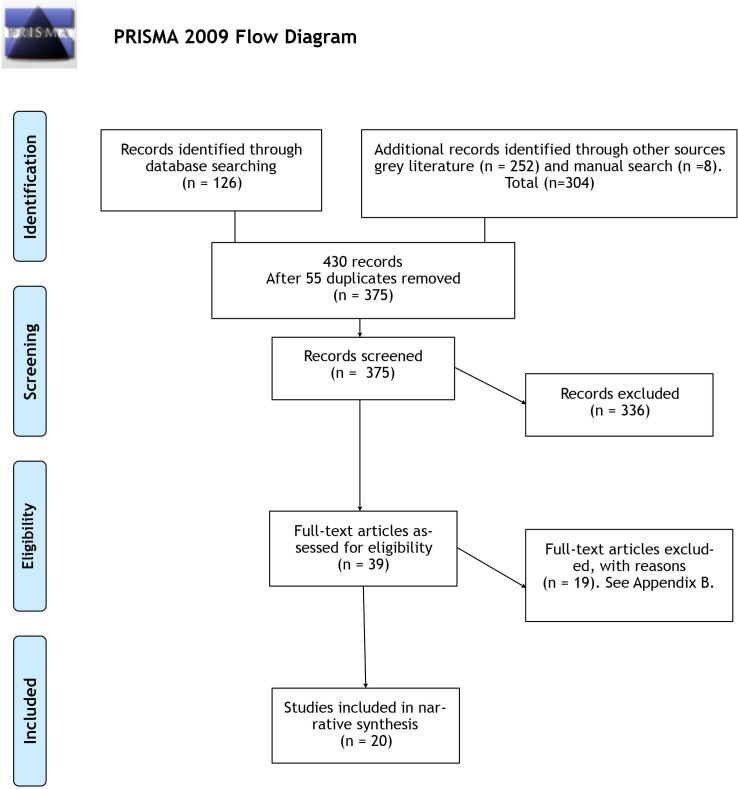
From 430 records, 20 were included for narrative synthesis. Fifteen studies researched chronic pain, two studies acute pain, two studies both types of pain and one study experimentally induced pain. The description of VAT applied in studies usually included the description of research experiments, vibroacoustic devices and frequencies of sinusoidal sound. There was high heterogeneity in study protocols, however, 40 Hz was predominantly used, most sessions ranged between 20 and 45 min, and the frequency of treatment was higher for acute pain (daily) compared with chronic pain (daily to once a week). Outcomes related to pain focused mainly on perceived pain; however, other surrogate measures were also considered, for example, an increased number of treatment days or pain medication usage.
Research in this area is too sparse to identify properties of VAT that are beneficial for pain management. We suggest VAT researchers describe a minimum of four measurements-frequency, amplitude, pulsation and loudness. Randomised controlled trials are needed to establish reliable scientific proof of VAT effectiveness for both acute and chronic pain. Furthermore, clinical practice would benefit from researching patients' experiences and preferences of vibroacoustic treatment and its psychosocial components.
探讨成人疼痛中声触诊振动疗法(VAT)的特点和效果。为未来成人疼痛管理中 VAT 的研究和临床应用提供方向。
范围综述。
BMČ、CINAHL Plus、Cochrane 图书馆、EBSCOhost、EBM 评价、EMBASE、Epistemonikos、ERIC、MEDLINE 完整、Scopus、Web of Science、Google Scholar、ProQuest、未发表来源的手工检索。
所有定量和定性研究以及系统综述,无任何日期或语言限制。
两名独立评审员提取了研究设计、地点和环境、疼痛原因、参与者、声触诊干预、测量工具以及与疼痛相关的关键发现等数据。
从 430 条记录中,有 20 条被纳入叙述性综述。15 项研究研究慢性疼痛,2 项研究急性疼痛,2 项研究两种类型的疼痛,1 项研究实验性诱导疼痛。研究中描述的 VAT 通常包括研究实验、声触诊设备和正弦声波频率的描述。然而,研究方案存在高度异质性,40Hz 被广泛应用,大多数疗程在 20 到 45 分钟之间,急性疼痛(每日)的治疗频率高于慢性疼痛(每日至每周一次)。与疼痛相关的结果主要集中在感知疼痛上;然而,也考虑了其他替代测量,例如增加治疗天数或疼痛药物使用。
该领域的研究过于稀疏,无法确定 VAT 对疼痛管理有益的特性。我们建议声触诊振动疗法研究人员描述至少四个测量参数——频率、幅度、脉冲和响度。需要进行随机对照试验,以建立声触诊振动疗法对急性和慢性疼痛的可靠科学证据。此外,研究患者对声触诊振动治疗及其心理社会成分的体验和偏好将使临床实践受益。