Mastrullo Valeria, van der Veen Daan R, Gupta Priyanka, Matos Rolando S, Johnston Jonathan D, McVey John H, Madeddu Paolo, Velliou Eirini G, Campagnolo Paola
Cardiovascular Section, Department of Biochemical Sciences, University of Surrey, Guildford, United Kingdom.
Chronobiology Section, Department of Biochemical Sciences, University of Surrey, Guildford, United Kingdom.
Front Pharmacol. 2022 Mar 21;13:867070. doi: 10.3389/fphar.2022.867070. eCollection 2022.
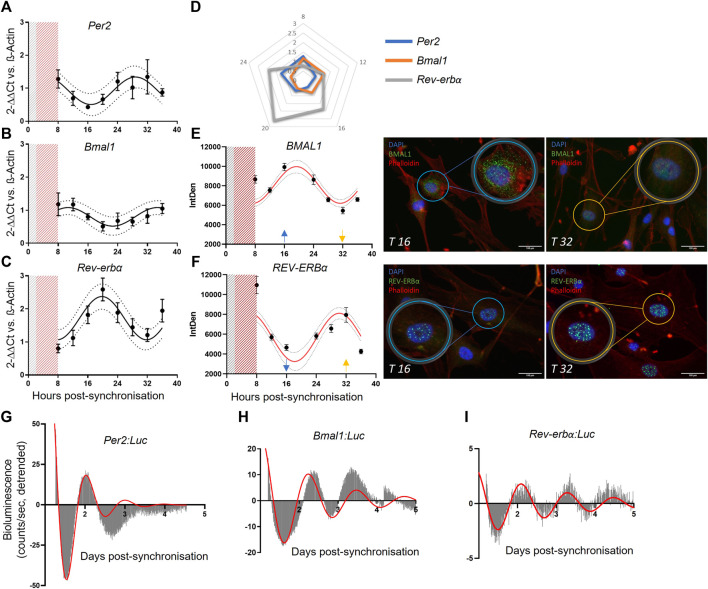
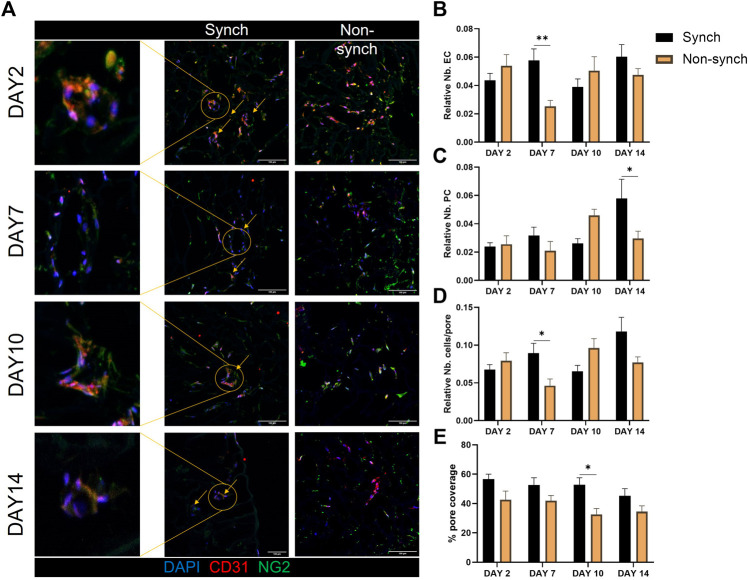
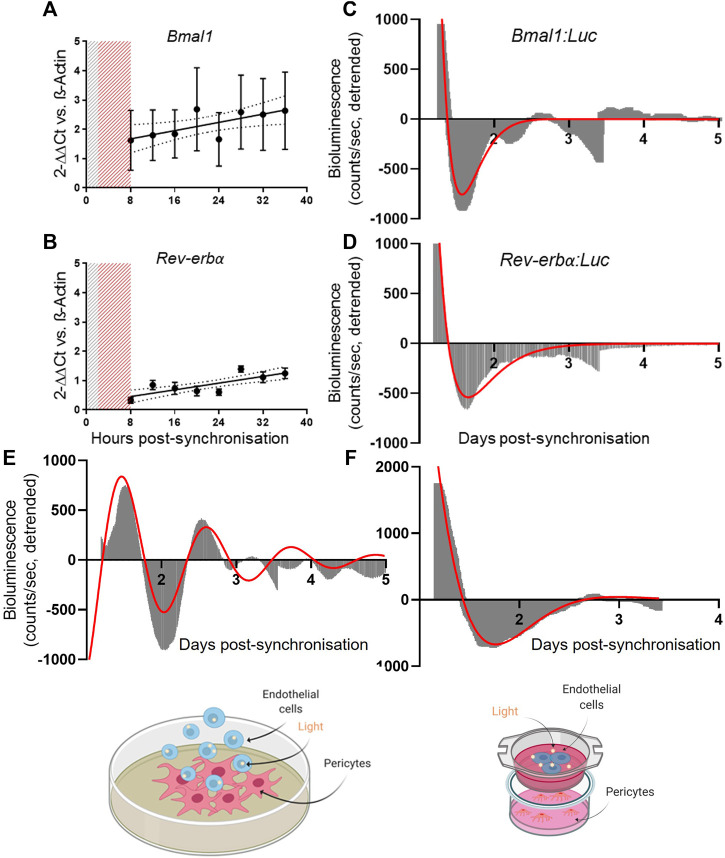
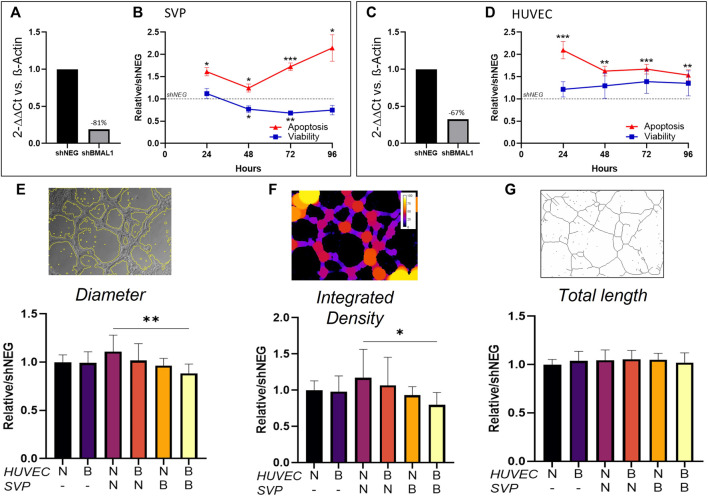
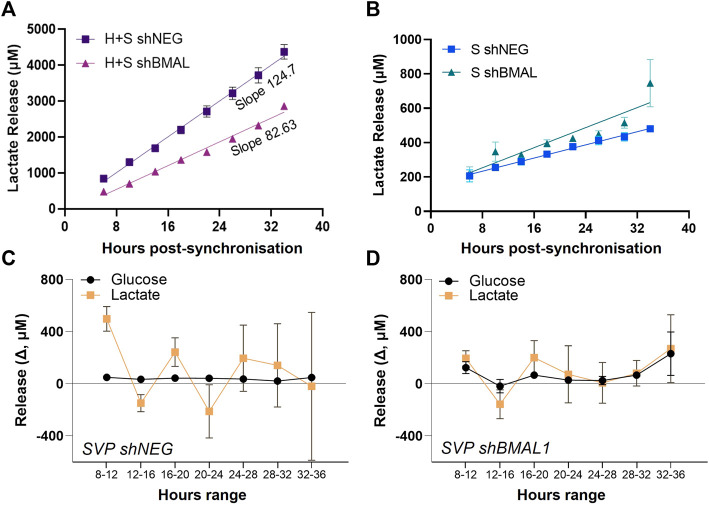
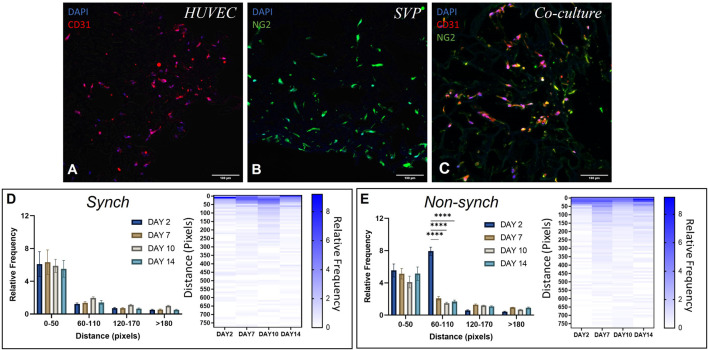
Angiogenesis, the formation of new capillaries from existing ones, is a fundamental process in regenerative medicine and tissue engineering. While it is known to be affected by circadian rhythms , its peripheral regulation within the vasculature and the role it performs in regulating the interplay between vascular cells have not yet been investigated. Peripheral clocks within the vasculature have been described in the endothelium and in smooth muscle cells. However, to date, scarce evidence has been presented regarding pericytes, a perivascular cell population deeply involved in the regulation of angiogenesis and vessel maturation, as well as endothelial function and homeostasis. More crucially, pericytes are also a promising source of cells for cell therapy and tissue engineering. Here, we established that human primary pericytes express key circadian genes and proteins in a rhythmic fashion upon synchronization. Conversely, we did not detect the same patterns in cultured endothelial cells. In line with these results, pericytes' viability was disproportionately affected by circadian cycle disruption, as compared to endothelial cells. Interestingly, endothelial cells' rhythm could be induced following exposure to synchronized pericytes in a contact co-culture. We propose that this mechanism could be linked to the altered release/uptake pattern of lactate, a known mediator of cell-cell interaction which was specifically altered in pericytes by the knockout of the key circadian regulator . In an angiogenesis assay, the maturation of vessel-like structures was affected only when both endothelial cells and pericytes did not express , indicating a compensation system. In a 3D tissue engineering scaffold, a synchronized clock supported a more structured organization of cells around the scaffold pores, and a maturation of vascular structures. Our results demonstrate that pericytes play a critical role in regulating the circadian rhythms in endothelial cells, and that silencing this system disproportionately affects their pro-angiogenic function. Particularly, in the context of tissue engineering and regenerative medicine, considering the effect of circadian rhythms may be critical for the development of mature vascular structures and to obtain the maximal reparative effect.
血管生成,即从现有血管形成新的毛细血管,是再生医学和组织工程中的一个基本过程。虽然已知其受昼夜节律影响,但其在脉管系统内的外周调节以及在调节血管细胞间相互作用中所起的作用尚未得到研究。脉管系统内的外周生物钟已在内皮细胞和平滑肌细胞中被描述。然而,迄今为止,关于周细胞(一种深度参与血管生成、血管成熟以及内皮功能和内环境稳态调节的血管周围细胞群体)的证据很少。更关键的是,周细胞也是细胞治疗和组织工程中很有前景的细胞来源。在此,我们证实人类原代周细胞在同步化后以节律性方式表达关键的昼夜节律基因和蛋白质。相反,我们在培养的内皮细胞中未检测到相同模式。与这些结果一致,与内皮细胞相比,周细胞的活力受昼夜周期破坏的影响更大。有趣的是,在接触共培养中,将内皮细胞暴露于同步化的周细胞后,其节律可以被诱导。我们提出这种机制可能与乳酸释放/摄取模式的改变有关,乳酸是一种已知的细胞间相互作用介质,通过敲除关键的昼夜节律调节因子,其在周细胞中发生了特异性改变。在血管生成试验中,只有当内皮细胞和周细胞都不表达时,类血管结构的成熟才会受到影响,这表明存在一种补偿系统。在三维组织工程支架中,同步的生物钟支持支架孔周围细胞形成更有序的组织,并促进血管结构的成熟。我们的结果表明,周细胞在调节内皮细胞的昼夜节律中起关键作用,并且使该系统沉默会对其促血管生成功能产生更大影响。特别是,在组织工程和再生医学背景下,考虑昼夜节律的影响对于成熟血管结构的发育以及获得最大修复效果可能至关重要。