Guangdong Provincial Key Laboratory of Tumor Immunotherapy, Cancer Research Institute, School of Basic Medical Sciences, Southern Medical University, Guangzhou, 510515, China.
Guangzhou First People's Hospital, School of Medicine, Southern China University of Technology, Guangzhou, 510180, China.
Cancer Gene Ther. 2022 Oct;29(10):1439-1451. doi: 10.1038/s41417-022-00453-6. Epub 2022 Apr 6.
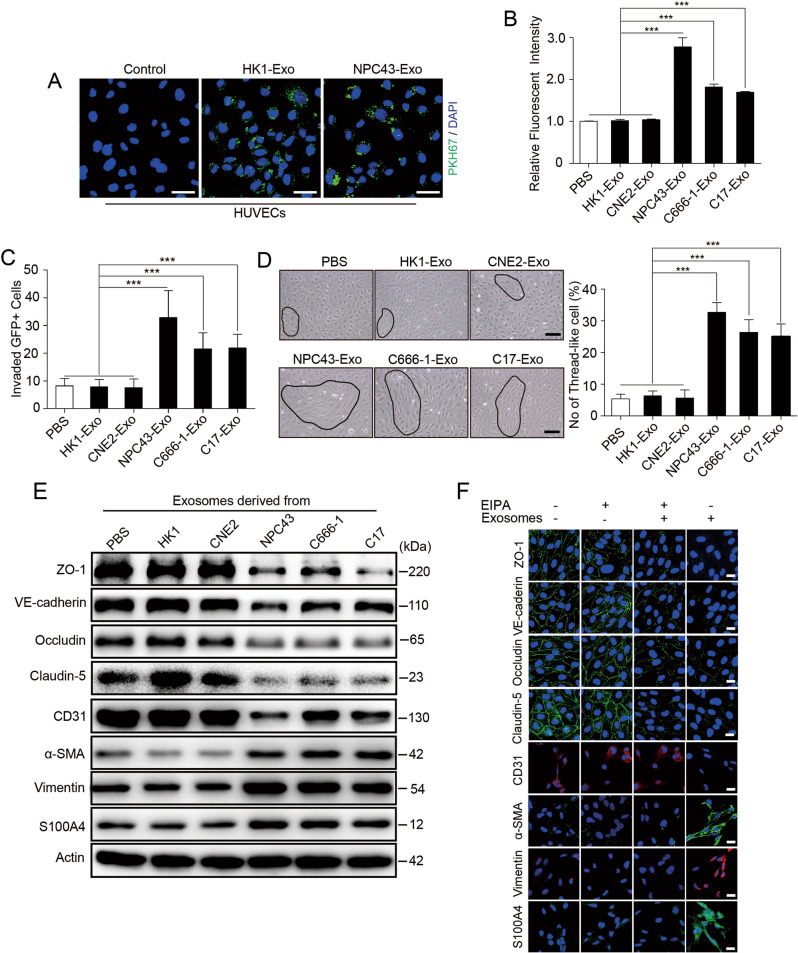
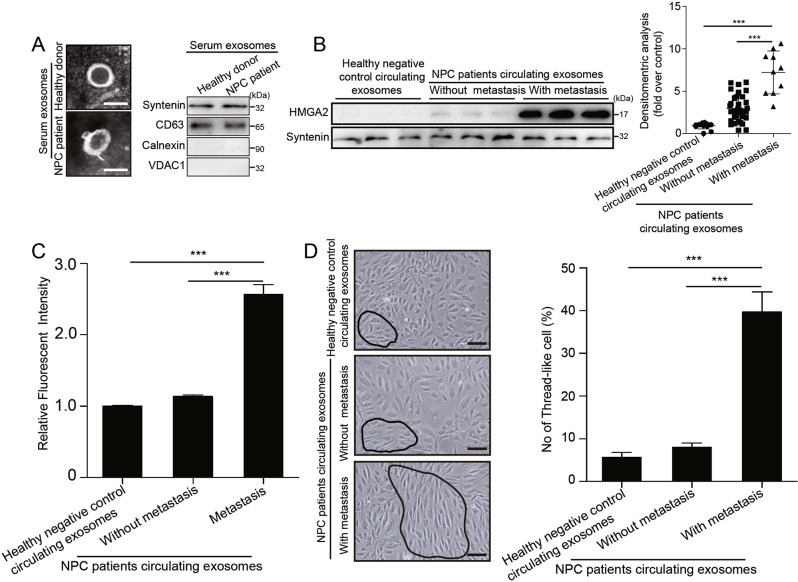
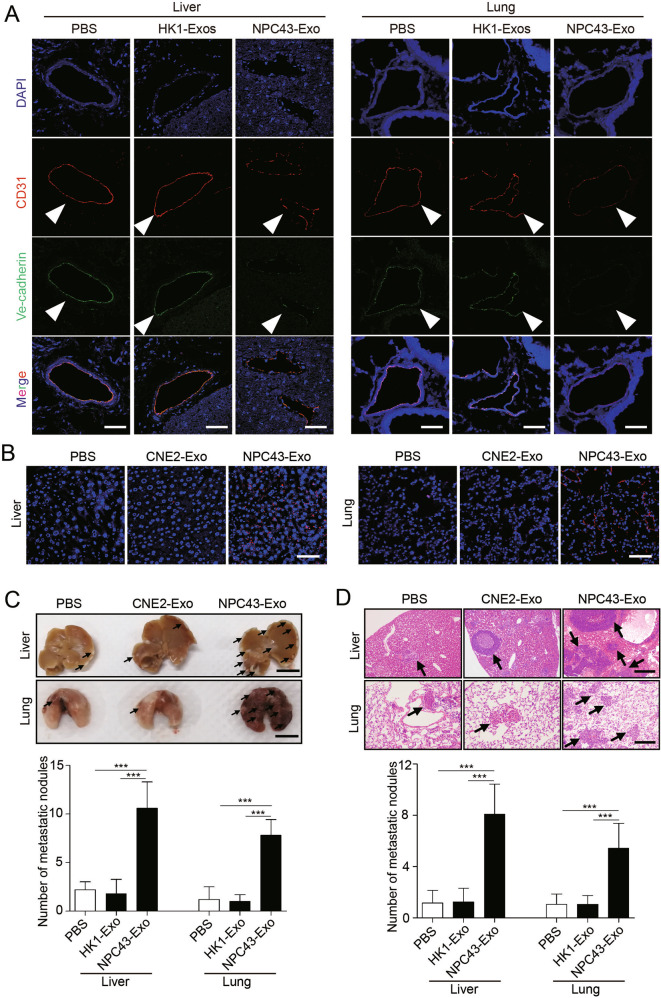
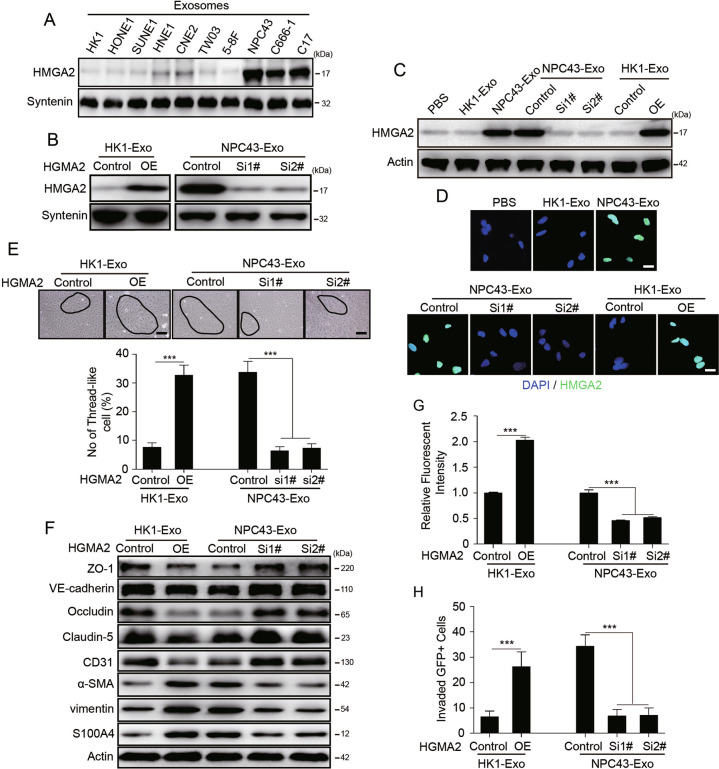
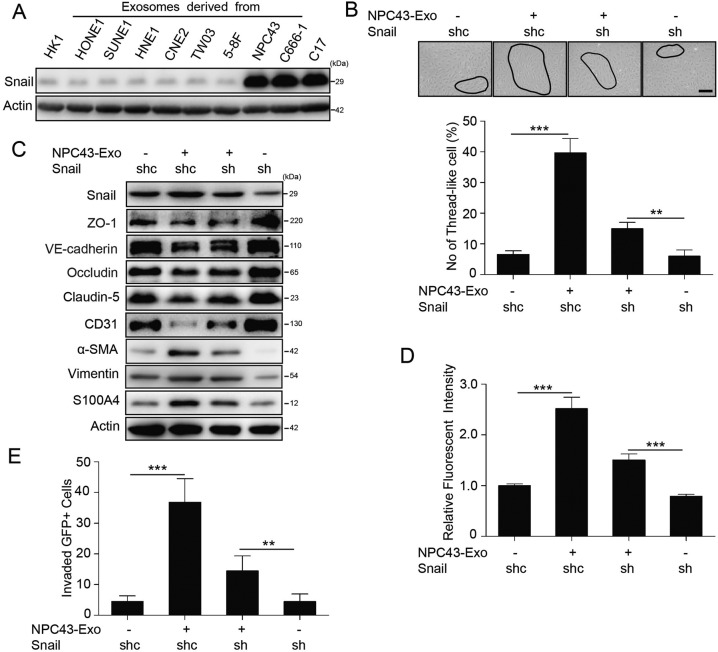
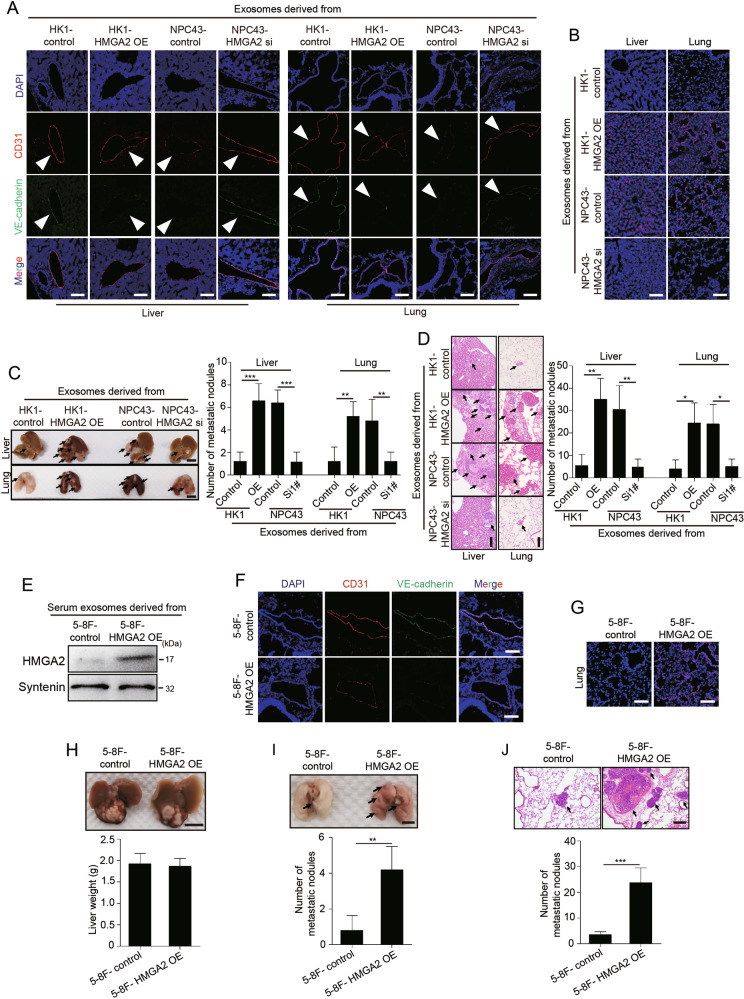
Increased vascular permeability facilitates metastasis. Cancer-secreted exosomes are emerging mediators of cancer-host crosstalk. Epstein-Barr virus (EBV), identified as the first human tumor-associated virus, plays a crucial role in metastatic tumors, especially in nasopharyngeal carcinoma (NPC). To date, whether and how exosomes from EBV-infected NPC cells affect vascular permeability remains unclear. Here, we show that exosomes from EBV-positive NPC cells, but not exosomes from EBV-negative NPC cells, destroy endothelial cell tight junction (TJ) proteins, which are natural barriers against metastasis, and promote endothelial-to-mesenchymal transition (EndMT) in endothelial cells. Proteomic analysis revealed that the level of HMGA2 protein was higher in exosomes derived from EBV-positive NPC cells compared with that in exosomes derived from EBV-negative NPC cells. Depletion of HMGA2 in exosomes derived from EBV-positive NPC cells attenuates endothelial cell dysfunction and tumor cell metastasis. In contrast, exosomes from HMGA2 overexpressing EBV-negative NPC cells promoted these processes. Furthermore, we showed that HMGA2 upregulates the expression of Snail, which contributes to TJ proteins reduction and EndMT in endothelial cells. Moreover, the level of HMGA2 in circulating exosomes is significantly higher in NPC patients with metastasis than in those without metastasis and healthy negative controls, and the level of HMGA2 in tumor cells is associated with TJ and EndMT protein expression in endothelial cells. Collectively, our findings suggest exosomal HMGA2 from EBV-positive NPC cells promotes tumor metastasis by targeting multiple endothelial TJ and promoting EndMT, which highlights secreted HMGA2 as a potential therapeutic target and a predictive marker for NPC metastasis.
血管通透性增加有助于转移。癌细胞分泌的外泌体正在成为癌症-宿主细胞串扰的新兴介质。EB 病毒(EBV)被确定为第一个与人类肿瘤相关的病毒,在转移性肿瘤中,特别是在鼻咽癌(NPC)中发挥着关键作用。迄今为止,尚不清楚 EBV 感染的 NPC 细胞来源的外泌体是否以及如何影响血管通透性。在这里,我们表明,来自 EBV 阳性 NPC 细胞的外泌体而不是来自 EBV 阴性 NPC 细胞的外泌体破坏了内皮细胞紧密连接(TJ)蛋白,这些蛋白是阻止转移的天然屏障,并促进内皮细胞向间充质转化(EndMT)。蛋白质组学分析显示,与 EBV 阴性 NPC 细胞来源的外泌体相比,来自 EBV 阳性 NPC 细胞的外泌体中 HMGA2 蛋白水平更高。从 EBV 阳性 NPC 细胞来源的外泌体中耗尽 HMGA2 可减弱内皮细胞功能障碍和肿瘤细胞转移。相反,来自高表达 HMGA2 的 EBV 阴性 NPC 细胞的外泌体则促进了这些过程。此外,我们表明 HMGA2 上调了 Snail 的表达,这有助于 TJ 蛋白的减少和内皮细胞的 EndMT。此外,转移 NPC 患者循环外泌体中的 HMGA2 水平明显高于无转移和健康阴性对照者,并且肿瘤细胞中的 HMGA2 水平与内皮细胞中 TJ 和 EndMT 蛋白的表达相关。总之,我们的研究结果表明,来自 EBV 阳性 NPC 细胞的外泌体 HMGA2 通过靶向多个内皮 TJ 并促进 EndMT 促进肿瘤转移,这突显了分泌的 HMGA2 作为 NPC 转移的潜在治疗靶点和预测标志物。