Department of Physiology, Ribeirão Preto Medical School, University of São Paulo, Ribeirão Preto, São Paulo, Brazil; Department of Biochemistry/Immunology, Ribeirão Preto Medical School, University of São Paulo, Ribeirão Preto, São Paulo, Brazil.
Department of Physiology, Ribeirão Preto Medical School, University of São Paulo, Ribeirão Preto, São Paulo, Brazil; Exercise Physiology Laboratory, School of Physical Education, Physiotherapy and Occupational Therapy, Universidade Federal de Minas Gerais, Belo Horizonte, Minas Gerais, Brazil.
Mol Metab. 2022 Jun;60:101492. doi: 10.1016/j.molmet.2022.101492. Epub 2022 Apr 4.
Although it is well established that urocortin 2 (Ucn2), a peptide member of the corticotrophin releasing factor (CRF) family, and its specific corticotrophin-releasing factor 2 receptor (CRF2R) are highly expressed in skeletal muscle, the role of this peptide in the regulation of skeletal muscle mass and protein metabolism remains elusive.
To elucidate the mechanisms how Ucn2 directly controls protein metabolism in skeletal muscles of normal mice, we carried out genetic tools, physiological and molecular analyses of muscles in vivo and in vitro.
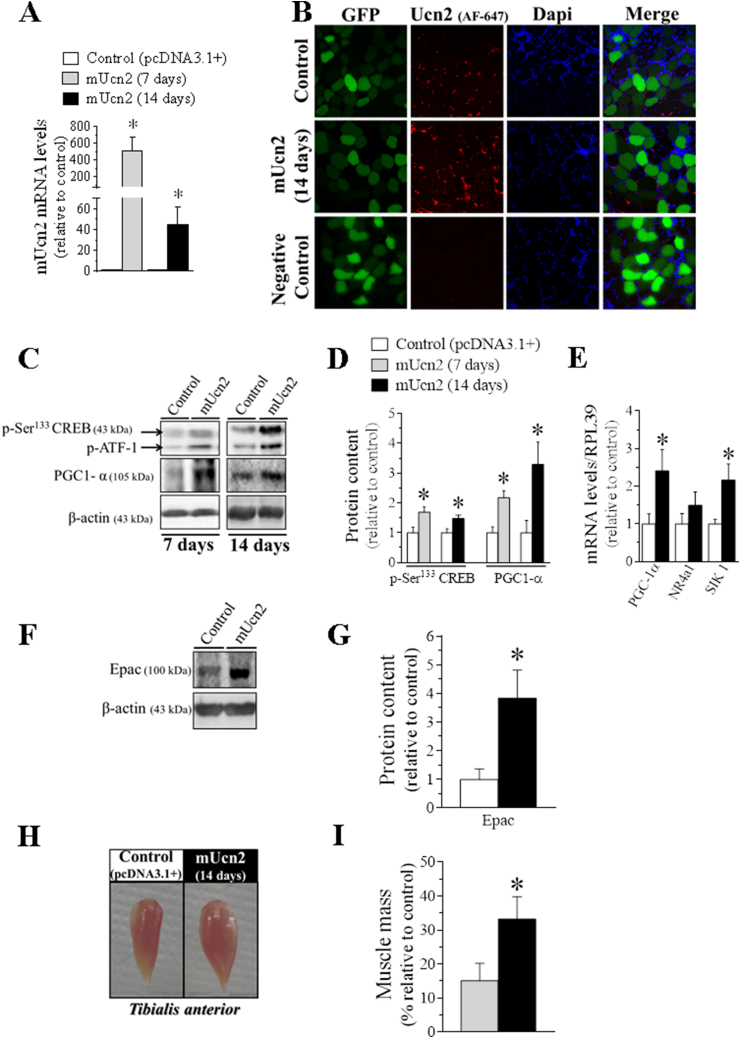
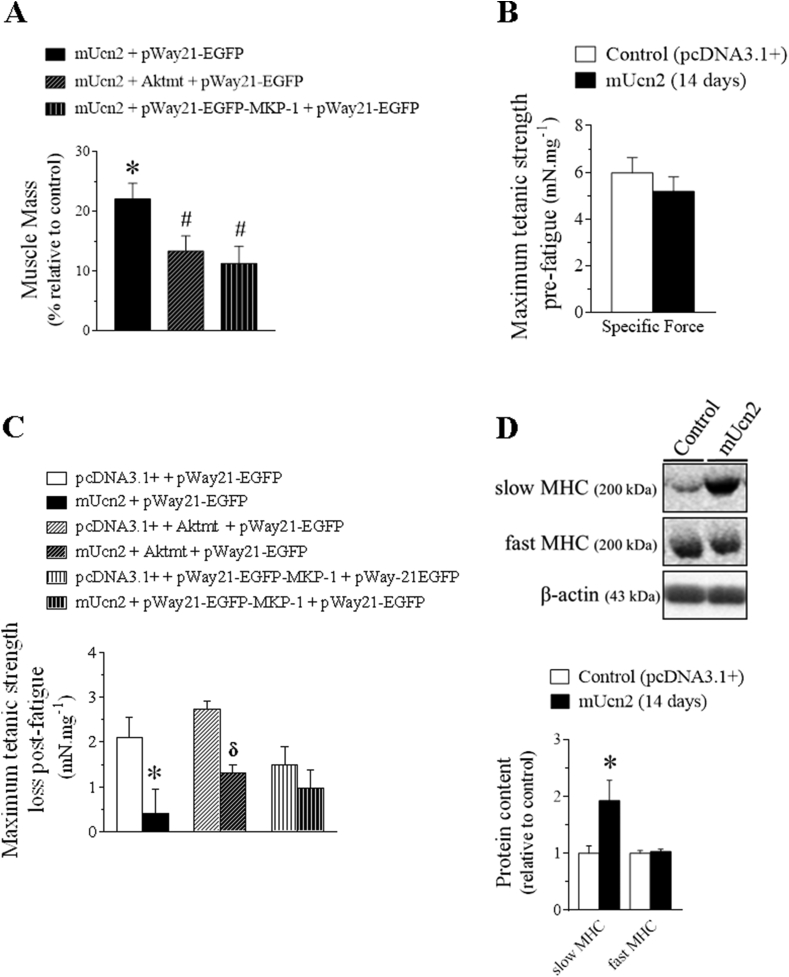
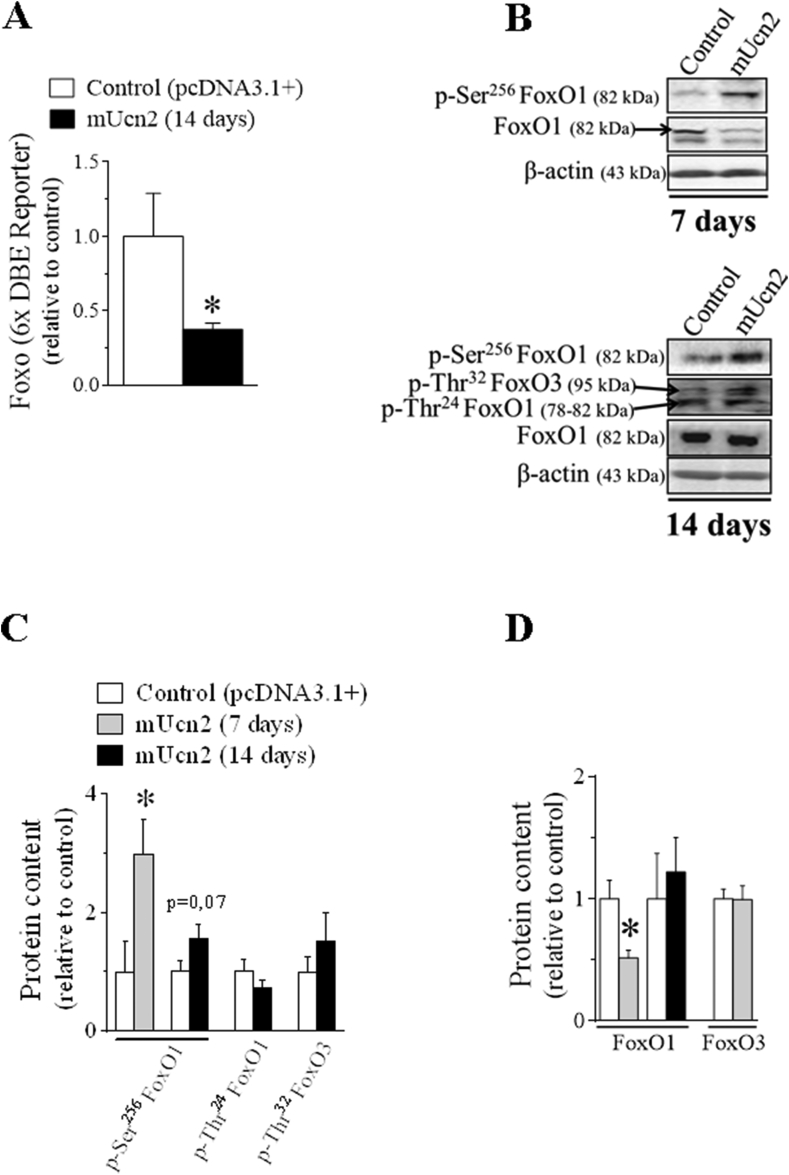
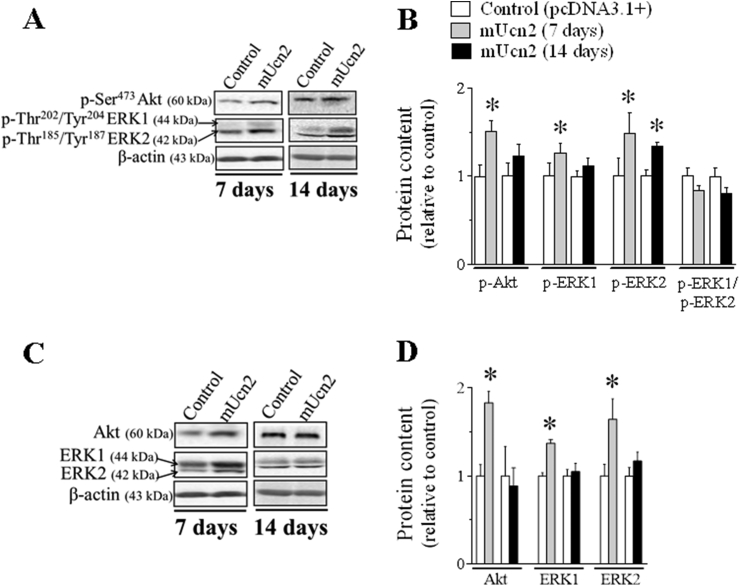
Here, we demonstrated that Ucn2 overexpression activated cAMP signaling and promoted an expressive muscle hypertrophy associated with higher rates of protein synthesis and activation of Akt/mTOR and ERK1/2 signaling pathways. Furthermore, Ucn2 induced a decrease in mRNA levels of atrogin-1 and in autophagic flux inferred by an increase in the protein content of LC3-I, LC3-II and p62. Accordingly, Ucn2 reduced both the transcriptional activity of FoxO in vivo and the overall protein degradation in vitro through an inhibition of lysosomal proteolytic activity. In addition, we demonstrated that Ucn2 induced a fast-to-slow fiber type shift and improved fatigue muscle resistance, an effect that was completely blocked in muscles co-transfected with mitogen-activated protein kinase phosphatase 1 (MKP-1), but not with dominant-negative Akt mutant (Aktmt).
These data suggest that Ucn2 triggers an anabolic and anti-catabolic response in skeletal muscle of normal mice probably through the activation of cAMP cascade and participation of Akt and ERK1/2 signaling. These findings open new perspectives in the development of therapeutic strategies to cope with the loss of muscle mass.
虽然已知尿皮质素 2(Ucn2)是促肾上腺皮质激素释放因子(CRF)家族的一种肽成员,并且其特异性促肾上腺皮质激素释放因子 2 受体(CRF2R)在骨骼肌中高度表达,但该肽在调节骨骼肌质量和蛋白质代谢中的作用仍不清楚。
为了阐明 Ucn2 如何直接控制正常小鼠骨骼肌中的蛋白质代谢,我们在体内和体外进行了遗传工具、生理学和分子分析。
在这里,我们证明了 Ucn2 过表达激活了 cAMP 信号通路,并促进了表达性肌肉肥大,与更高的蛋白质合成率以及 Akt/mTOR 和 ERK1/2 信号通路的激活相关。此外,Ucn2 诱导肌萎缩基因 1(atrogin-1)的 mRNA 水平降低,并通过 LC3-I、LC3-II 和 p62 的蛋白含量增加推断自噬通量增加。因此,Ucn2 通过抑制溶酶体蛋白水解活性,降低了 FoxO 的体内转录活性和体外的整体蛋白质降解。此外,我们证明 Ucn2 诱导快速向慢速纤维类型转变,并改善疲劳肌肉抵抗,该作用在与丝裂原活化蛋白激酶磷酸酶 1(MKP-1)共转染的肌肉中完全被阻断,但在与显性负 Akt 突变体(Aktmt)共转染的肌肉中没有被阻断。
这些数据表明,Ucn2 可能通过激活 cAMP 级联和参与 Akt 和 ERK1/2 信号通路,在正常小鼠的骨骼肌中引发合成代谢和抗分解代谢反应。这些发现为开发治疗策略以应对肌肉质量损失开辟了新的前景。