Grewe Justus M, Knapstein Paul-Richard, Donat Antonia, Jiang Shan, Smit Daniel J, Xie Weixin, Keller Johannes
Department of Trauma and Orthopedic Surgery, University Medical Center Hamburg-Eppendorf, 20246, Hamburg, Germany.
Clinic and Polyclinic for Vascular Medicine, University Heart Center Hamburg-Eppendorf, 20246, Hamburg, Germany.
Bone Res. 2022 Apr 8;10(1):34. doi: 10.1038/s41413-022-00205-0.
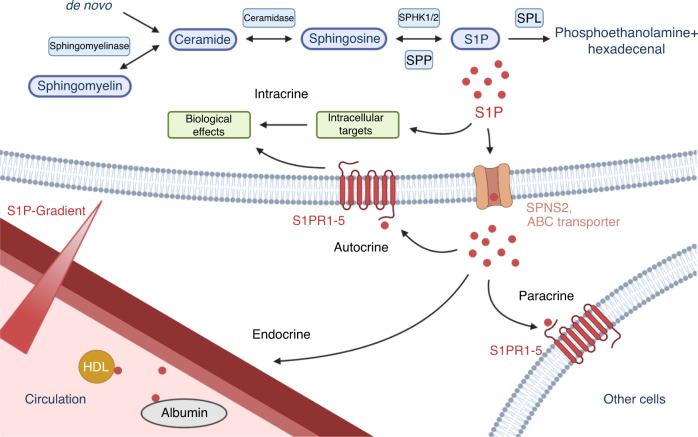
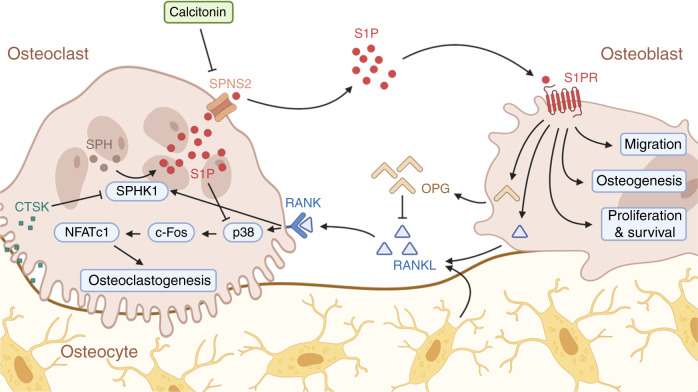
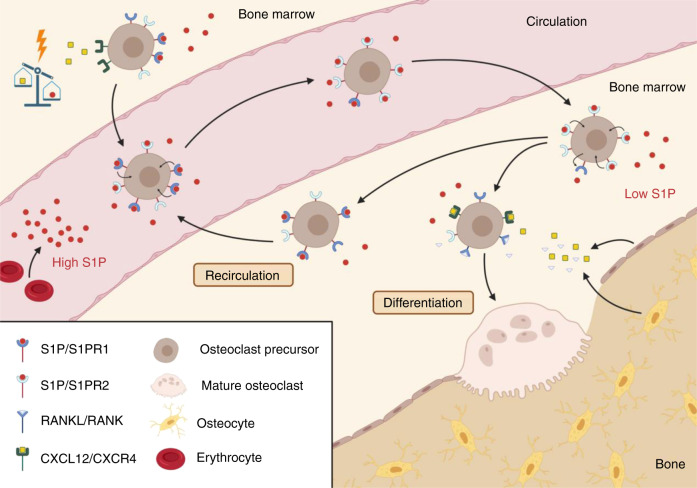
Osteoporosis is a systemic bone disease that affects more than 200 million people worldwide and is caused by the disruption of the equilibrium between osteoclastic bone resorption and osteoblastic bone formation. Sphingosine-1-phosphate (S1P) is a natural, bioactive sphingolipid that has been shown to play a major role in cardiovascular and immunological pathologies by regulating biological and cellular processes, including migration, differentiation, proliferation and survival. Recent studies also suggest a central role for S1P in bone diseases, including osteoporosis; however, the effects of S1P, particularly in bone metabolism, remain to be further elucidated. In this review, we summarize the available literature on the role of S1P in bone metabolism with a focus on osteoporosis. On the cellular level, S1P acts as an osteoclast-osteoblast coupling factor to promote osteoblast proliferation and bone formation. Moreover, the recruitment of osteoclast precursors to resorption sites is regulated by the interplay of S1P gradients and S1P receptor expression. From a clinical perspective, increasing evidence suggests that systemically elevated S1P blood levels may serve as an independent risk factor for osteoporosis-related fractures. Taken together, S1P signaling is a potential therapeutic target and may serve as a novel biomarker in patients with systemic bone disease.
骨质疏松症是一种全身性骨骼疾病,全球有超过2亿人受其影响,它由破骨细胞骨吸收与成骨细胞骨形成之间的平衡破坏所致。1-磷酸鞘氨醇(S1P)是一种天然的生物活性鞘脂,已被证明通过调节包括迁移、分化、增殖和存活在内的生物学和细胞过程,在心血管和免疫病理学中发挥主要作用。最近的研究还表明S1P在包括骨质疏松症在内的骨骼疾病中起核心作用;然而,S1P的作用,尤其是在骨代谢中的作用,仍有待进一步阐明。在本综述中,我们总结了关于S1P在骨代谢中作用的现有文献,重点是骨质疏松症。在细胞水平上,S1P作为破骨细胞-成骨细胞偶联因子,促进成骨细胞增殖和骨形成。此外,S1P梯度和S1P受体表达的相互作用调节破骨细胞前体向吸收部位的募集。从临床角度来看,越来越多的证据表明,全身S1P血液水平升高可能是骨质疏松症相关骨折的独立危险因素。综上所述,S1P信号传导是一个潜在的治疗靶点,可能成为全身性骨病患者的新型生物标志物。