Division of Endocrinology and Metabolism, Department of Internal Medicine, National Cheng Kung University Hospital, Tainan, Taiwan.
Department of Physiology, College of Medicine, National Cheng Kung University, Tainan, Taiwan.
J Biol Chem. 2022 May;298(5):101904. doi: 10.1016/j.jbc.2022.101904. Epub 2022 Apr 6.
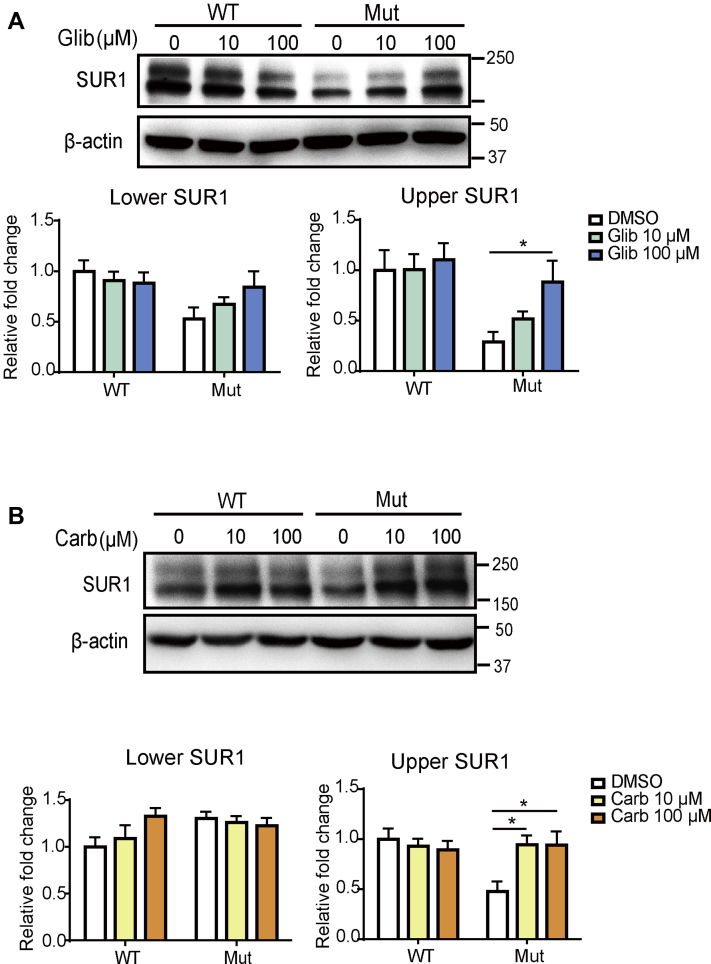
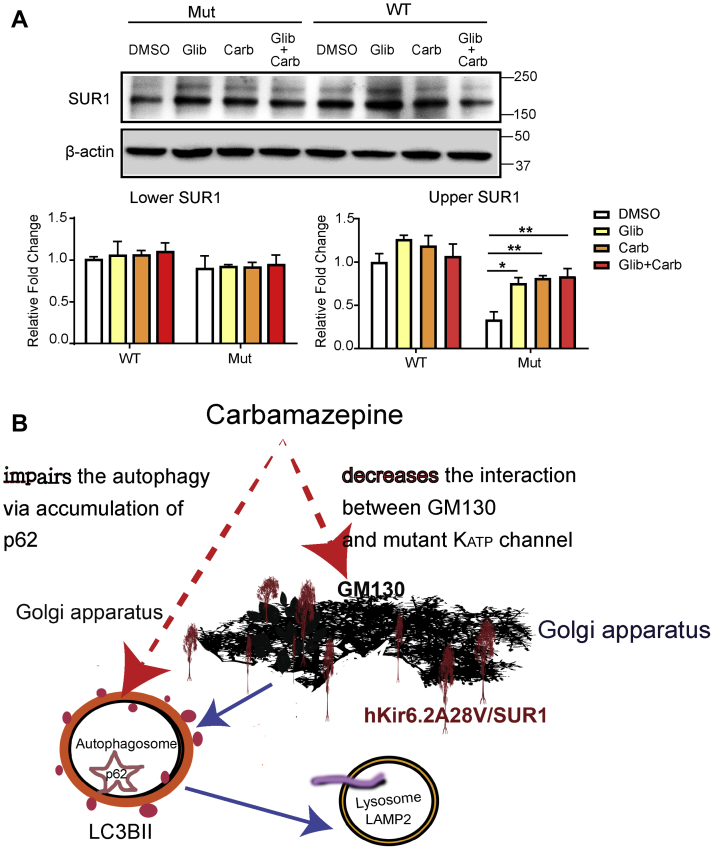
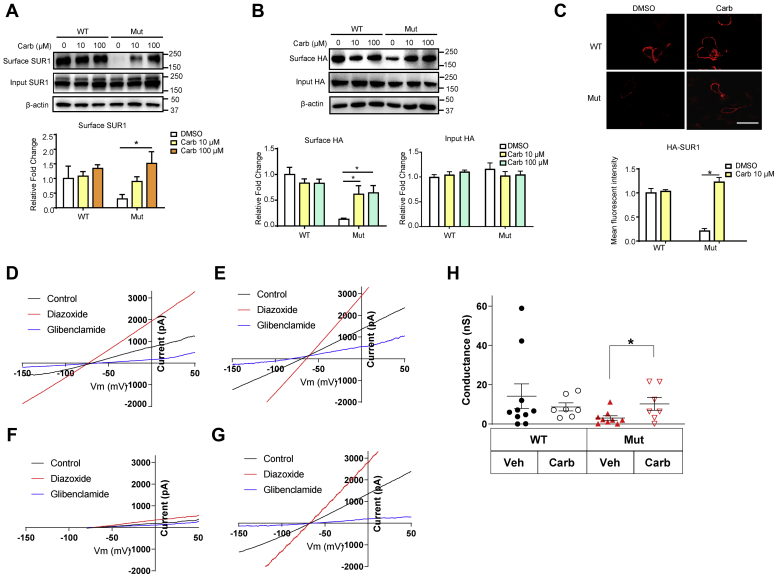
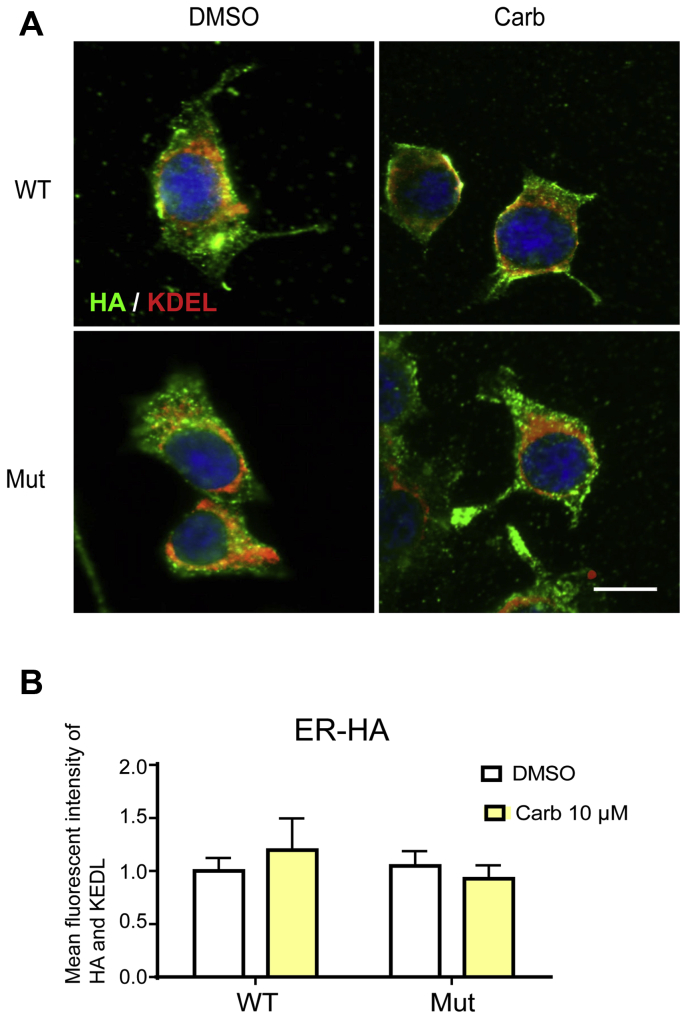
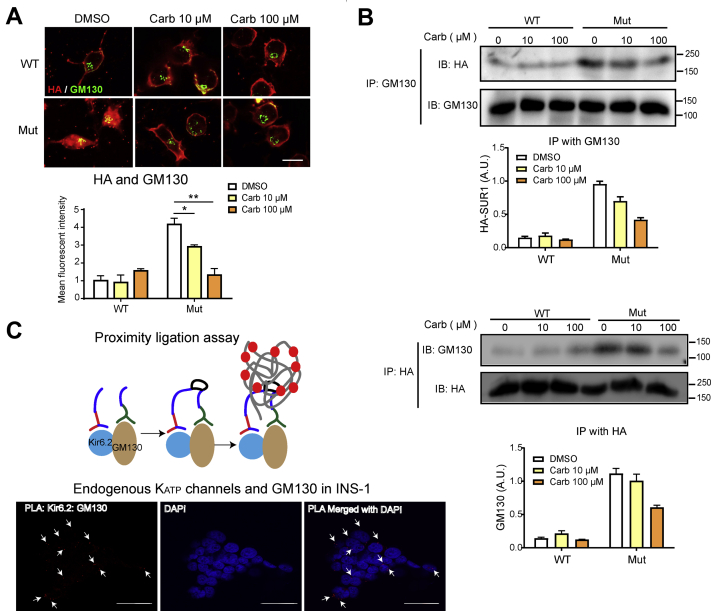
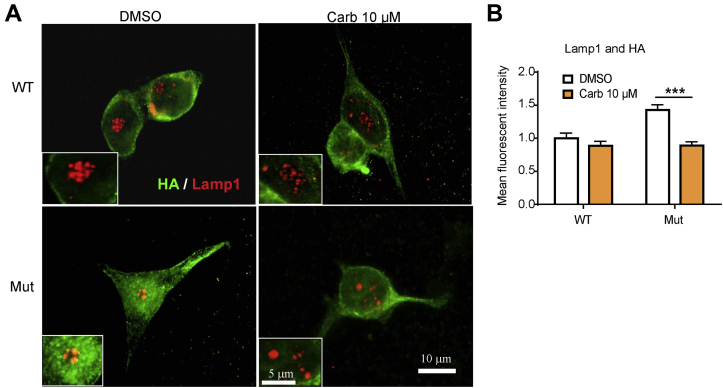
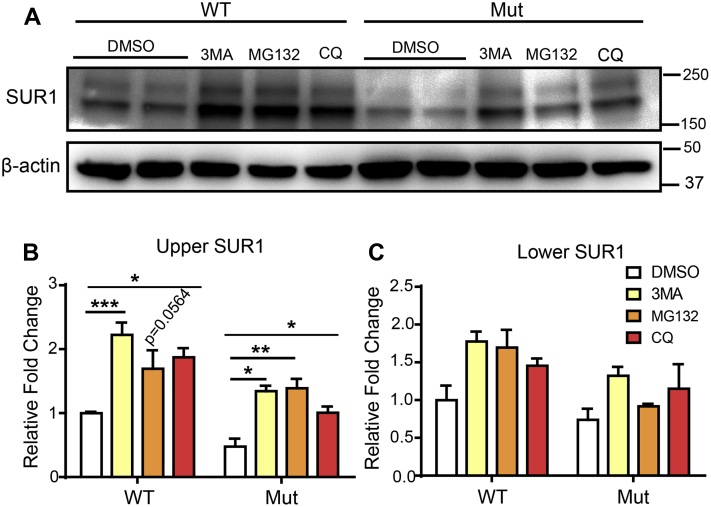
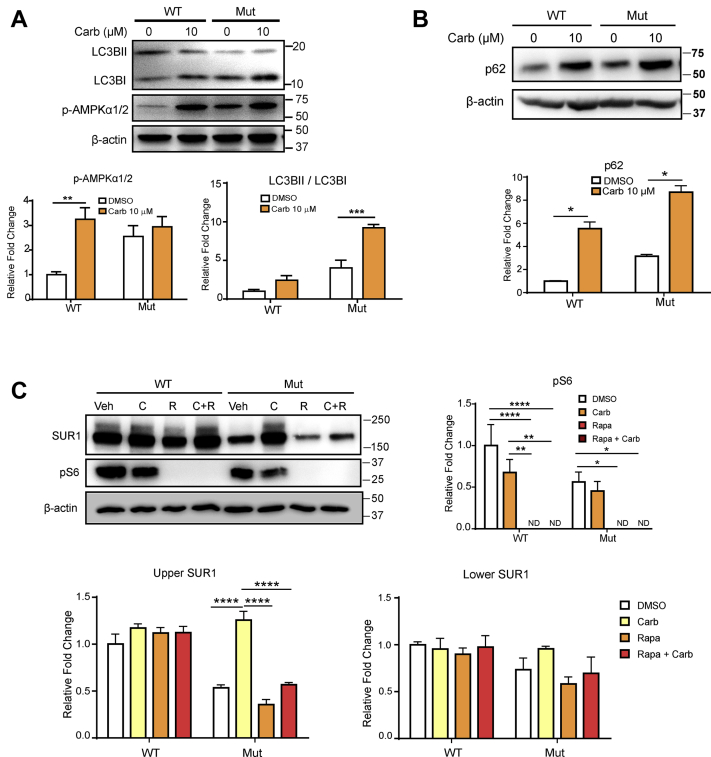
Pancreatic β-cells express ATP-sensitive potassium (K) channels, consisting of octamer complexes containing four sulfonylurea receptor 1 (SUR1) and four Kir6.2 subunits. Loss of K channel function causes persistent hyperinsulinemic hypoglycemia of infancy (PHHI), a rare but debilitating condition if not treated. We previously showed that the sodium-channel blocker carbamazepine (Carb) corrects K channel surface expression defects induced by PHHI-causing mutations in SUR1. In this study, we show that Carb treatment can also ameliorate the trafficking deficits associated with a recently discovered PHHI-causing mutation in Kir6.2 (Kir6.2-A28V). In human embryonic kidney 293 or INS-1 cells expressing this mutant K channel (SUR1 and Kir6.2-A28V), biotinylation and immunostaining assays revealed that Carb can increase surface expression of the mutant K channels. We further examined the subcellular distributions of mutant K channels before and after Carb treatment; without Carb treatment, we found that mutant K channels were aberrantly accumulated in the Golgi apparatus. However, after Carb treatment, coimmunoprecipitation of mutant K channels and Golgi marker GM130 was diminished, and K staining was also reduced in lysosomes. Intriguingly, Carb treatment also simultaneously increased autophagic flux and p62 accumulation, suggesting that autophagy-dependent degradation of the mutant channel was not only stimulated but also interrupted. In summary, our data suggest that surface expression of Kir6.2-A28V K channels is rescued by Carb treatment via promotion of mutant K channel exit from the Golgi apparatus and reduction of autophagy-mediated protein degradation.
胰岛β细胞表达 ATP 敏感性钾 (K) 通道,由包含四个磺酰脲受体 1 (SUR1) 和四个 Kir6.2 亚基的八聚体复合物组成。K 通道功能丧失会导致婴儿持续性高胰岛素性低血糖症 (PHHI),如果不治疗,这是一种罕见但使人虚弱的疾病。我们之前表明,钠离子通道阻滞剂卡马西平 (Carb) 可纠正由 SUR1 引起的 PHHI 突变导致的 K 通道表面表达缺陷。在这项研究中,我们表明 Carb 治疗还可以改善与最近发现的 Kir6.2 (Kir6.2-A28V) 引起的 PHHI 突变相关的转运缺陷。在表达这种突变 K 通道 (SUR1 和 Kir6.2-A28V) 的人胚肾 293 或 INS-1 细胞中,生物素化和免疫染色测定表明 Carb 可以增加突变 K 通道的表面表达。我们进一步检查了 Carb 治疗前后突变 K 通道的亚细胞分布;没有 Carb 治疗,我们发现突变 K 通道异常积聚在高尔基体中。然而,在 Carb 治疗后,突变 K 通道和高尔基体标志物 GM130 的共免疫沉淀减少,溶酶体中的 K 染色也减少。有趣的是,Carb 治疗还同时增加了自噬通量和 p62 积累,表明突变通道的自噬依赖性降解不仅受到刺激,而且受到干扰。总之,我们的数据表明,Carb 治疗通过促进突变 K 通道从高尔基体中逸出和减少自噬介导的蛋白降解,挽救 Kir6.2-A28V K 通道的表面表达。