Gattoni Giacomo, Andrews Toby G R, Benito-Gutiérrez Èlia
Department of Zoology, University of Cambridge, Cambridge, United Kingdom.
Front Neurosci. 2022 Mar 24;16:812223. doi: 10.3389/fnins.2022.812223. eCollection 2022.
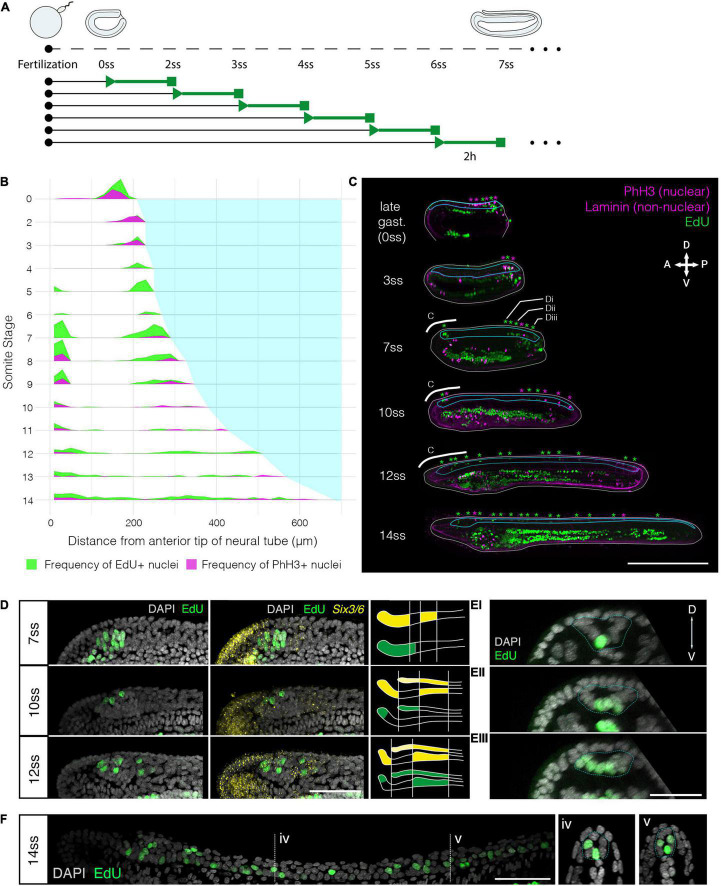
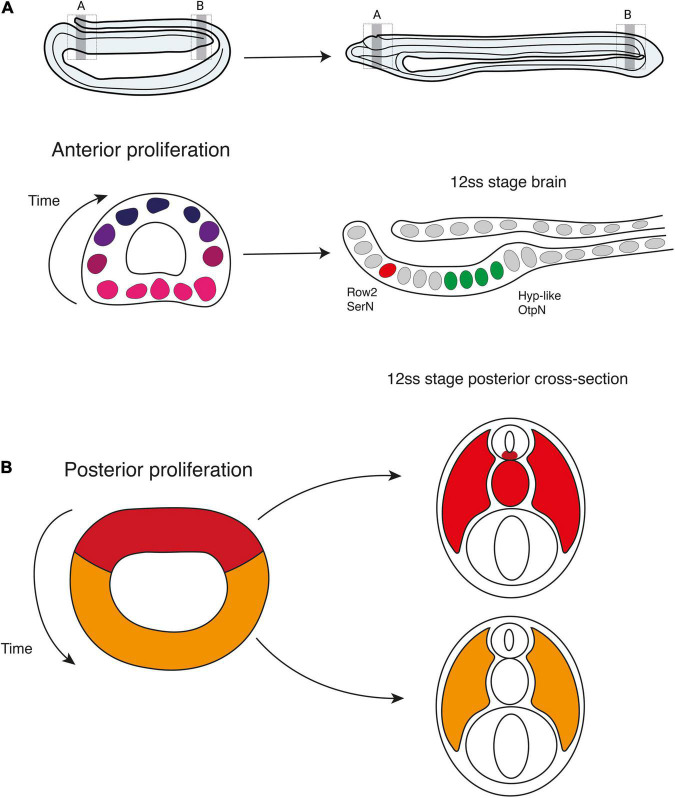
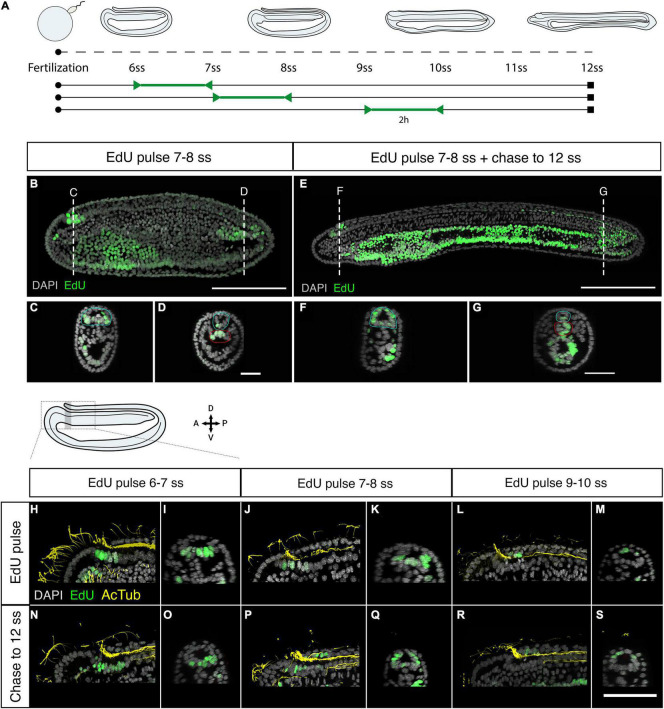
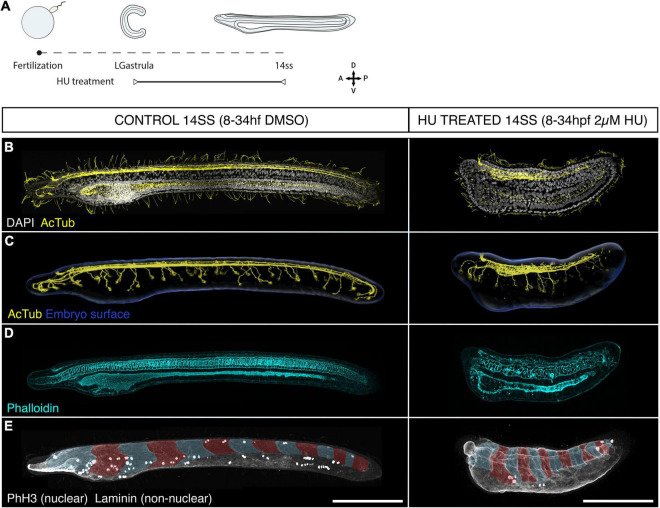
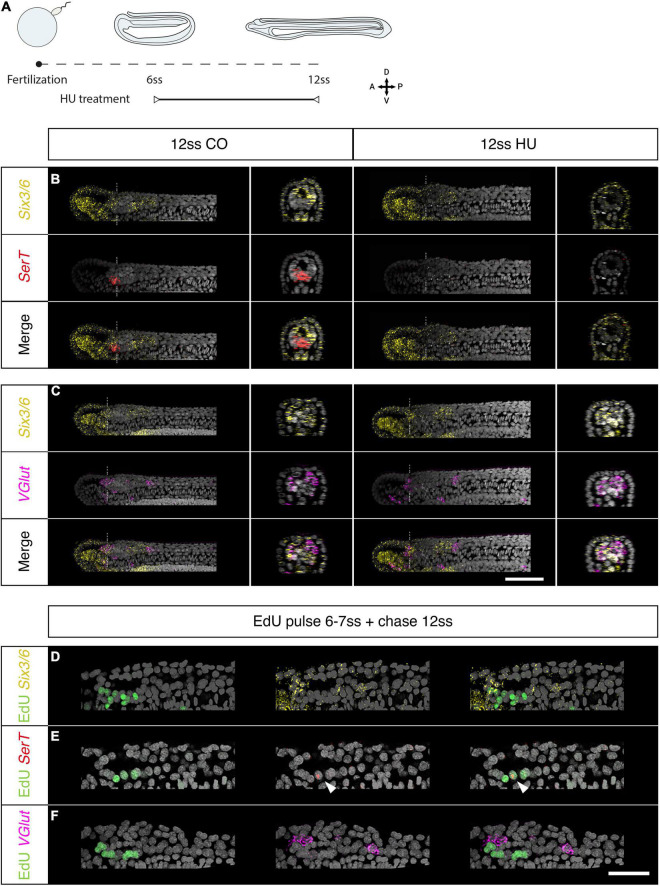
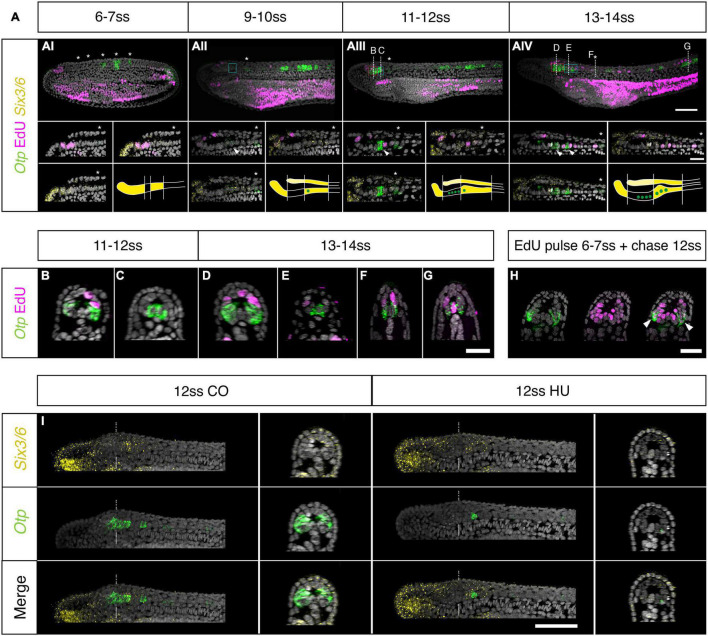
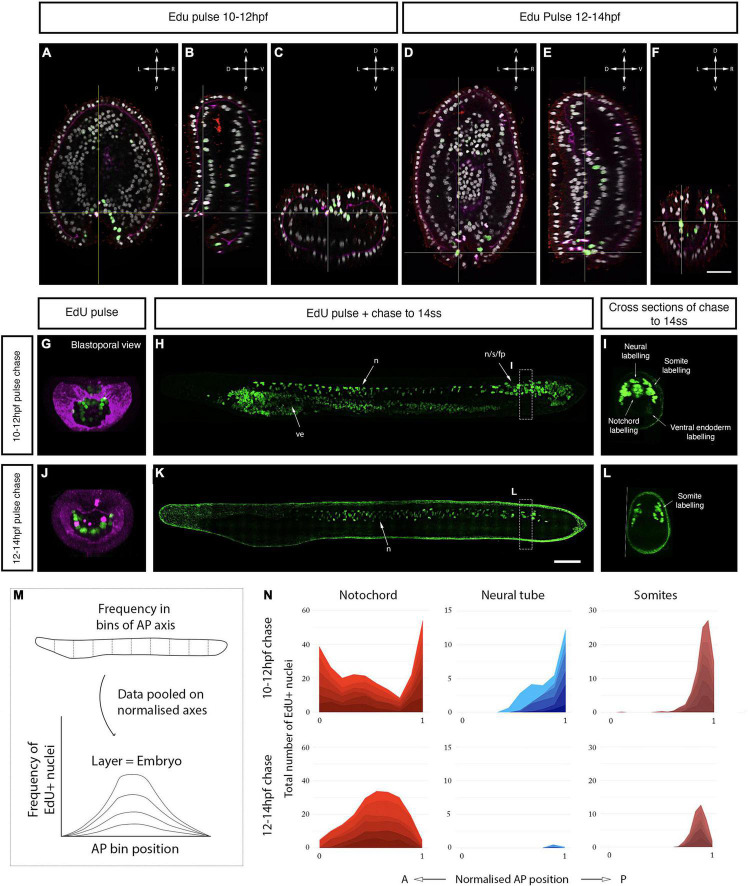
The central nervous system of the cephalochordate amphioxus consists of a dorsal neural tube with an anterior brain. Two decades of gene expression analyses in developing amphioxus embryos have shown that, despite apparent morphological simplicity, the amphioxus neural tube is highly regionalised at the molecular level. However, little is known about the morphogenetic mechanisms regulating the spatiotemporal emergence of cell types at distinct sites of the neural axis and how their arrangements contribute to the overall neural architecture. In vertebrates, proliferation is key to provide appropriate cell numbers of specific types to particular areas of the nervous system as development proceeds, but in amphioxus proliferation has never been studied at this level of detail, nor in the specific context of neurogenesis. Here, we describe the dynamics of cell division during the formation of the central nervous system in amphioxus embryos, and identify specific regions of the nervous system that depend on proliferation of neuronal precursors at precise time-points for their maturation. By labelling proliferating cells at specific time points in development, and inhibiting cell division during neurulation, we demonstrate that localised proliferation in the anterior cerebral vesicle is required to establish the full cell type repertoire of the frontal eye complex and the putative hypothalamic region of the amphioxus brain, while posterior proliferating progenitors, which were found here to derive from the dorsal lip of the blastopore, contribute to elongation of the caudal floor plate. Between these proliferative domains, we find that trunk nervous system differentiation is independent from cell division, in which proliferation decreases during neurulation and resumes at the early larval stage. Taken together, our results highlight the importance of proliferation as a tightly controlled mechanism for shaping and regionalising the amphioxus neural axis during development, by addition of new cells fated to particular types, or by influencing tissue geometry.
头索动物文昌鱼的中枢神经系统由一个带有前端脑的背侧神经管组成。二十年来对文昌鱼胚胎发育过程中的基因表达分析表明,尽管文昌鱼在形态上看似简单,但其神经管在分子水平上高度区域化。然而,对于调节神经轴不同部位细胞类型时空出现的形态发生机制,以及它们的排列如何构成整体神经结构,我们知之甚少。在脊椎动物中,随着发育的进行,增殖是为神经系统特定区域提供适当数量特定类型细胞的关键,但在文昌鱼中,从未在如此详细的水平上研究过增殖,也未在神经发生的特定背景下进行过研究。在这里,我们描述了文昌鱼胚胎中枢神经系统形成过程中细胞分裂的动态,并确定了神经系统中特定区域,这些区域在精确的时间点依赖于神经元前体的增殖来实现成熟。通过在发育的特定时间点标记增殖细胞,并在神经胚形成过程中抑制细胞分裂,我们证明前脑泡中的局部增殖对于建立文昌鱼脑的额眼复合体和假定的下丘脑区域的完整细胞类型库是必需的,而在这里发现的后增殖祖细胞来源于胚孔的背唇,它们有助于尾底板的延长。在这些增殖区域之间,我们发现躯干神经系统的分化独立于细胞分裂,其中增殖在神经胚形成过程中减少,并在幼体早期恢复。综上所述,我们的结果强调了增殖作为一种严格控制的机制在发育过程中塑造和区域化文昌鱼神经轴的重要性,通过添加注定为特定类型的新细胞,或通过影响组织几何形状来实现。