Neuroscience Institute, New York University, New York, United States.
Department of Neurobiology, Harvard Medical School, Boston, United States.
Elife. 2020 Dec 23;9:e63249. doi: 10.7554/eLife.63249.
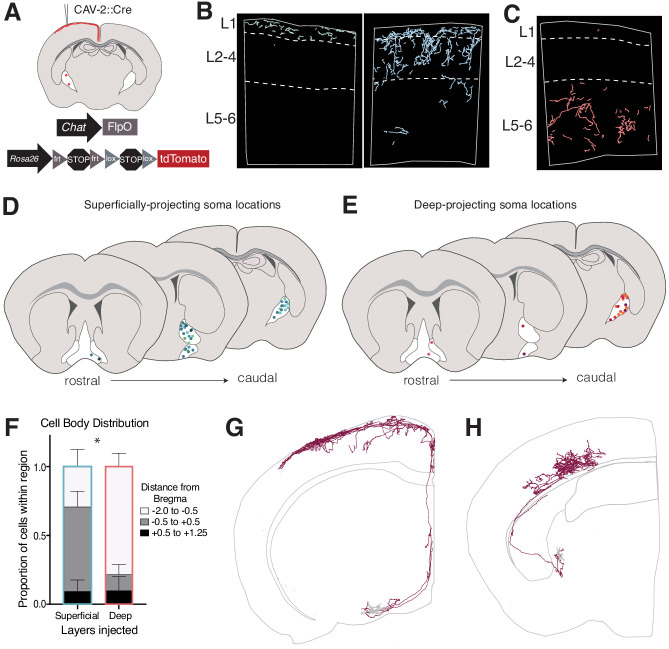
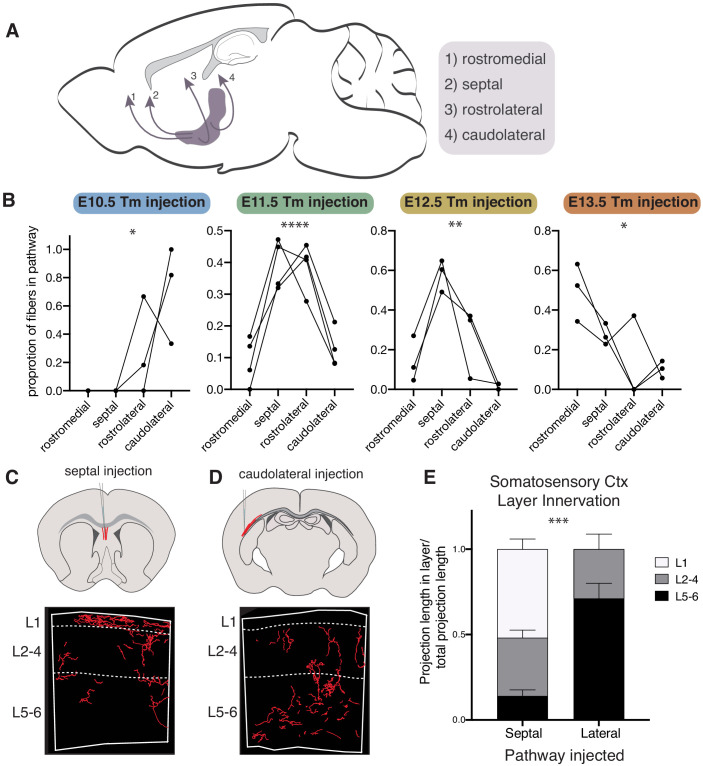
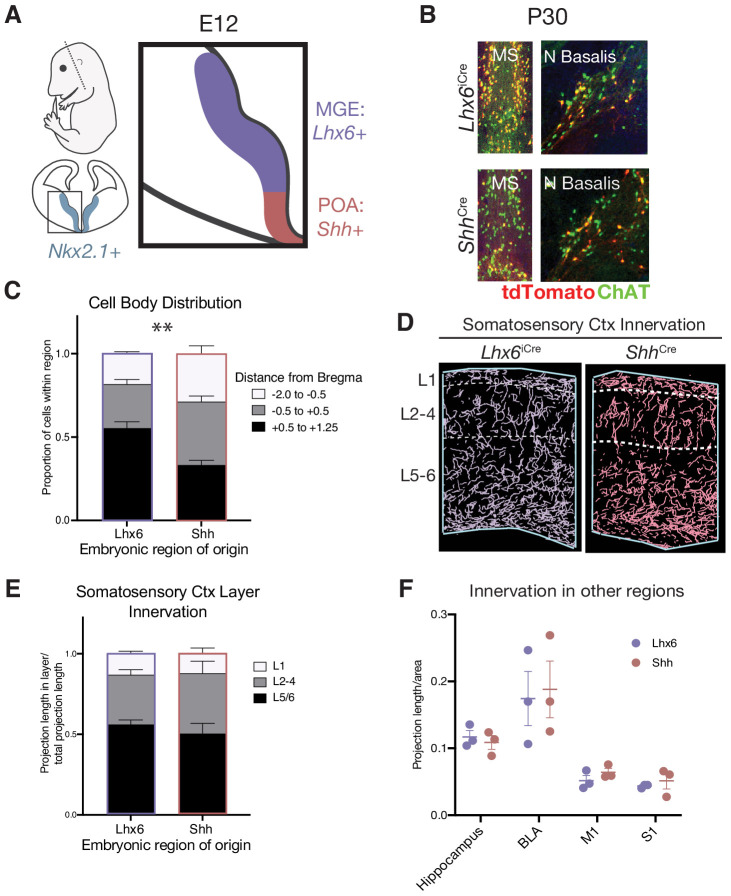
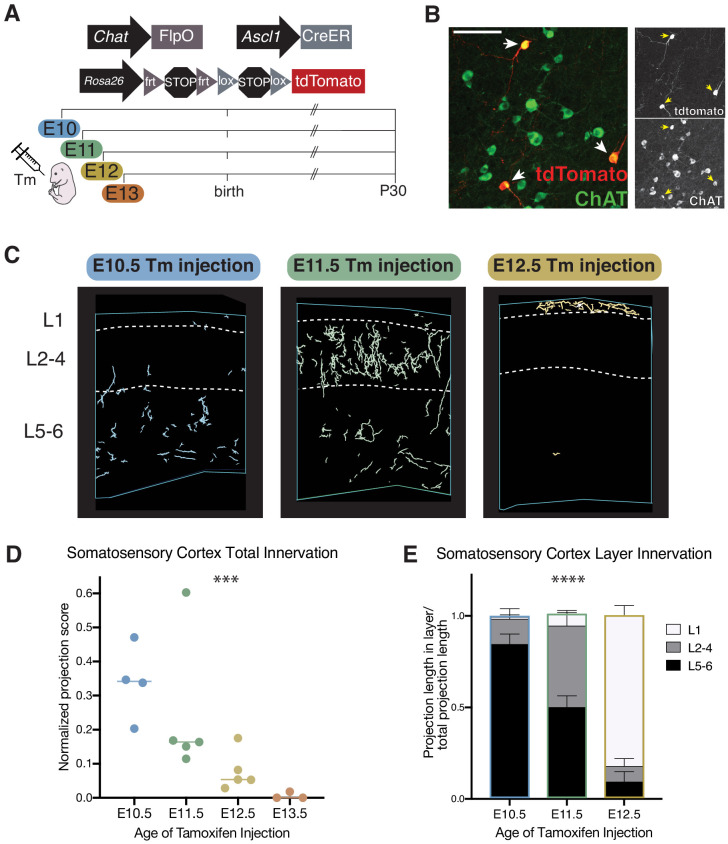
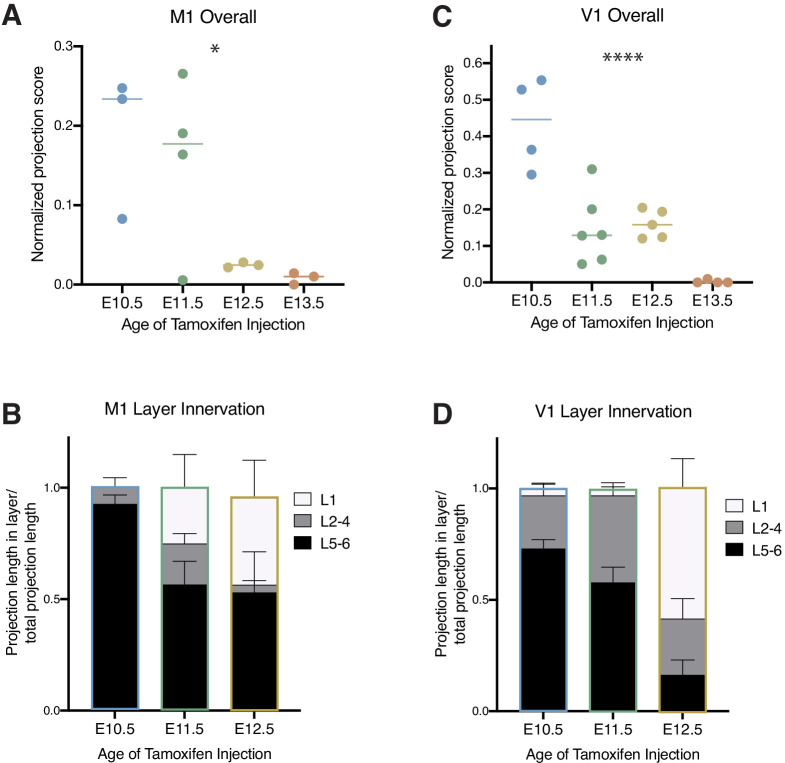
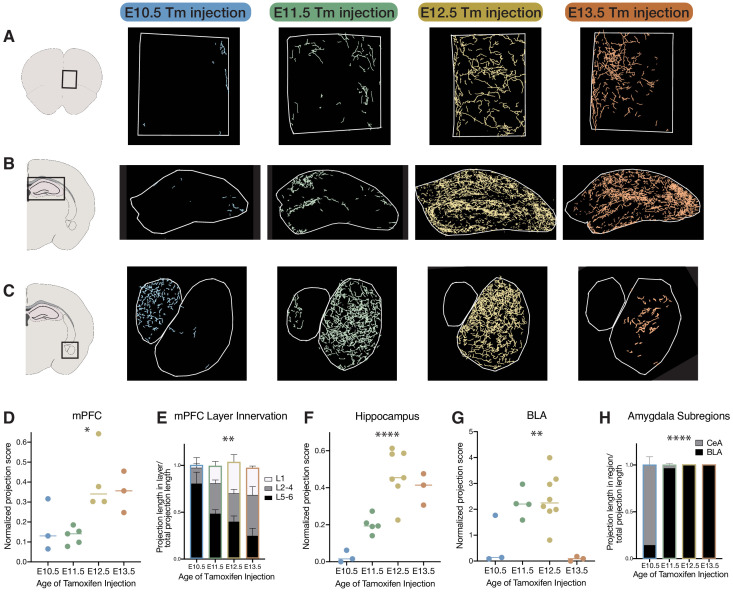
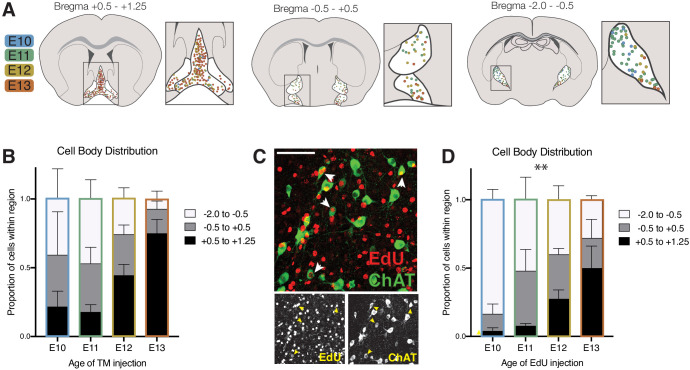
The basal forebrain cholinergic system projects broadly throughout the cortex and constitutes a critical source of neuromodulation for arousal and attention. Traditionally, this system was thought to function diffusely. However, recent studies have revealed a high degree of spatiotemporal specificity in cholinergic signaling. How the organization of cholinergic afferents confers this level of precision remains unknown. Here, using intersectional genetic fate mapping, we demonstrate that cholinergic fibers within the mouse cortex exhibit remarkable laminar and regional specificity and that this is organized in accordance with cellular birthdate. Strikingly, birthdated cholinergic projections within the cortex follow an inside-out pattern of innervation. While early born cholinergic populations target deep layers, late born ones innervate superficial laminae. We also find that birthdate predicts cholinergic innervation patterns within the amygdala, hippocampus, and prefrontal cortex. Our work reveals previously unappreciated specificity within the cholinergic system and the developmental logic by which these circuits are assembled.
基底前脑胆碱能系统广泛投射到大脑皮层,并构成觉醒和注意力的关键神经调节来源。传统上,人们认为这个系统的功能是弥散的。然而,最近的研究揭示了胆碱能信号传递具有高度的时空特异性。胆碱能传入纤维的组织如何赋予这种精确性尚不清楚。在这里,我们使用交差遗传命运映射,证明了小鼠皮层内的胆碱能纤维表现出显著的分层和区域特异性,并且这种特异性是按照细胞出生时间组织的。引人注目的是,皮层内的出生时间胆碱能投射遵循从内到外的支配模式。早期出生的胆碱能神经元投射到深层,而晚期出生的则支配浅层。我们还发现,出生时间可以预测杏仁核、海马体和前额叶皮层内的胆碱能支配模式。我们的工作揭示了胆碱能系统内以前未被重视的特异性,以及这些回路组装的发育逻辑。