Lu Di, Wang Zhizhi, Chen Zhiming, Fan Jiayang, Zhai Jianxue, Fang Duopei, Cai He, Liu Xiguang, Wu Hua, Cai Kaican
Department of Thoracic Surgery, Nanfang Hospital, Southern Medical University, Guangzhou, China.
Front Pharmacol. 2022 Mar 23;13:822615. doi: 10.3389/fphar.2022.822615. eCollection 2022.
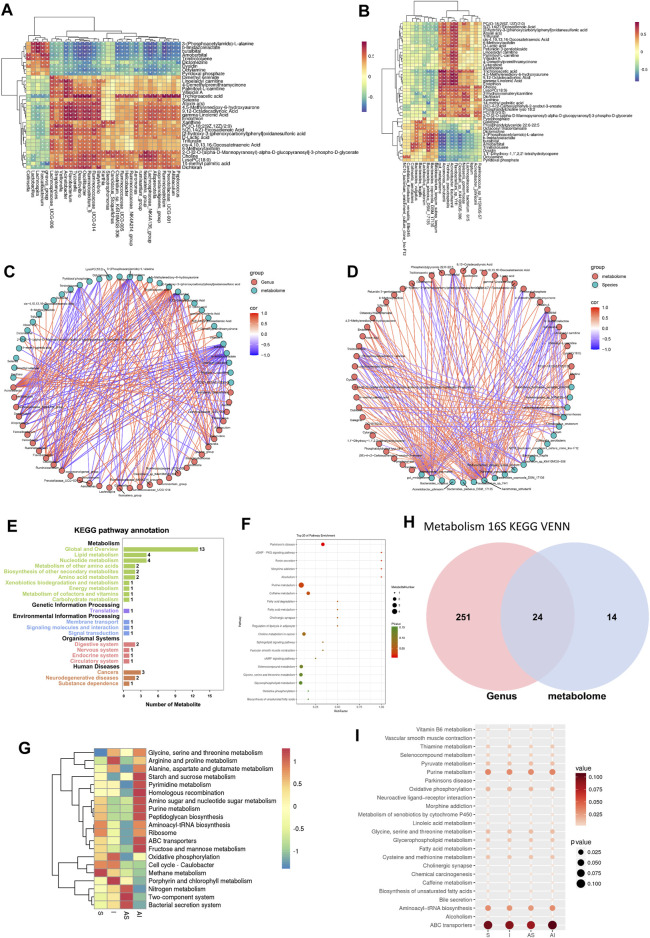
Single-lung ventilation (SLV) associated acute lung injury is similar to ischemia reperfusion (IR) injury which is usually occurred during lung surgery. Olmesartan (Olm), a novel angiotensin receptor blocker (ARB), has been reported to ameliorate organ IR injury. Several recent studies have shown that lung microbiota may be involved in pulmonary diseases, but the effect of pulmonary microbiota in SLV-induced lung injury has not been reported. This study aims to determine the mechanism of how Olm attenuates SLV induced lung injury. Our data showed that 7 days Olm treatment before modeling markedly alleviated SLV-induced lung injury by suppressing inflammation and reactive oxygen species. Bronchoalveolar lavage fluid samples from the injured side were collected for 16S rRNA gene-based sequencing analysis and 53 different bacteria at the genus and species levels were identified. Furthermore, the injured lung samples were collected for metabolomics analysis using liquid chromatography-mass spectrometry analyses to explore differential metabolites. The Kyoto Encyclopedia of Genes and Genomes (KEGG) was applied to analyze the correlation between differential metabolites and lung microbiota. A total of 38 pathways were identified according to differential metabolites and 275 relevant pathways were enriched via analyzing the microbial community, 24 pathways were both identified by analyzing either metabolites or microbiota, including pyrimidine metabolism, purine metabolism, aminoacyl-tRNA biosynthesis and ATP-binding cassette transporter. Besides classical blockage of the renin-angiotensin II system, Olm could also alleviate SLV-induced lung injury by rewiring the interaction between pulmonary microbiota and metabolites.
单肺通气(SLV)相关的急性肺损伤类似于通常在肺部手术期间发生的缺血再灌注(IR)损伤。奥美沙坦(Olm)是一种新型血管紧张素受体阻滞剂(ARB),据报道可改善器官IR损伤。最近的几项研究表明,肺微生物群可能参与肺部疾病,但肺微生物群在SLV诱导的肺损伤中的作用尚未见报道。本研究旨在确定Olm减轻SLV诱导的肺损伤的机制。我们的数据表明,建模前7天的Olm治疗通过抑制炎症和活性氧显著减轻了SLV诱导的肺损伤。收集受伤侧的支气管肺泡灌洗 fluid 样本进行基于16S rRNA基因的测序分析,在属和种水平上鉴定出53种不同的细菌。此外,收集受伤的肺样本,使用液相色谱-质谱分析进行代谢组学分析,以探索差异代谢物。应用京都基因与基因组百科全书(KEGG)分析差异代谢物与肺微生物群之间的相关性。根据差异代谢物鉴定出总共38条途径,通过分析微生物群落富集了275条相关途径,通过分析代谢物或微生物群鉴定出24条途径,包括嘧啶代谢、嘌呤代谢、氨酰-tRNA生物合成和ATP结合盒转运蛋白。除了经典的肾素-血管紧张素II系统阻断外,Olm还可以通过重新构建肺微生物群与代谢物之间的相互作用来减轻SLV诱导的肺损伤。