Instituto de Investigaciones Marinas (IIM), Consejo Superior de Investigaciones Científicas (CSIC), Vigo, Spain.
Front Immunol. 2022 Mar 24;13:863096. doi: 10.3389/fimmu.2022.863096. eCollection 2022.
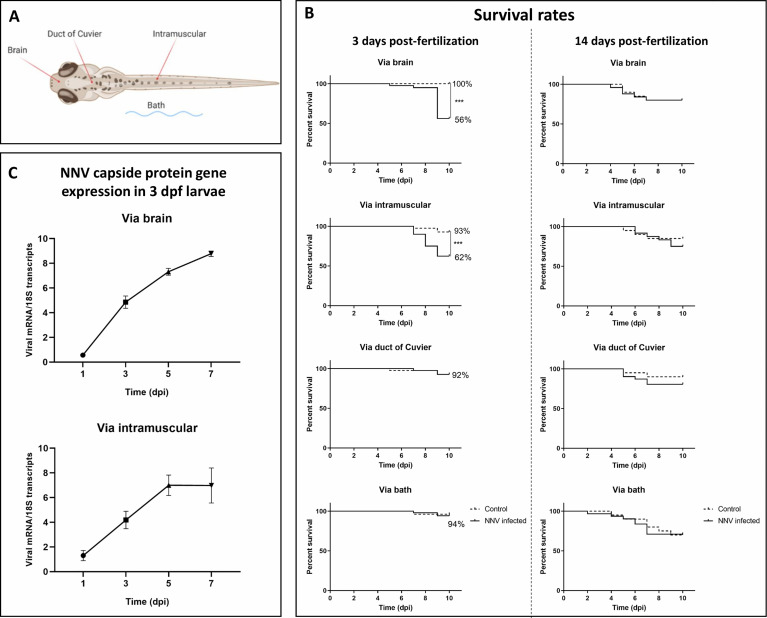
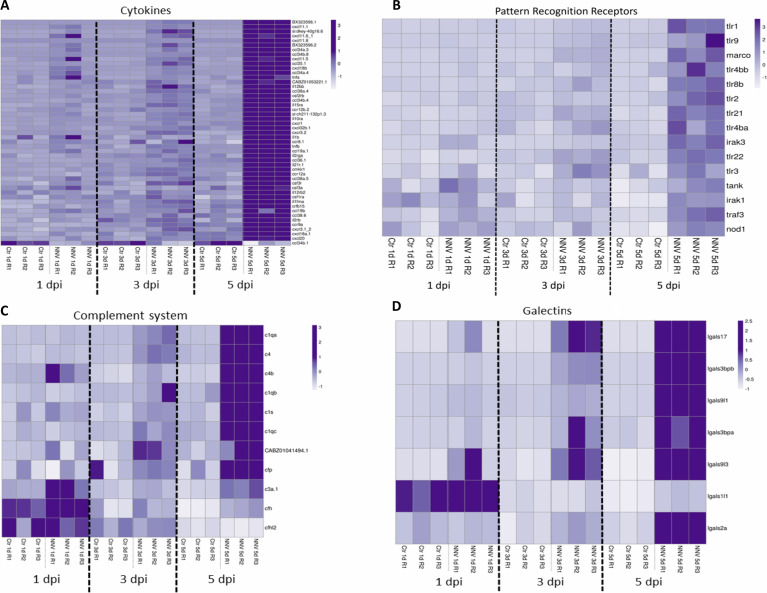
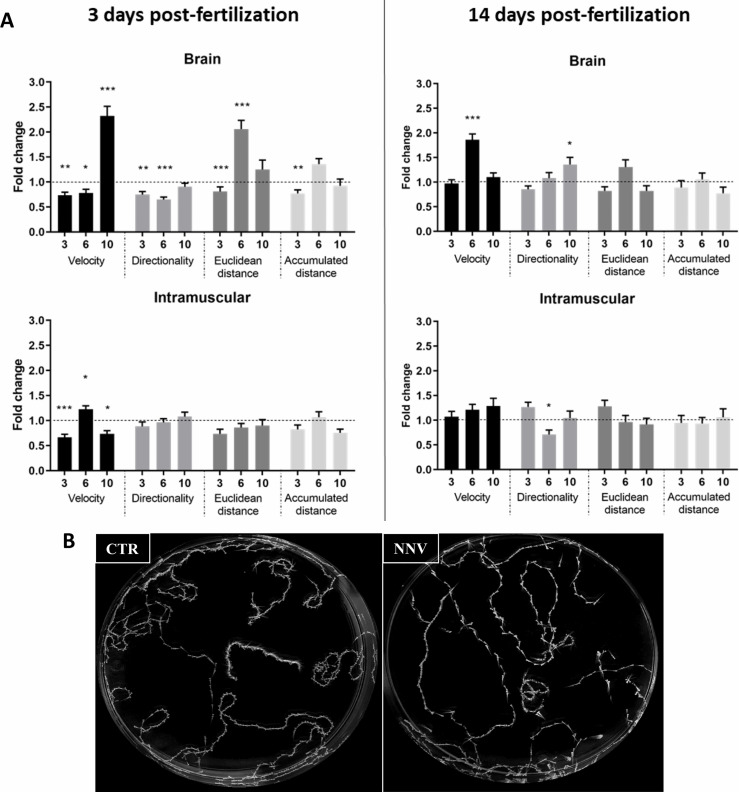
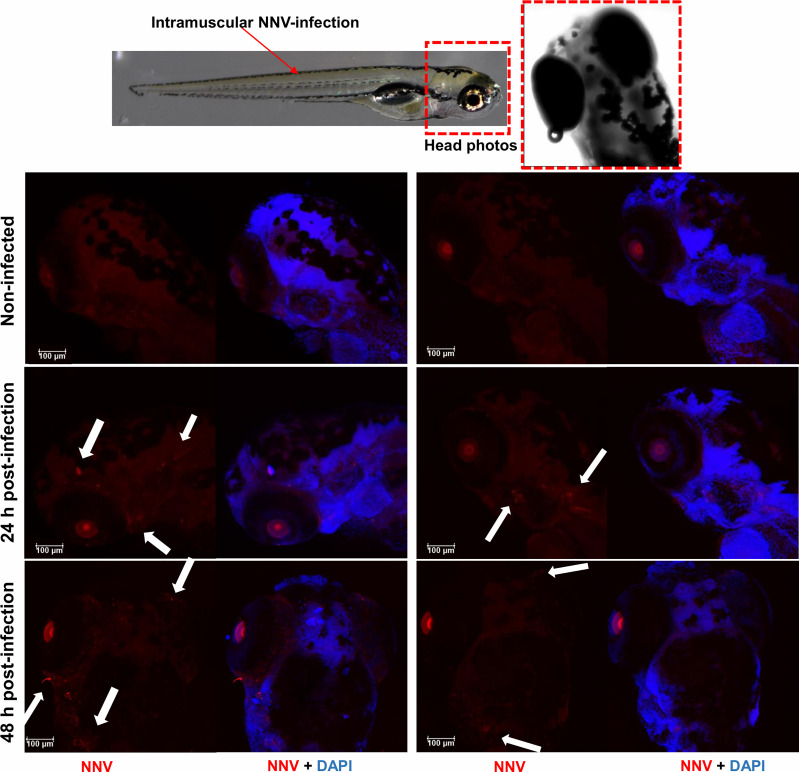
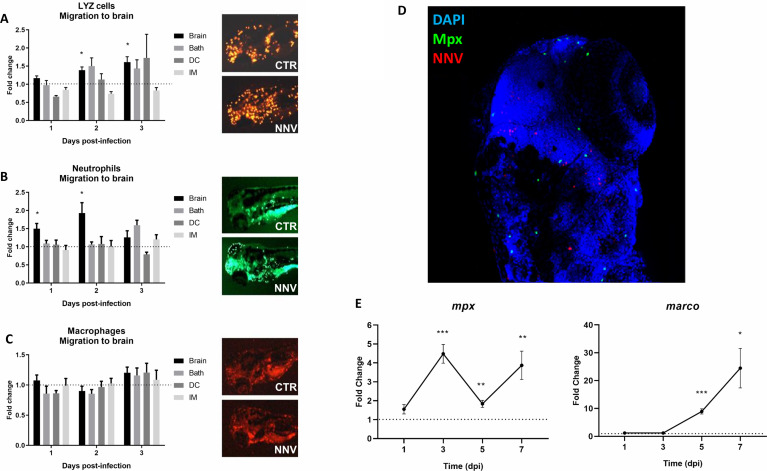
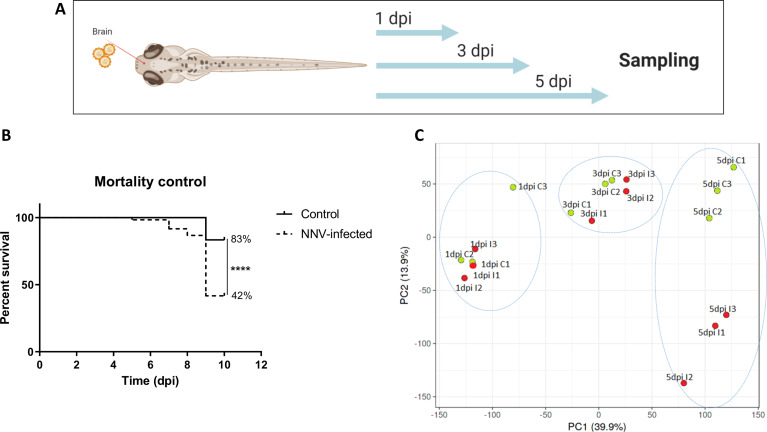
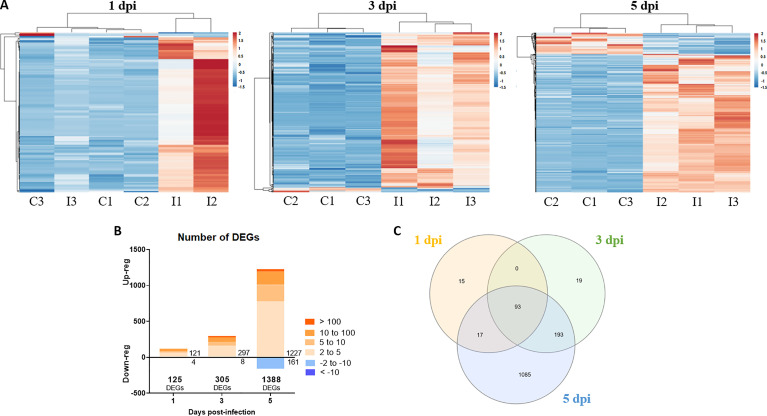
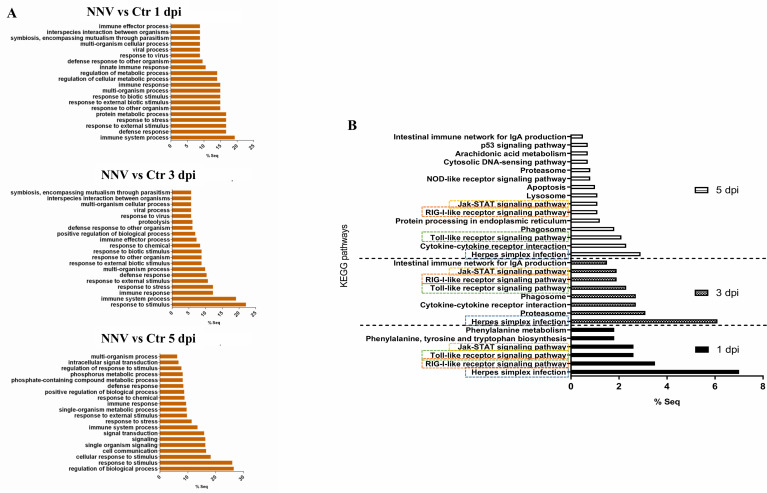
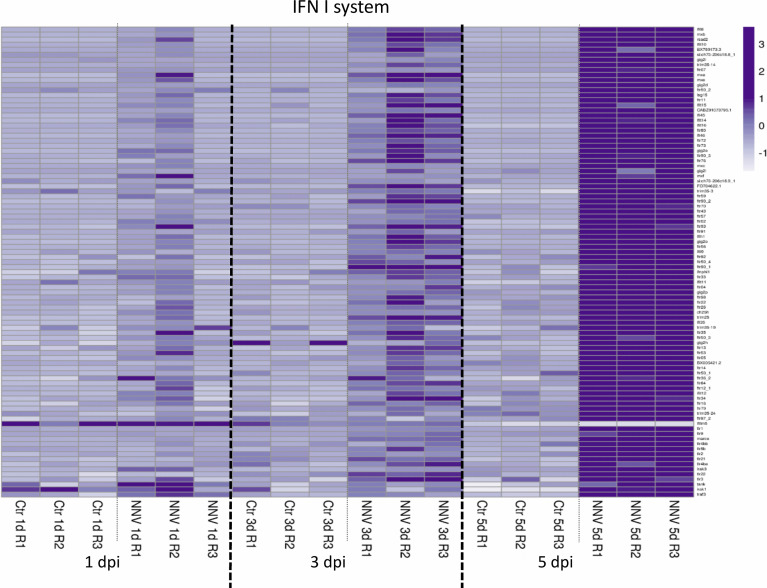
Nervous necrosis virus (NNV) is a neurotropic pathogenic virus affecting a multitude of marine and freshwater fish species that has a high economic impact on aquaculture farms worldwide. Therefore, the development of new tools and strategies aimed at reducing the mortality caused by this virus is a pivotal need. Although zebrafish is not considered a natural host for NNV, the numerous experimental advantages of this species make zebrafish an attractive model for studying different aspects of the disease caused by NNV, viral encephalopathy and retinopathy (VER). In this work, we established the best way and age to infect zebrafish larvae with NNV, obtaining significant mortalities in 3-day-postfertilization larvae when the virus was inoculated directly into the brain or by intramuscular microinjection. As occurs in naturally susceptible fish species, we confirmed that after intramuscular injection the virus was able to migrate to the central nervous system (CNS). As expected, due to the severe damage that this virus causes to the CNS, alterations in the swimming behavior of the zebrafish larvae were also observed. Taking advantage of the existence of transgenic fluorescent zebrafish lines, we were able to track the migration of different innate immune cells, mainly neutrophils, to the site of infection with NNV the brain. However, we did not observe colocalization between the viral particles and neutrophils. RNA-Seq analysis of NNV-infected and uninfected larvae at 1, 3 and 5 days postinfection (dpi) revealed a powerful modulation of the antiviral immune response, especially at 5 dpi. We found that this response was dominated by, though not restricted to, the type I interferon system, the major defence mechanism in the innate immune response against viral pathogens. Therefore, as zebrafish larvae are able to develop the main characteristic of NNV infection and respond with an efficient immune arsenal, we confirmed the suitability of zebrafish larvae for modelling VER disease and studying different aspects of NNV pathogenesis, immune response and screening of antiviral drugs.
神经坏死病毒 (NNV) 是一种嗜神经的致病性病毒,影响多种海洋和淡水鱼类,对全球水产养殖造成重大经济损失。因此,开发旨在降低这种病毒引起的死亡率的新工具和策略是当务之急。虽然斑马鱼不是 NNV 的天然宿主,但这种物种的众多实验优势使其成为研究 NNV 引起的疾病、病毒性脑脊髓炎和视网膜病变 (VER) 不同方面的有吸引力的模型。在这项工作中,我们确定了用 NNV 感染斑马鱼幼虫的最佳方式和年龄,当病毒直接接种到大脑或肌肉内微量注射时,在 3 日龄孵化后的幼虫中获得了显著的死亡率。与天然易感鱼类一样,我们证实,肌肉内注射后,病毒能够迁移到中枢神经系统 (CNS)。正如预期的那样,由于这种病毒对中枢神经系统造成的严重损害,也观察到斑马鱼幼虫游泳行为的改变。利用存在的转基因荧光斑马鱼品系,我们能够追踪不同固有免疫细胞(主要是中性粒细胞)向 NNV 感染部位的迁移——大脑。然而,我们没有观察到病毒颗粒与中性粒细胞的共定位。对感染和未感染 NNV 的幼虫在感染后 1、3 和 5 天(dpi)的 RNA-Seq 分析显示,抗病毒免疫反应被强力调控,尤其是在 5 dpi。我们发现,这种反应主要由 I 型干扰素系统主导,尽管不限于该系统,这是固有免疫反应针对病毒病原体的主要防御机制。因此,由于斑马鱼幼虫能够发展出 NNV 感染的主要特征,并以有效的免疫武器库作出反应,我们证实了斑马鱼幼虫适合模拟 VER 疾病,并研究 NNV 发病机制、免疫反应和抗病毒药物筛选的不同方面。