Université Paris-Saclay, Inserm, Commissariat à l'énergie Atomique et aux énergies Alternatives (CEA), Center for Immunology of Viral, Auto-Immune, Hematological and Bacterial Diseases [IMVA-HB/Infectious Disease Models and Innovative Therapies (IDMIT)], Fontenay-aux-Roses, France.
Life&Soft, Fontenay-aux-Roses, France.
Front Immunol. 2022 Mar 25;13:841723. doi: 10.3389/fimmu.2022.841723. eCollection 2022.
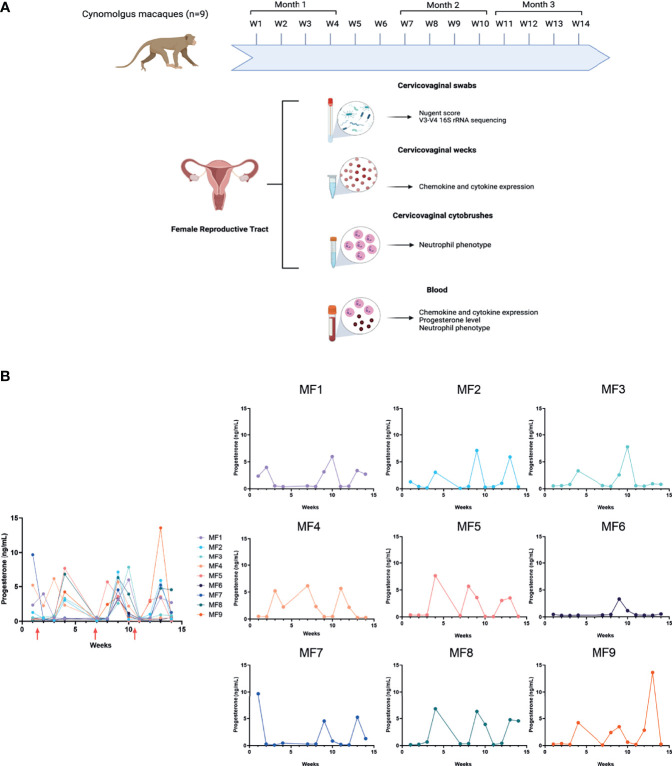
The female reproductive tract (FRT) mucosa is the first line of defense against sexually transmitted infection (STI). FRT environmental factors, including immune-cell composition and the vaginal microbiota, interact with each other to modulate susceptibility to STIs. Moreover, the menstrual cycle induces important modifications within the FRT mucosa. Cynomolgus macaques are used as a model for the pathogenesis and prophylaxis of STIs. In addition, their menstrual cycle and FRT morphology are similar to women. The cynomolgus macaque vaginal microbiota is highly diverse and similar to dysbiotic vaginal microbiota observed in women. However, the impact of the menstrual cycle on immune markers and the vaginal microbiota in female cynomolgus macaques is unknown. We conducted a longitudinal study covering three menstrual cycles in cynomolgus macaques. The evolution of the composition of the vaginal microbiota and inflammation (cytokine/chemokine profile and neutrophil phenotype) in the FRT and blood was determined throughout the menstrual cycle.
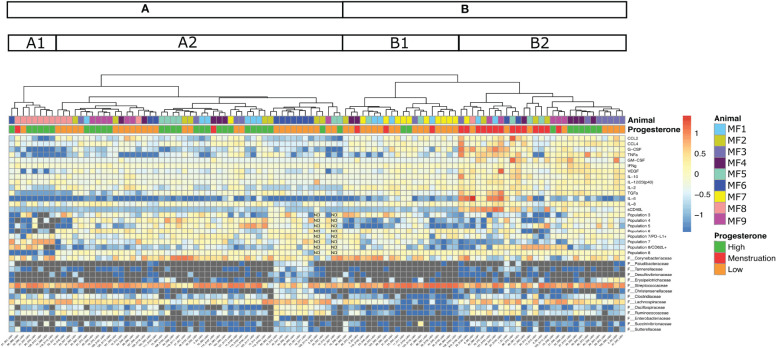
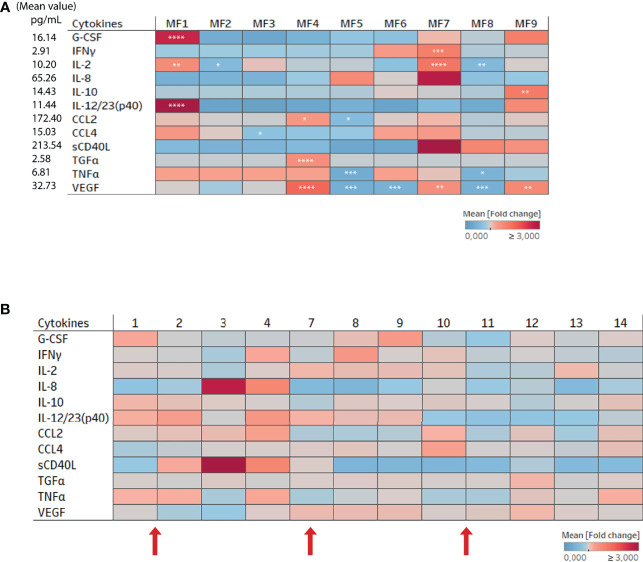
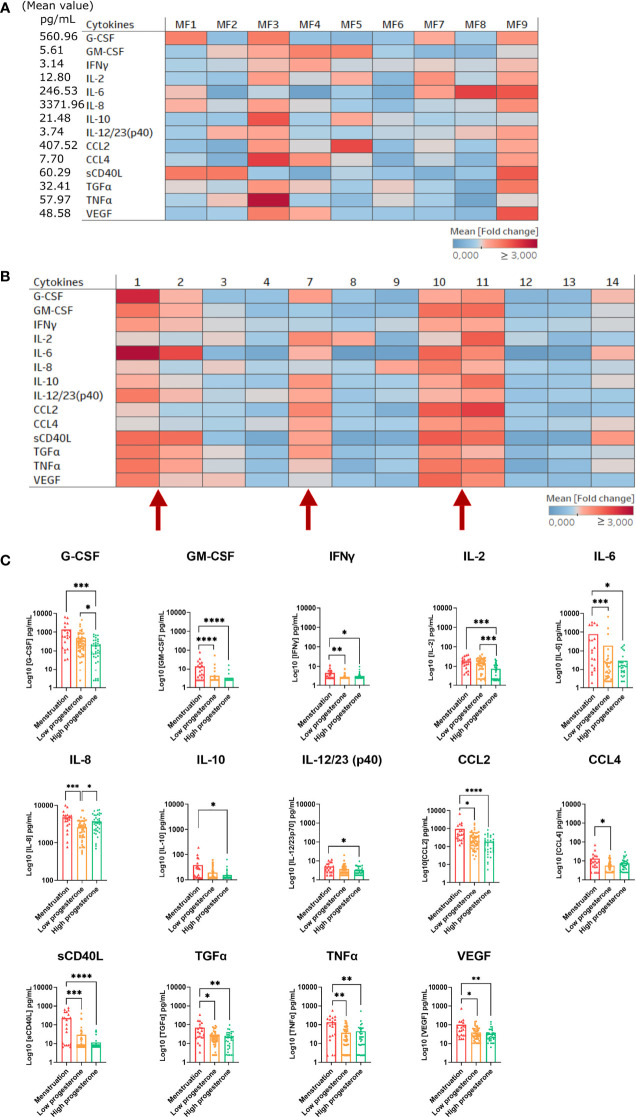
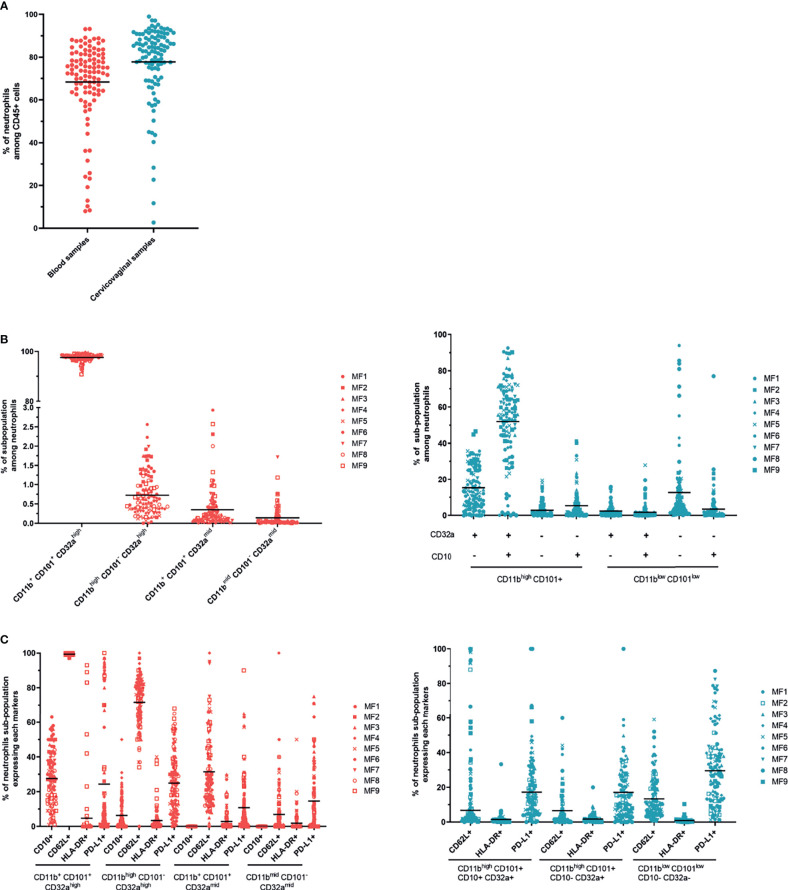
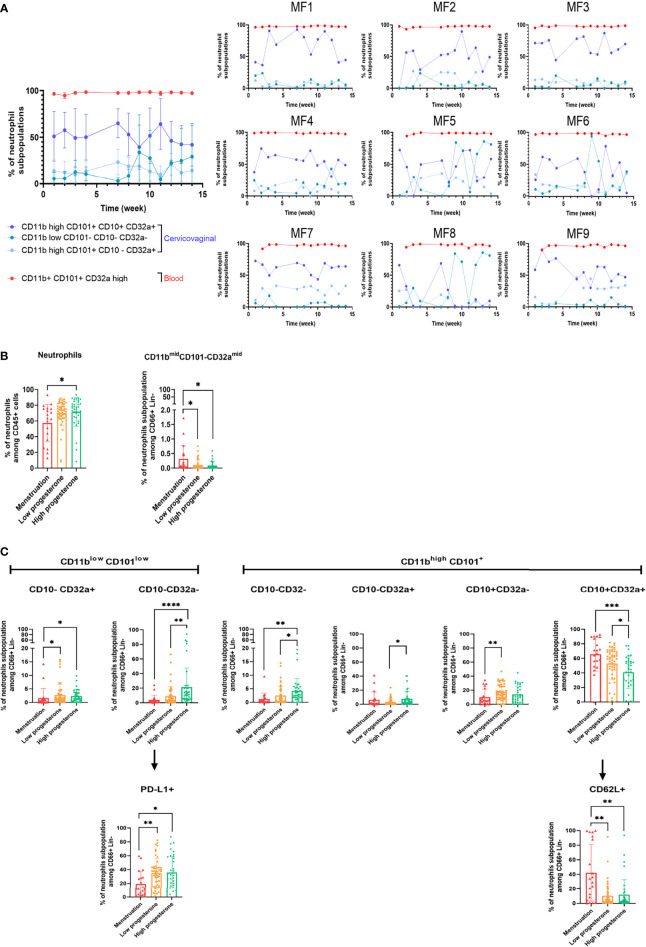
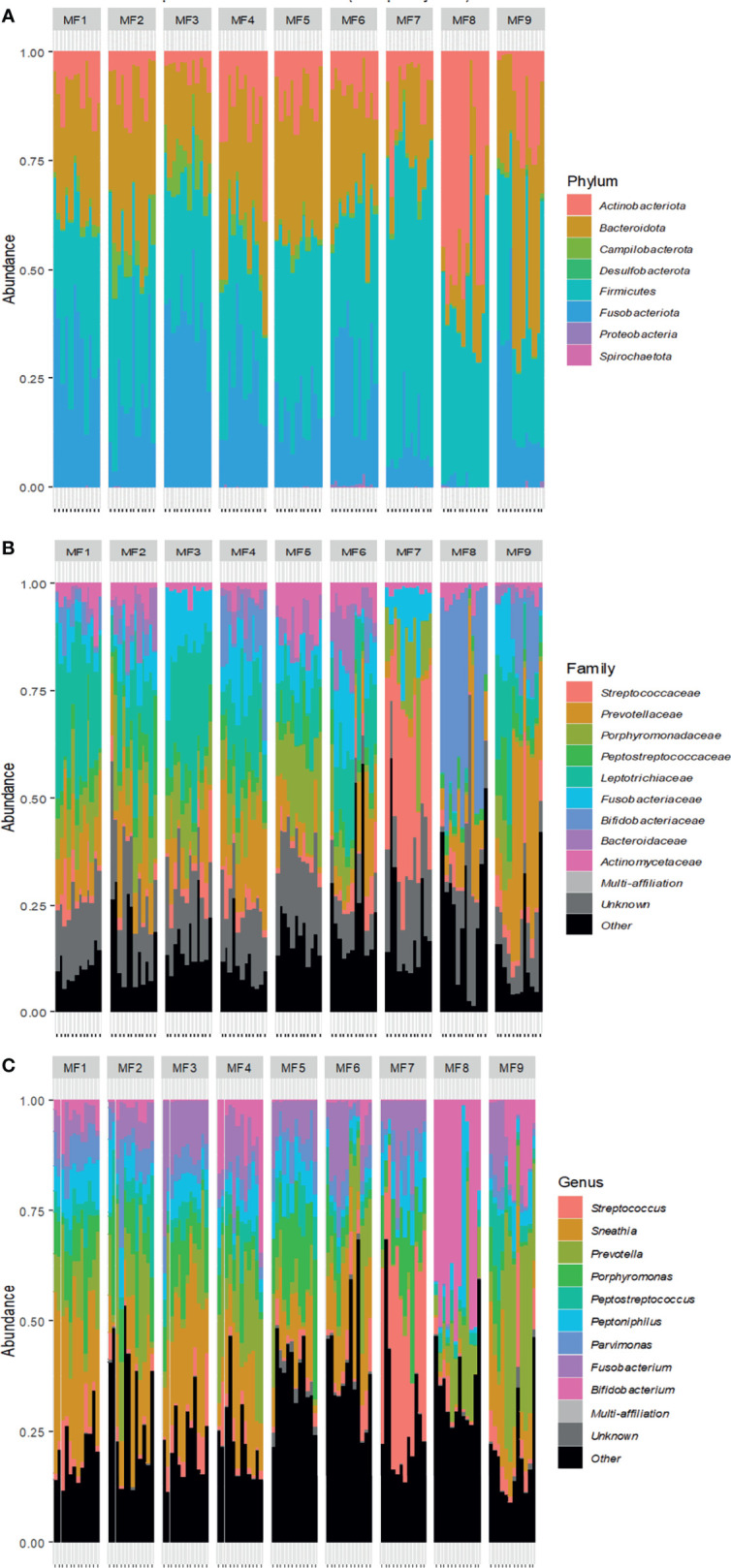
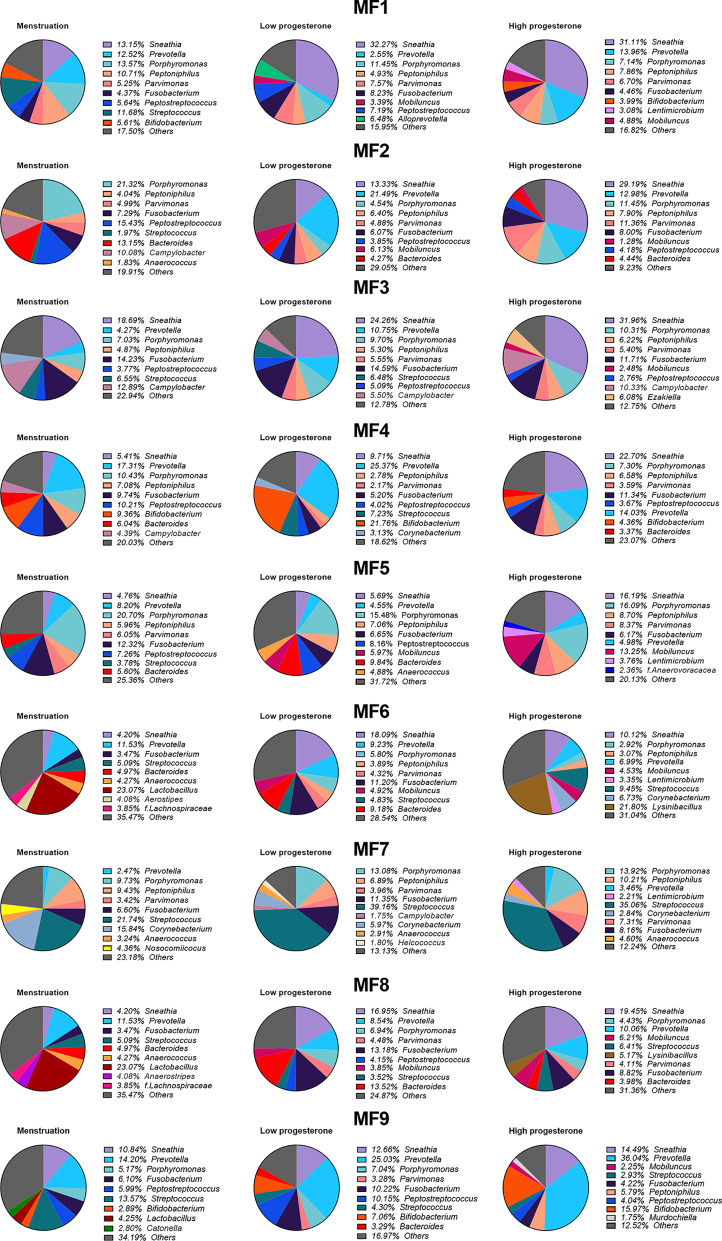
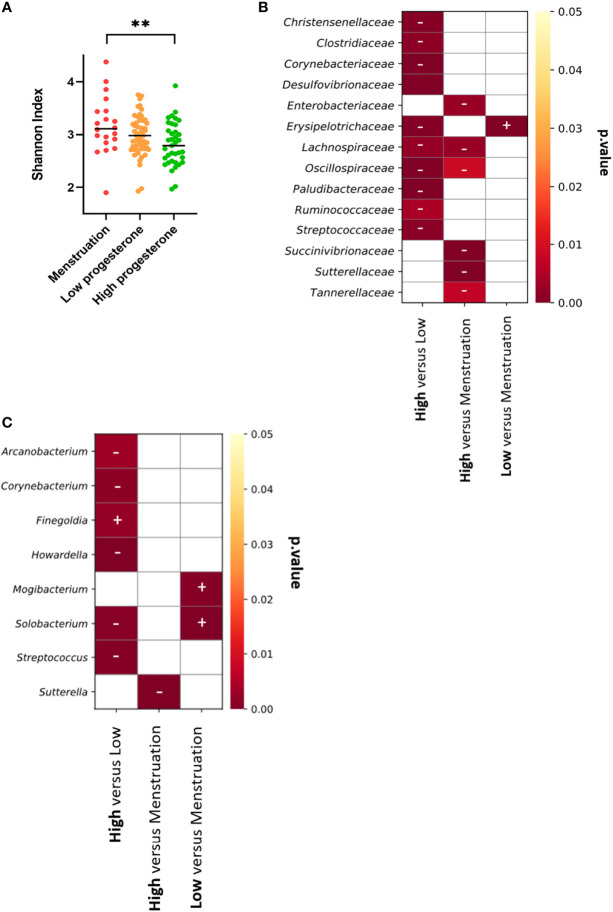
Cervicovaginal cytokine/chemokine concentrations were affected by the menstrual cycle, with a peak of production during menstruation. We observed three main cervicovaginal neutrophil subpopulations: CD11b CD101 CD10 CD32a, CD11b CD101 CD10 CD32a, and CD11b CD101 CD10 CD32a, of which the proportion varied during the menstrual cycle. During menstruation, there was an increase in the CD11b CD101 CD10 CD32a subset of neutrophils, which expressed higher levels of CD62L. Various bacterial taxa in the vaginal microbiota showed differential abundance depending on the phase of the menstrual cycle. Compilation of the factors that vary according to hormonal phase showed the clustering of samples collected during menstruation, characterized by a high concentration of cytokines and an elevated abundance of the CD11b CD101 CD10 CD32a CD62L neutrophil subpopulation.
We show a significant impact of menstruation on the local environment (cytokine production, neutrophil phenotype, and vaginal microbiota composition) in female cynomolgus macaques. Menstruation triggers increased production of cytokines, shift of the vaginal microbiota composition and the recruitment of mature/activated neutrophils from the blood to the FRT. These results support the need to monitor the menstrual cycle and a longitudinal sampling schedule for further studies in female animals and/or women focusing on the mucosal FRT environment.
女性生殖道(FRT)黏膜是抵御性传播感染(STI)的第一道防线。FRT 环境因素,包括免疫细胞组成和阴道微生物群,相互作用以调节对 STI 的易感性。此外,月经周期会导致 FRT 黏膜发生重要变化。食蟹猴被用作研究 STI 发病机制和预防的模型。此外,它们的月经周期和 FRT 形态与女性相似。食蟹猴阴道微生物群高度多样化,类似于女性中观察到的失调阴道微生物群。然而,月经周期对雌性食蟹猴免疫标志物和阴道微生物群的影响尚不清楚。我们进行了一项纵向研究,涵盖了食蟹猴的三个月经周期。在整个月经周期中,确定了阴道微生物群和 FRT 及血液中的炎症(细胞因子/趋化因子谱和中性粒细胞表型)组成的演变。
宫颈阴道细胞因子/趋化因子浓度受月经周期影响,在月经期间达到高峰。我们观察到三种主要的宫颈阴道中性粒细胞亚群:CD11b CD101 CD10 CD32a、CD11b CD101 CD10 CD32a 和 CD11b CD101 CD10 CD32a,其中比例在月经周期中有所变化。在月经期间,CD11b CD101 CD10 CD32a 中性粒细胞亚群增加,该亚群表达更高水平的 CD62L。阴道微生物群中的各种细菌类群根据月经周期表现出不同的丰度。根据激素阶段变化的因素的编译显示,在月经期间收集的样本聚类,其特征是细胞因子浓度高,CD11b CD101 CD10 CD32a CD62L 中性粒细胞亚群丰度增加。
我们表明,月经对雌性食蟹猴的局部环境(细胞因子产生、中性粒细胞表型和阴道微生物群组成)有重大影响。月经会引发细胞因子产生增加、阴道微生物群组成变化以及成熟/激活的中性粒细胞从血液募集到 FRT。这些结果支持需要监测月经周期和进行纵向采样计划,以进一步研究女性动物和/或女性的黏膜 FRT 环境。