Liu Zhenhao, Zhang Siwen, Li Hong, Guo Jiaojiao, Wu Dan, Zhou Wen, Xie Lu
Department of Hematology, Xiangya Hospital, Central South University, Changsha, China.
Key Laboratory of Carcinogenesis and Cancer Invasion, Ministry of Education, Key Laboratory of Carcinogenesis, National Health and Family Planning Commission, Cancer Research Institute, School of Basic Medical Science, Central South University, Changsha, China.
Front Genet. 2022 Mar 23;13:844604. doi: 10.3389/fgene.2022.844604. eCollection 2022.
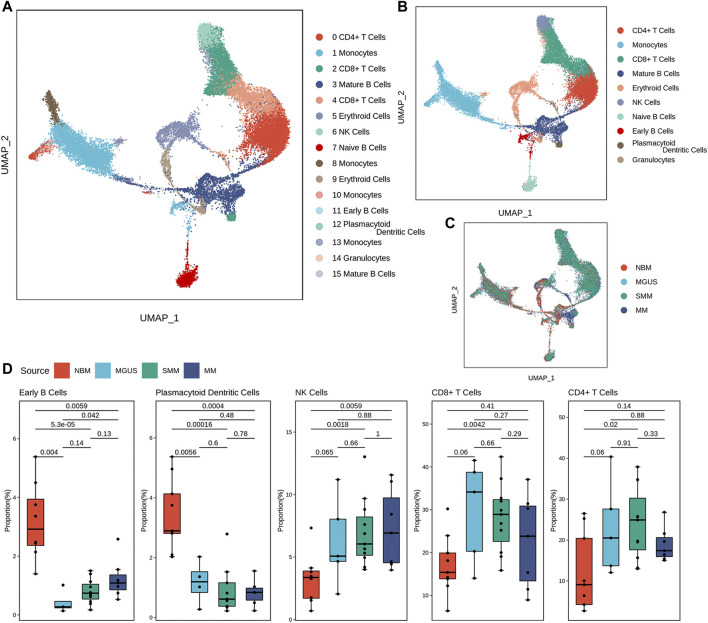
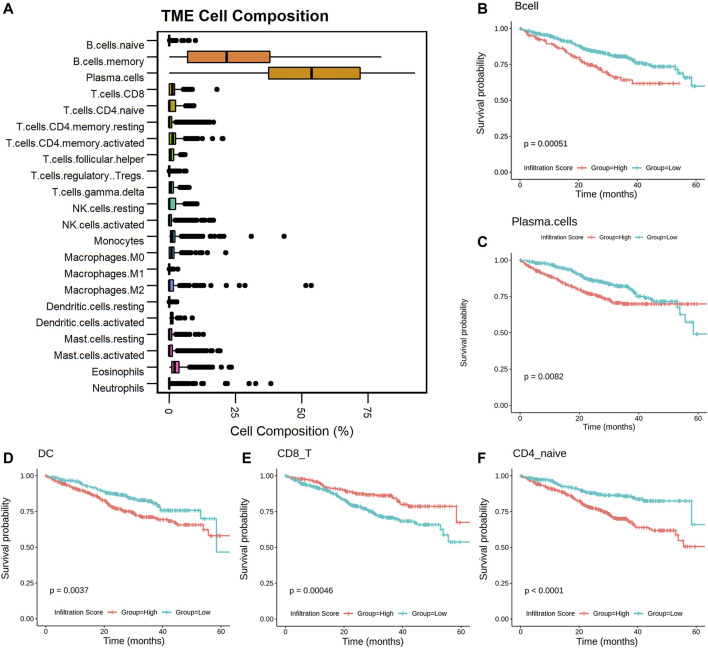
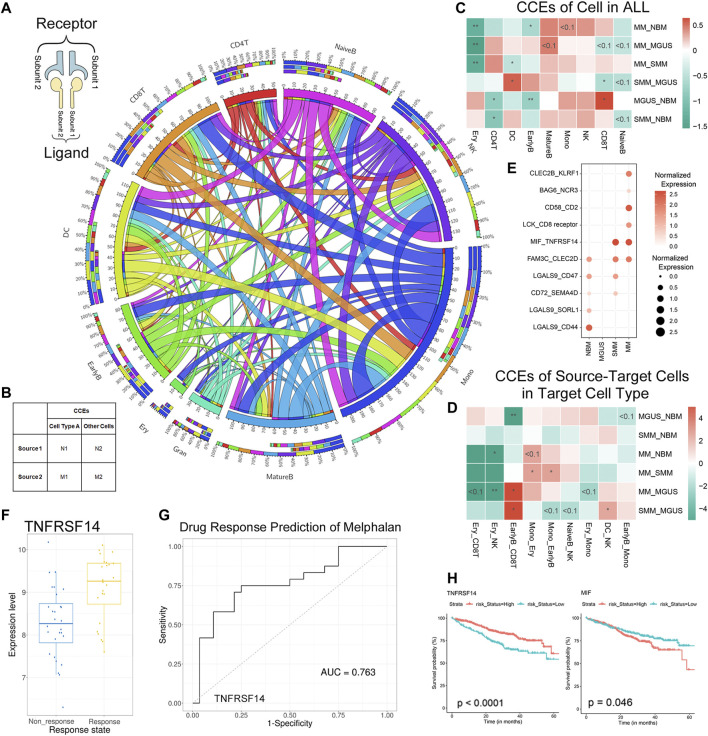
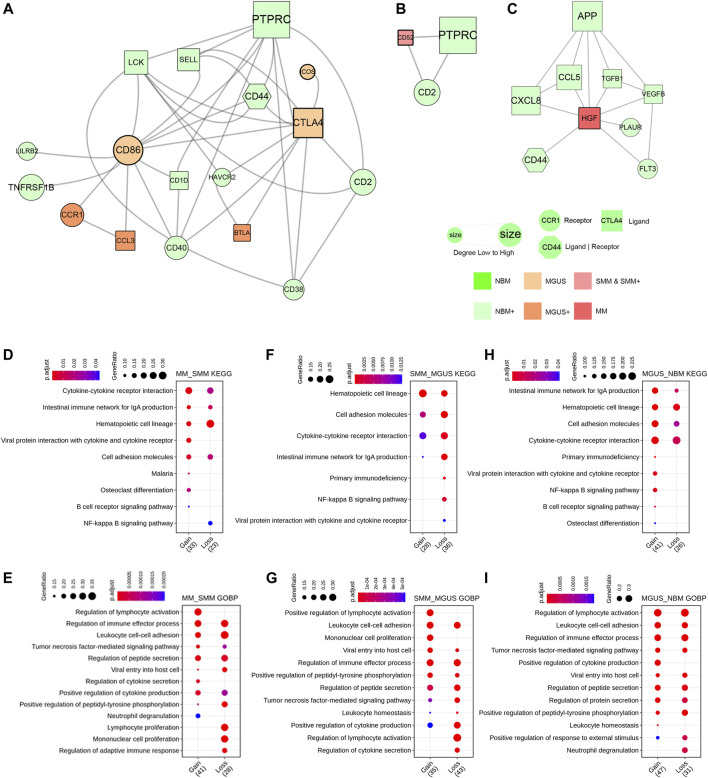
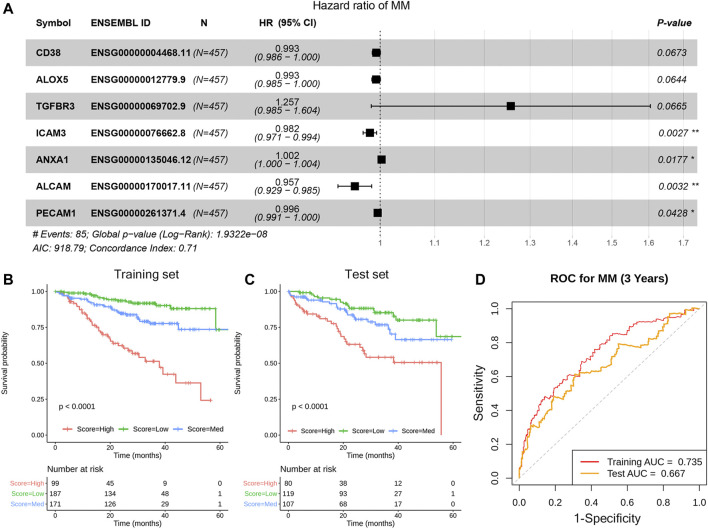
Cell-cell interaction event (CCEs) dysregulation may relate to the heterogeneity of the tumor microenvironment (TME) and would affect therapeutic responses and clinical outcomes. To reveal the alteration of the immune microenvironment in bone marrow from a healthy state to multiple myeloma (MM), scRNA-seq data of the four states, including healthy state normal bone marrow (NBM) and three disease states (MGUS, SMM, and MM), were collected for analysis. With immune microenvironment reconstruction, the cell types, including NK cells, CD8 T cells, and CD4 T cells, with a higher percentage in disease states were associated with prognosis of MM patients. Furthermore, CCEs were annotated and dysregulated CCEs were identified. The number of CCEs were significantly changed between disease states and NBM. The dysregulated CCEs participated in regulation of immune cell proliferation and immune response, such as MIF-TNFRSF14 interacted between early B cells and CD8 T cells. Moreover, CCE genes related to drug response, including bortezomib and melphalan, provide candidate therapeutic markers for MM treatment. Furthermore, MM patients were separated into three risk groups based on the CCE prognostic signature. Immunoregulation-related differentiation and activation of CD4 T cells corresponded to the progression status with moderate risk. These results provide a comprehensive understanding of the critical role of intercellular communication in the immune microenvironment over the evolution of premalignant MM, which is related to the tumorigenesis and progression of MM, which moreover, suggests a way of potential target selection for clinical intervention.
细胞-细胞相互作用事件(CCEs)失调可能与肿瘤微环境(TME)的异质性有关,并会影响治疗反应和临床结果。为了揭示从健康状态到多发性骨髓瘤(MM)骨髓中免疫微环境的变化,收集了包括健康状态正常骨髓(NBM)和三种疾病状态(MGUS、SMM和MM)在内的四种状态的单细胞RNA测序(scRNA-seq)数据进行分析。通过免疫微环境重建,疾病状态下百分比更高的细胞类型,包括自然杀伤(NK)细胞、CD8 T细胞和CD4 T细胞,与MM患者的预后相关。此外,对CCEs进行了注释并鉴定出失调的CCEs。疾病状态和NBM之间CCEs的数量有显著变化。失调CCEs参与免疫细胞增殖和免疫反应的调节,如早期B细胞和CD8 T细胞之间的巨噬细胞移动抑制因子(MIF)-肿瘤坏死因子受体超家族成员14(TNFRSF14)相互作用。此外,与药物反应相关的CCE基因,包括硼替佐米和马法兰,为MM治疗提供了候选治疗标志物。此外,根据CCE预后特征将MM患者分为三个风险组。CD4 T细胞的免疫调节相关分化和激活与中度风险的进展状态相对应。这些结果全面了解了细胞间通讯在癌前MM演变过程中免疫微环境中的关键作用,这与MM的肿瘤发生和进展相关,此外,还提出了一种临床干预潜在靶点选择的方法。