Zhang Zexin, Li Jing, Lu Ke, Wu Wenfeng, Huang Ziyi, Zhang Chi, Guo Wei, Li Jiayin, Lin Lizhu
The First Clinical Medical College of Guangzhou University of Traditional Chinese Medicine, Guangzhou, China.
The First Affiliated Hospital of Hunan University of Traditional Chinese Medicine, Changsha, China.
J Oncol. 2022 Apr 1;2022:3657349. doi: 10.1155/2022/3657349. eCollection 2022.
Non-small-cell lung cancer (NSCLC) is a major type of lung carcinoma that threatens the health and life of humans worldwide. We aimed to establish an n6-methyladenosine (m6A)-relevant ncRNA model to effectively evaluate the outcome of patients.
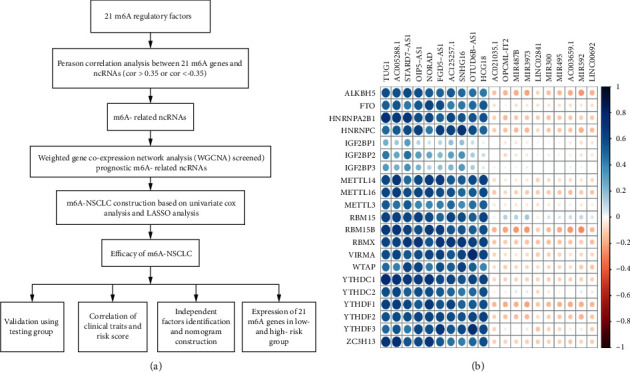
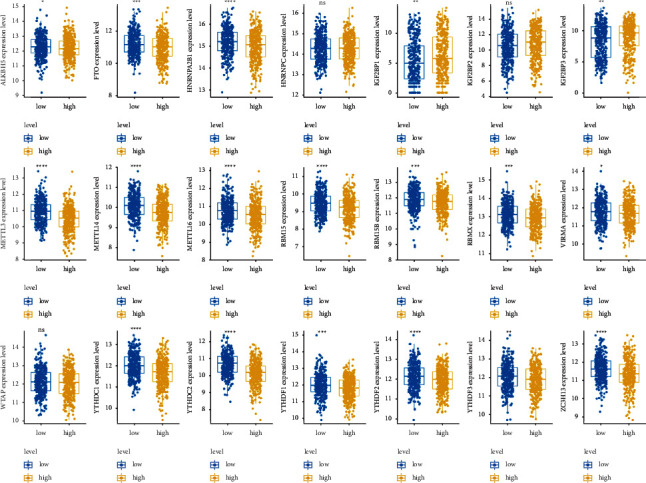
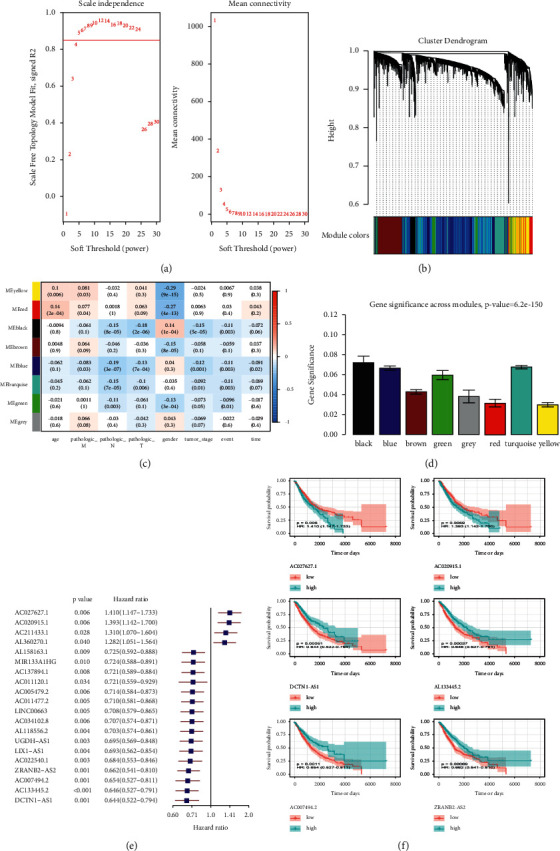
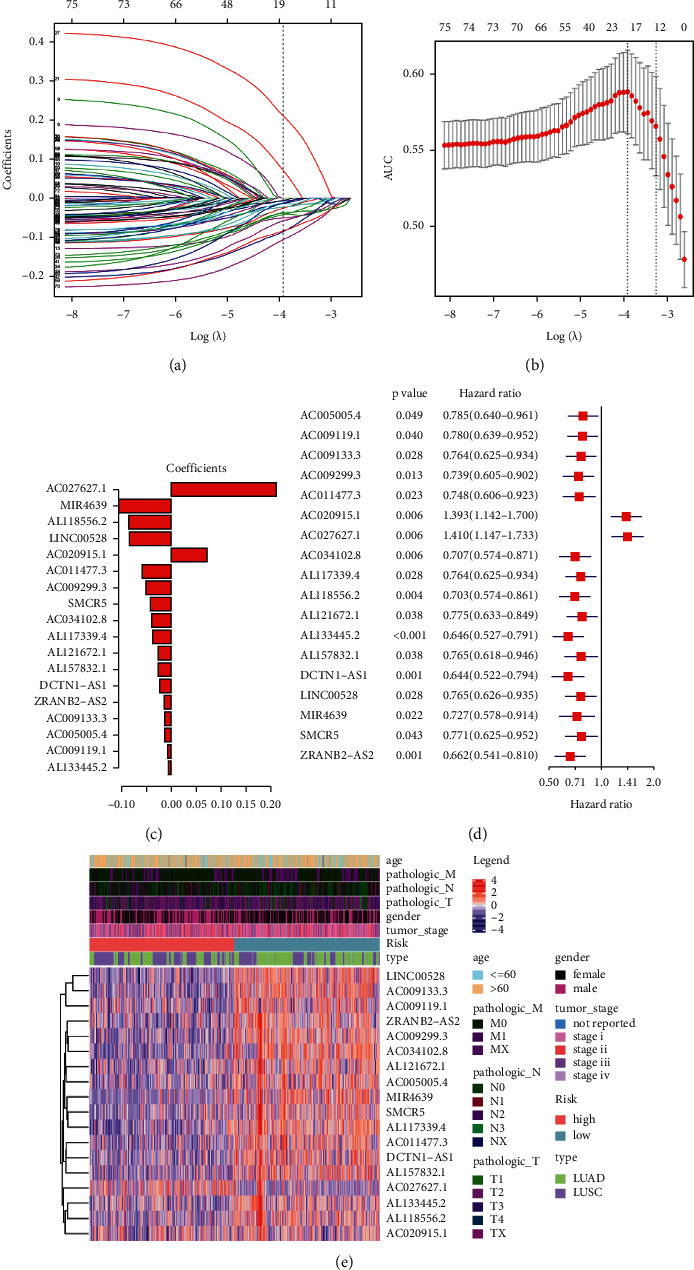
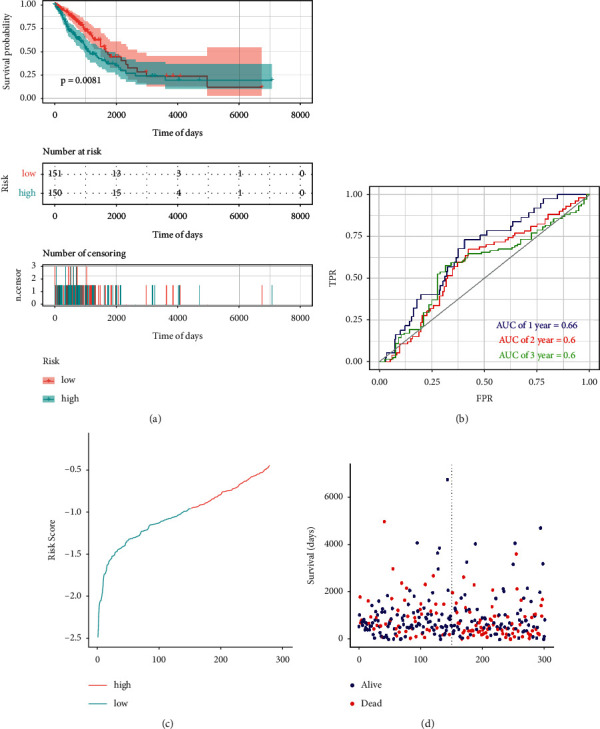
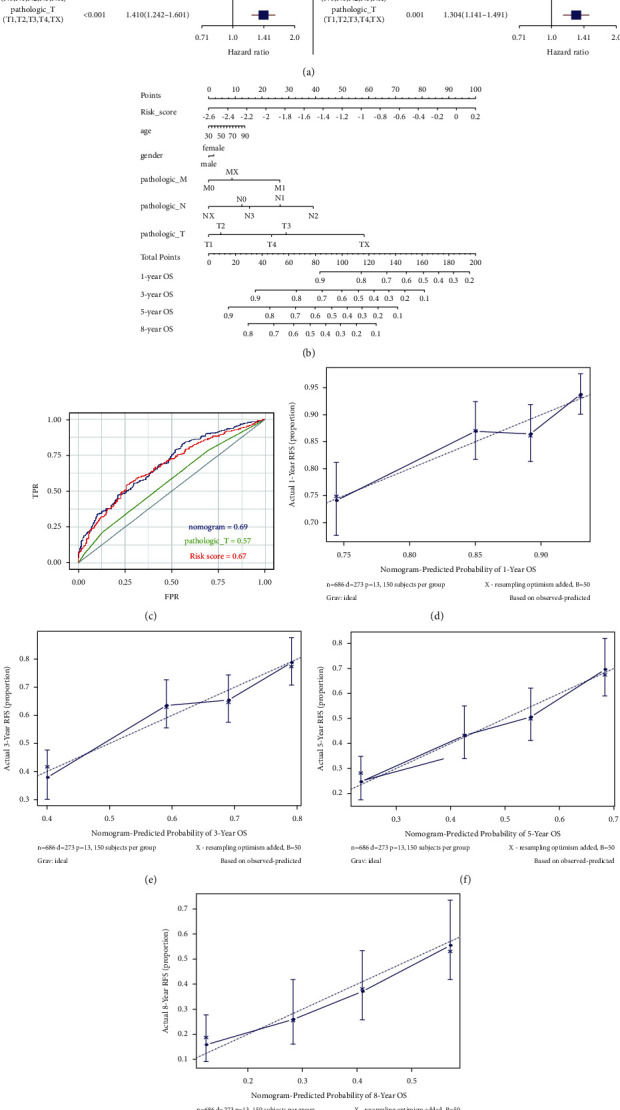
m6A-Related ncRNAs (lncRNA/miRNA) were acquired from the UCSC Xena database. Pearson's correlation analysis among 21 m6A regulatory factors and ncRNAs were implemented to explore m6A-relevant ncRNAs. Weighted gene co-expression network analysis (WGCNA) identified hub modules of gene associated with prognosis of NSCLC patients. Univariate Cox regression analysis identified 80 m6A-related ncRNAs. Least absolute shrinkage and selector operation (LASSO) filtered out redundant factors and established a risk score model (m6A-NSCLC) in the TCGA training data set. Validation of prognostic ability was performed using testing data sets from the TCGA database. We also conducted a correlation analysis among the risk score and different clinical traits. Both univariate and multivariate Cox analyses were combined to verify prognostic factors which have independent value, and a nomogram on the basis of m6A-NSCLC risk scores and clinical traits was constructed to assess the prognosis of patients. In addition, we screened differentially expressed genes (DEGs) based on different risk scores and performed enrichment analysis. Finally, 21 m6A regulators were detected to be differentially expressed between two risk groups.
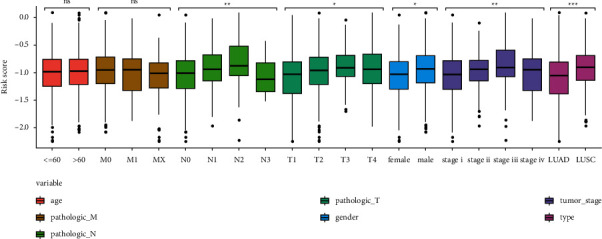
An m6A-NSCLC risk model with 18 ncRNAs was constructed. By comparison with low-risk patients, high-risk score patients had poor prognosis. The distribution of risk score in the tumor size and extent (), number of near lymph nodes (), clinical stage, sex, and tumor types was significantly different. The risk score could act as an independent prognostic factor with the nomogram assessing overall survival in NSCLC. DEGs inherent to cell movement and immune regulation were involved in NSCLC development. Furthermore, 18 of 21 m6A regulators were differentially expressed, implying their correlation to survival prognosis.
The m6A-NSCLC could be effectively utilized for evaluation of prognosis of patients.
非小细胞肺癌(NSCLC)是一种主要的肺癌类型,威胁着全球人类的健康和生命。我们旨在建立一个与N6-甲基腺苷(m6A)相关的非编码RNA模型,以有效评估患者的预后。
从UCSC Xena数据库中获取与m6A相关的非编码RNA(lncRNA/miRNA)。对21个m6A调控因子与非编码RNA进行Pearson相关性分析,以探索与m6A相关的非编码RNA。加权基因共表达网络分析(WGCNA)确定了与NSCLC患者预后相关的基因枢纽模块。单因素Cox回归分析确定了80个与m6A相关的非编码RNA。最小绝对收缩和选择算子(LASSO)筛选出冗余因素,并在TCGA训练数据集中建立了风险评分模型(m6A-NSCLC)。使用来自TCGA数据库的测试数据集对预后能力进行验证。我们还对风险评分与不同临床特征进行了相关性分析。结合单因素和多因素Cox分析,验证具有独立价值的预后因素,并构建基于m6A-NSCLC风险评分和临床特征的列线图,以评估患者的预后。此外,我们根据不同的风险评分筛选出差异表达基因(DEG)并进行富集分析。最后,检测到21个m6A调节因子在两个风险组之间存在差异表达。
构建了一个包含18个非编码RNA的m6A-NSCLC风险模型。与低风险患者相比,高风险评分患者的预后较差。风险评分在肿瘤大小和范围、近淋巴结数量、临床分期、性别和肿瘤类型中的分布存在显著差异。风险评分可作为独立的预后因素,列线图可评估NSCLC患者的总生存期。与细胞运动和免疫调节相关的DEG参与了NSCLC的发生发展。此外,21个m6A调节因子中有18个存在差异表达,这表明它们与生存预后相关。
m6A-NSCLC可有效用于评估患者的预后。