Shen Yi-Wei, Yang Yi, Liu Hao, Wang Bei-Yu, Ding Chen, Meng Yang, Rong Xin, Hong Ying
Department of Orthopedics, Orthopedic Research Institute, West China Hospital, Sichuan University, Chengdu, China.
Department of Operation Room and Anesthesia Center, West China Hospital, Sichuan University, Chengdu, China.
Global Spine J. 2024 Jan;14(1):56-66. doi: 10.1177/21925682221094265. Epub 2022 Apr 9.
Retrospective cohort study.
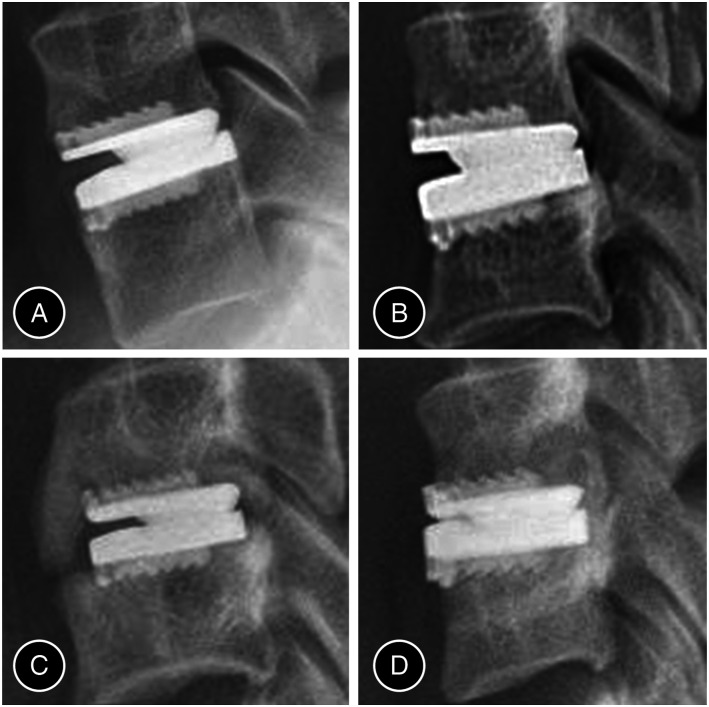
This study aimed to explore the effect of preoperative cervical spondylosis on the heterotopic ossification (HO) formation in different locations after cervical disc replacement (CDR).
The degree of preoperative cervical spondylosis was evaluated radiologically, including the intervertebral disc, uncovertebral joints, facet joints and ligaments. The effects of cervical spondylosis on the HO formation after CDR were analyzed according to the location of HO. Multivariate logistic regression was performed to identify the independent factors.
149 patients with a total of 196 arthroplasty segments were involved in this study. HO, anterior HO (AHO), and posterior HO (PHO) developed in 59.69%, 22.96%, and 41.84% levels, respectively. The significant factors in univariate analysis for PHO after CDR included the disc height loss, anterior osteophytes, preoperative uncovertebral joint osteophytes and facet joint degeneration. The incidence of adjacent segment degeneration (ASD) was significantly higher in the PHO group compared to that without PHO at the last follow-up ( = .003). The disc height loss in high-grade HO was significantly more than that in low-grade group ( = .039). Multivariate analysis identified disc height loss was the only independent factor for PHO ( = .009). No significant degenerative factors related to the formation of AHO were found.
Preoperative cervical spondylosis predominantly affected the HO formation in the posterior disc space after CDR. The disc height loss was an independent risk factor for PHO formation. Rigorous criteria for the extent of preoperative disc height loss should be used when selecting appropriate candidates for CDR.
回顾性队列研究。
本研究旨在探讨术前颈椎病对颈椎间盘置换术(CDR)后不同部位异位骨化(HO)形成的影响。
通过影像学评估术前颈椎病的程度,包括椎间盘、钩椎关节、小关节和韧带。根据HO的部位分析颈椎病对CDR后HO形成的影响。进行多因素逻辑回归分析以确定独立因素。
本研究纳入149例患者,共196个关节置换节段。HO、前路HO(AHO)和后路HO(PHO)的发生水平分别为59.69%、22.96%和41.84%。CDR后PHO单因素分析的显著因素包括椎间盘高度丢失、前方骨赘、术前钩椎关节骨赘和小关节退变。在末次随访时,PHO组相邻节段退变(ASD)的发生率显著高于无PHO组(P = 0.003)。高级别HO的椎间盘高度丢失显著多于低级别组(P = 0.039)。多因素分析确定椎间盘高度丢失是PHO的唯一独立因素(P = 0.009)。未发现与AHO形成相关的显著退变因素。
术前颈椎病主要影响CDR后椎间盘后间隙的HO形成。椎间盘高度丢失是PHO形成的独立危险因素。在为CDR选择合适的候选者时,应使用严格的术前椎间盘高度丢失程度标准。