Beijing Key Laboratory for Forest Pest Control, College of Forestry, Beijing Forestry University, Beijing, China.
United States Department of Agriculture, Agricultural Research Service, Salinas, California, USA.
Microbiol Spectr. 2022 Apr 27;10(2):e0258121. doi: 10.1128/spectrum.02581-21. Epub 2022 Apr 11.
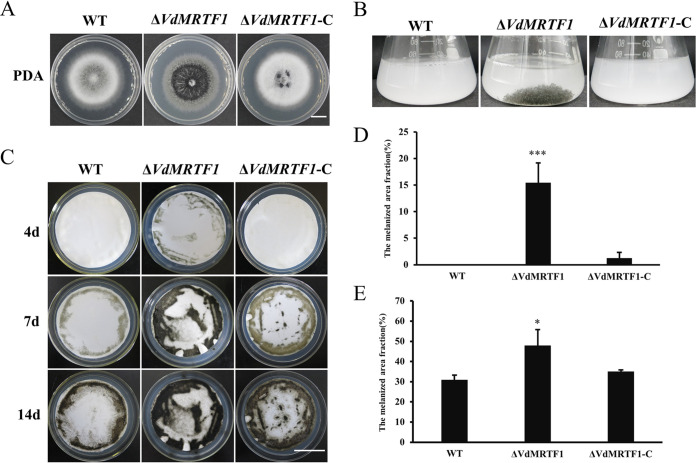
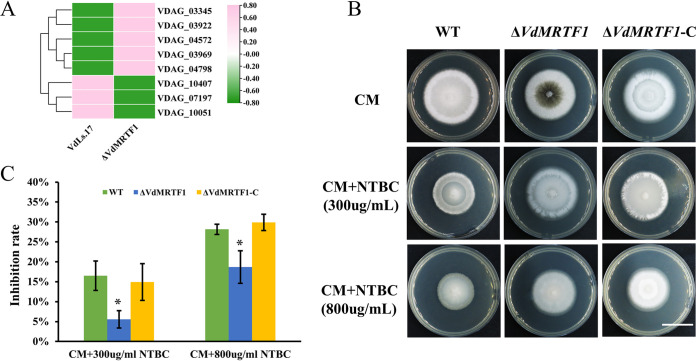
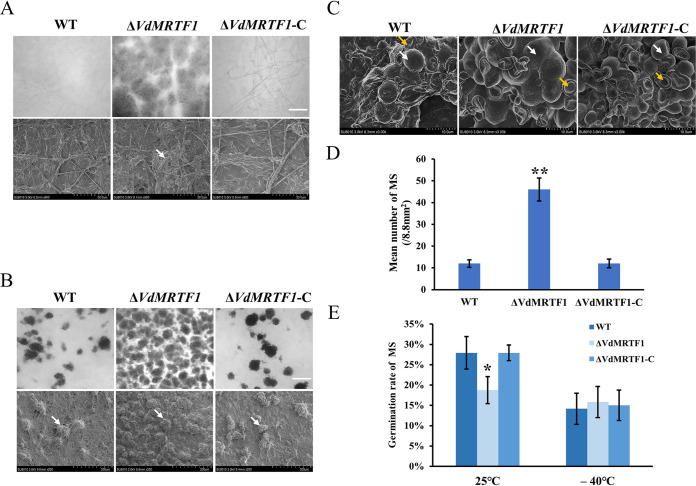
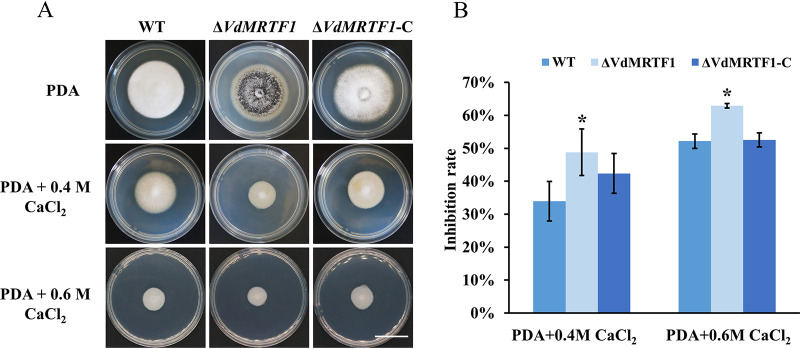
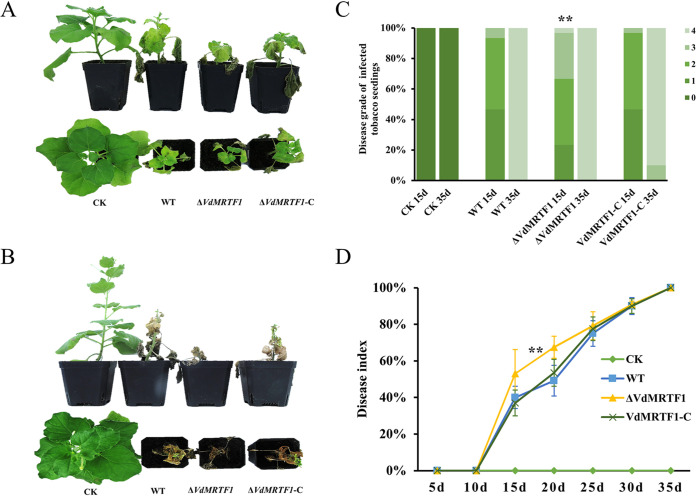
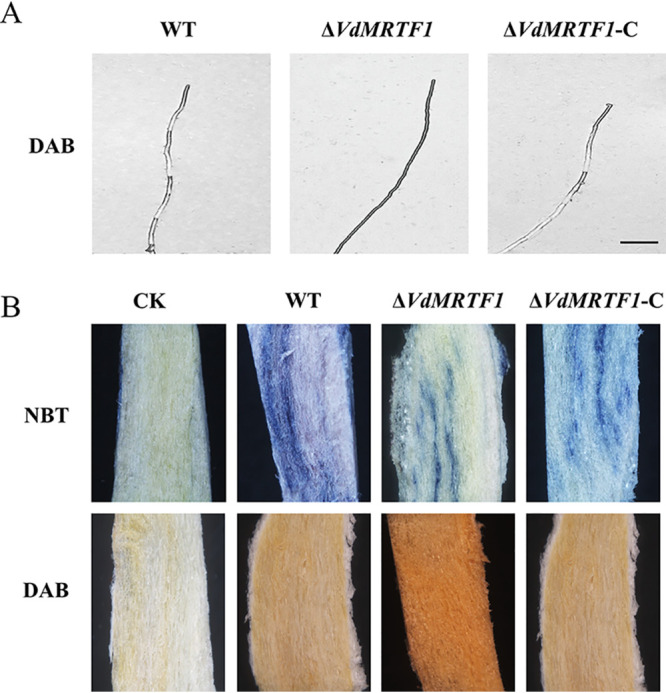
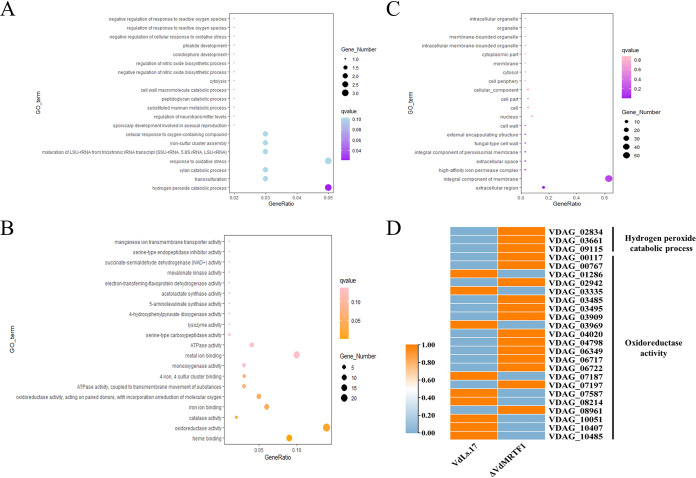
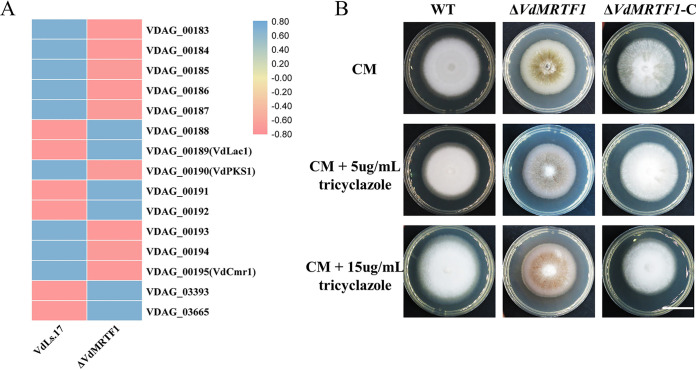
The ascomycete fungus Verticillium dahliae infects over 400 plant species and causes serious losses of economically important crops, such as cotton and tomato, and also of woody plants, such as smoke tree, maple, and olive. Melanized long-term survival structures known as microsclerotia play crucial roles in the disease cycle of V. dahliae, enabling this soilborne fungus to survive for years in the soil in the absence of a host. Previously, we identified VdMRTF1 (icrosclerotia-elated ranscription actor) encoding a bZip transcription factor which is downregulated during microsclerotial development in V. dahliae. In the present study, we showed that VdMRTF1 negatively controls melanin production and virulence by genetic, biological, and transcriptomic analyses. The mutant strain lacking (Δ) exhibited increased melanin biosynthesis and the defect also promoted microsclerotial development and sensitivity to Ca. In comparison with the wild-type strain, the Δ strain showed a significant enhancement in virulence and displayed an increased capacity to eliminate reactive oxygen species . Furthermore, analyses of transcriptomic profiles between the Δ and wild-type strains indicated that VdMRTF1 regulates the differential expression of genes associated with melanin biosynthesis, tyrosine metabolism, hydrogen peroxide catabolic processes, and oxidoreductase activity in V. dahliae. Taken together, these data show that VdMRTF1 is a negative transcriptional regulator of melanin biosynthesis, microsclerotia formation, and virulence in V. dahliae. Verticillium wilt is difficult to manage because the pathogen colonizes the plant xylem tissue and produces melanized microsclerotia which survive for more than 10 years in soil without a host. The molecular mechanisms underlying microsclerotia formation are of great importance to control the disease. Here, we provide evidence that a bZip transcription factor, VdMRTF1, plays important roles in melanin biosynthesis, microsclerotial development, resistance to elevated Ca levels, and fungal virulence of V. dahliae. The findings extend and deepen our understanding of the complexities of melanin biosynthesis, microsclerotia formation, and virulence that are regulated by bZip transcription factors in V. dahliae.
有隔内生真菌维氏枝顶孢(Verticillium dahliae)感染超过 400 种植物物种,导致棉花、番茄等重要经济作物以及烟树、枫树、橄榄等木本植物严重损失。被称为微菌核的黑色素化长期生存结构在 V. dahliae 的病害循环中起着至关重要的作用,使这种土壤传播真菌能够在没有宿主的情况下在土壤中存活多年。以前,我们鉴定了 VdMRTF1(微菌核相关转录因子),它编码一个 bZip 转录因子,在 V. dahliae 微菌核发育过程中下调。在本研究中,我们通过遗传、生物和转录组分析表明,VdMRTF1 通过负调控黑色素产生和毒力。缺乏 VdMRTF1 的突变株(Δ)表现出黑色素生物合成增加,缺陷也促进了微菌核发育和对 Ca 的敏感性。与野生型菌株相比,Δ 菌株的毒力显著增强,消除活性氧的能力增强。此外,Δ 和野生型菌株之间的转录组谱分析表明,VdMRTF1 调节与黑色素生物合成、酪氨酸代谢、过氧化氢分解代谢过程和 V. dahliae 中氧化还原酶活性相关的基因的差异表达。总之,这些数据表明,VdMRTF1 是 V. dahliae 中黑色素生物合成、微菌核形成和毒力的负转录调节因子。维管束萎蔫病难以管理,因为病原体定植在植物木质部组织中,并产生黑色素化的微菌核,在没有宿主的情况下,这些微菌核在土壤中存活超过 10 年。微菌核形成的分子机制对控制病害具有重要意义。在这里,我们提供了证据表明,bZip 转录因子 VdMRTF1 在黑色素生物合成、微菌核发育、对升高的 Ca 水平的抗性和 V. dahliae 的真菌毒力中发挥重要作用。研究结果扩展和深化了我们对 bZip 转录因子在 V. dahliae 中调控黑色素生物合成、微菌核形成和毒力的复杂性的理解。