Department of Nuclear Medicine & PET-Centre, Aarhus University Hospital, Palle Juul-Jensens Blvd. 165, 8200 Aarhus, Denmark.
Steno Diabetes Center Aarhus, Aarhus University Hospital, Hedeager 3, 8200 Aarhus, Denmark.
Nutrients. 2022 Mar 22;14(7):1322. doi: 10.3390/nu14071322.
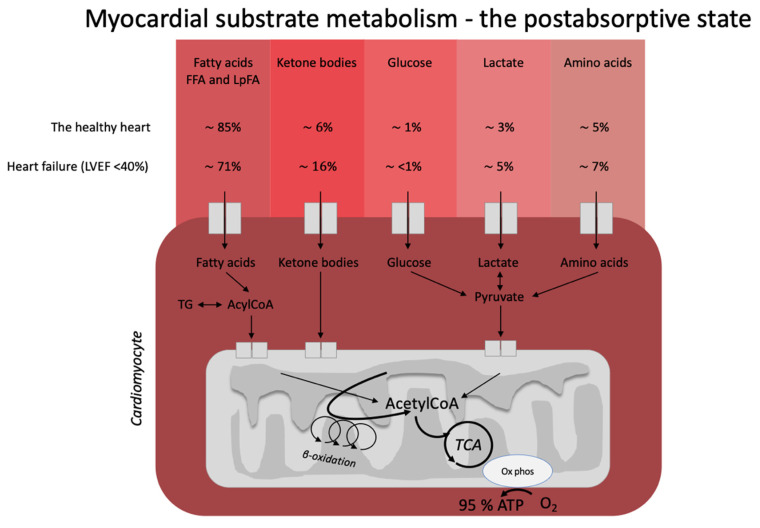
The ketogenic diet (KD) entails a high intake of fat, moderate intake of protein, and a very limited intake of carbohydrates. Ketogenic dieting has been proposed as an effective intervention for type 2 diabetes and obesity since glycemic control is improved and sustained weight loss can be achieved. Interestingly, hyperketonemia is also associated with beneficial cardiovascular effects, possibly caused by improved cardiac energetics and reduced oxygen use. Therefore, the KD has the potential to both treat and prevent cardiovascular disease. However, the KD has some adverse effects that could counteract the beneficial cardiovascular properties. Of these, hyperlipidemia with elevation of triglycerides and LDL cholesterol levels are the most important. In addition, poor diet adherence and lack of knowledge regarding long-term effects may also reduce the broader applicability of the KD. The objective of this narrative review is to provide insights into the KD and its effects on myocardial ketone body utilization and, consequently, cardiovascular health.
生酮饮食(KD)涉及高脂肪、适量蛋白质和极少量碳水化合物的摄入。由于血糖控制得到改善,并且可以持续减轻体重,生酮饮食已被提议作为 2 型糖尿病和肥胖症的有效干预措施。有趣的是,高酮血症也与有益的心血管效应相关,这可能是由于改善了心脏能量学和减少了氧气使用。因此,KD 有可能既治疗又预防心血管疾病。然而,KD 也有一些不良反应,可能会抵消其有益的心血管特性。其中,血脂异常伴甘油三酯和 LDL 胆固醇水平升高是最重要的。此外,饮食依从性差和对长期影响的了解不足也可能降低 KD 的广泛适用性。本综述的目的是提供对 KD 及其对心肌酮体利用的影响的深入了解,进而影响心血管健康。