Bougen-Zhukov Nicola, Decourtye-Espiard Lyvianne, Mitchell Wilson, Redpath Kieran, Perkinson Jacqui, Godwin Tanis, Black Michael A, Guilford Parry
Centre for Translational Cancer Research (Te Aho Matatū), Cancer Genetics Laboratory, Department of Biochemistry, University of Otago, Dunedin 9016, New Zealand.
Cancers (Basel). 2022 Mar 22;14(7):1609. doi: 10.3390/cancers14071609.
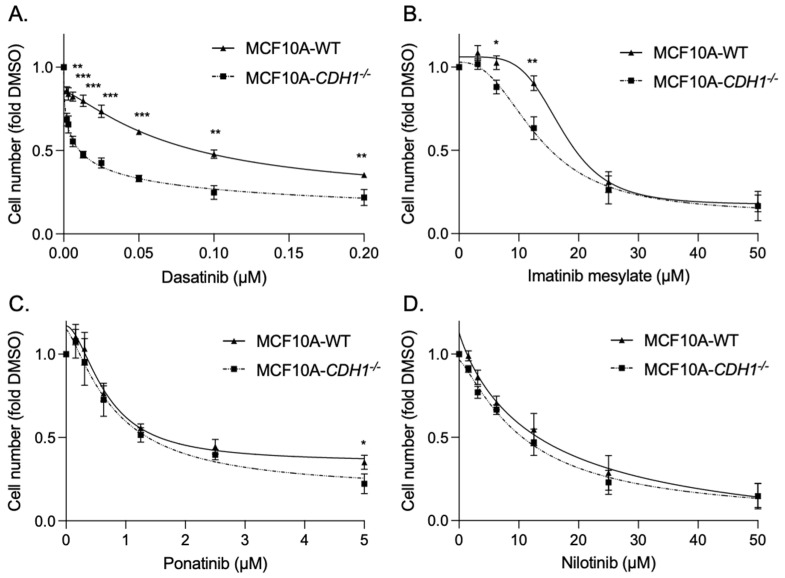
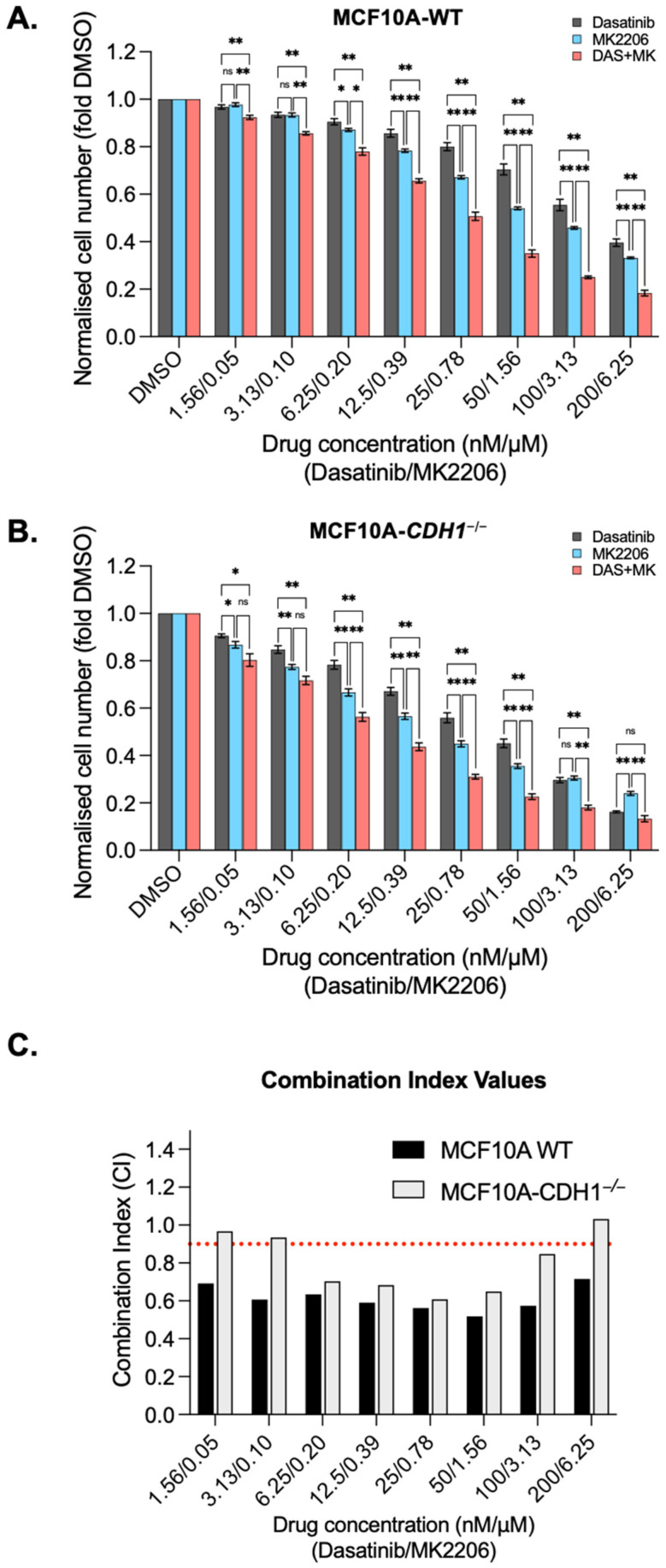
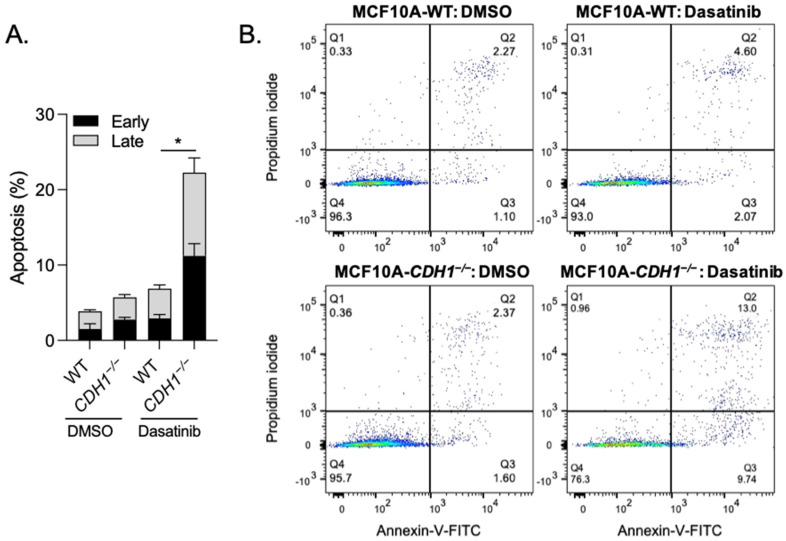
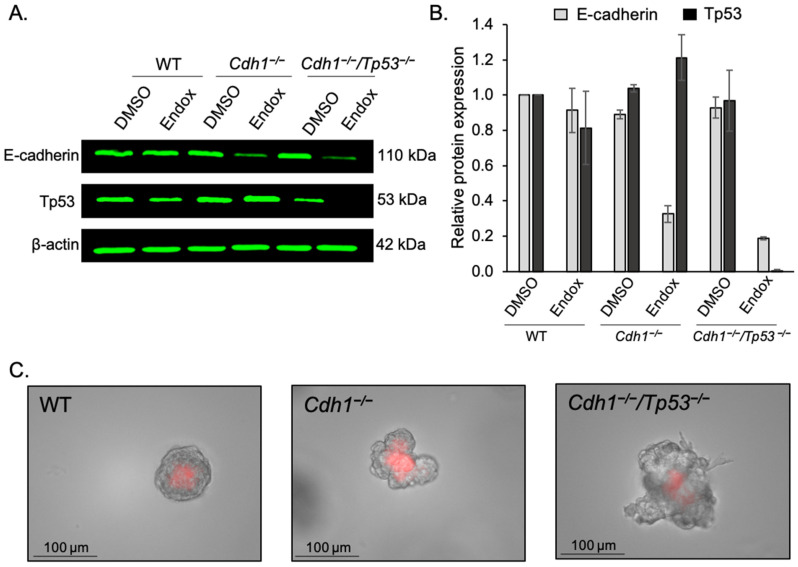
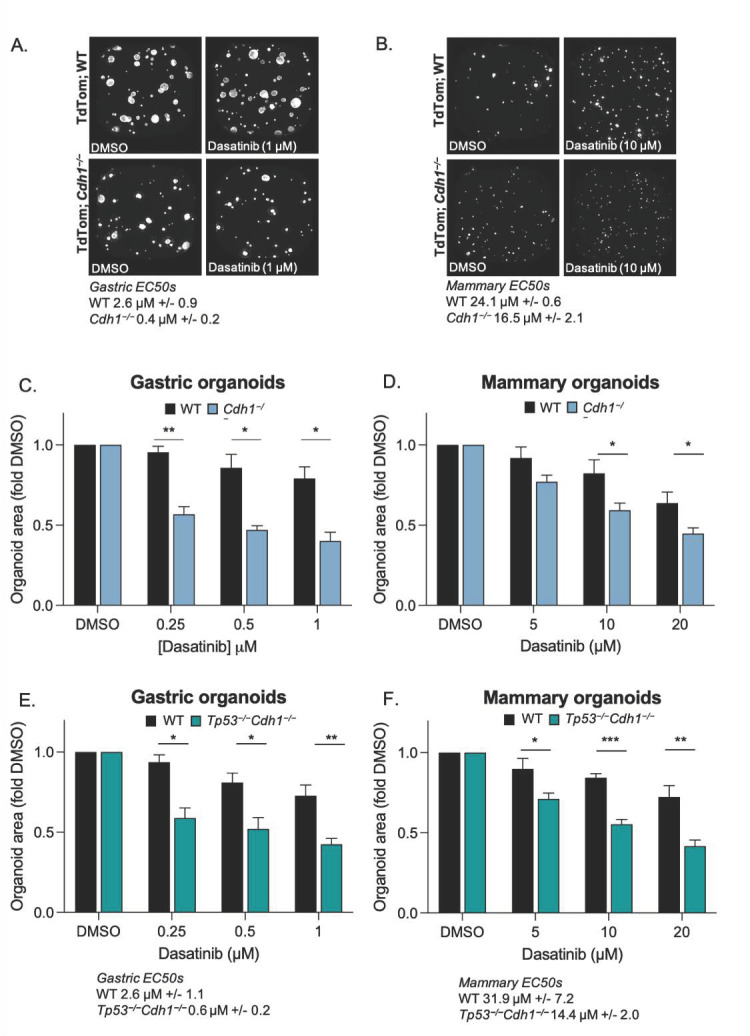
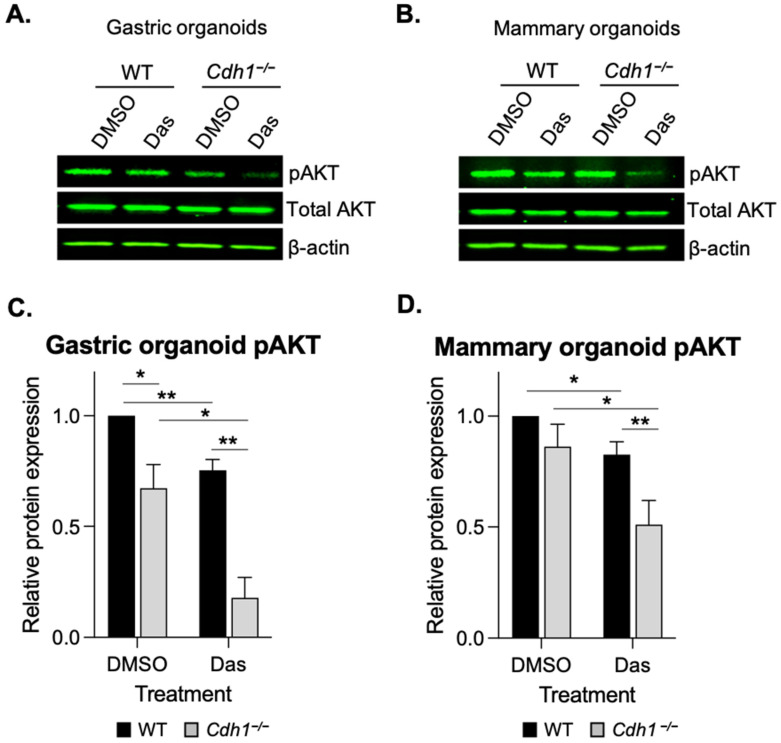
The gene, encoding the cell adhesion protein E-cadherin, is one of the most frequently mutated genes in gastric cancer and inactivating germline mutations are responsible for the cancer syndrome hereditary diffuse gastric cancer (HDGC). -deficient gastric cancers exhibit high AKT serine/threonine kinase 3 ( expression, but specific drugs against this AKT isoform are not available. We therefore used two publicly available datasets to identify -associated genes which could be used to indirectly target AKT3. Reactome analysis identified an enrichment of extracellular matrix remodelling genes in -high gastric cancers. Of the 51 genes that were significantly correlated with (but not ), discoidin domain receptor tyrosine kinase 2 () showed the strongest positive association. Treatment of isogenic human cells and mouse gastric and mammary organoids with dasatinib, a small molecule inhibitor of multiple kinases including SRC, BCR-ABL and DDR2, preferentially slowed the growth and induced apoptosis of E-cadherin-deficient cells. Dasatinib treatment also preferentially slowed the growth of gastric and mammary organoids harbouring both and mutations. In organoid models, dasatinib treatment was associated with decreased phosphorylation of total AKT, with a stronger effect seen in -deficient organoids. Treatment with combinations of dasatinib and an inhibitor of AKT, MK2206, enhanced the effect of dasatinib in breast MCF10A cells. In conclusion, targeting the DDR2-SRC-AKT3 axis with dasatinib represents a promising approach for the chemoprevention and chemotherapy of gastric and breast cancers lacking E-cadherin.
编码细胞粘附蛋白E-钙粘蛋白的基因是胃癌中最常发生突变的基因之一,种系失活突变导致癌症综合征遗传性弥漫性胃癌(HDGC)。E-钙粘蛋白缺陷型胃癌表现出高AKT丝氨酸/苏氨酸激酶3(AKT3)表达,但尚无针对这种AKT亚型的特异性药物。因此,我们使用了两个公开可用的数据集来鉴定与AKT3相关的基因,这些基因可用于间接靶向AKT3。反应组分析确定在E-钙粘蛋白高表达的胃癌中细胞外基质重塑基因富集。在与AKT3显著相关(但与AKT1不相关)的51个基因中,盘状结构域受体酪氨酸激酶2(DDR2)显示出最强的正相关。用达沙替尼(一种包括SRC、BCR-ABL和DDR2在内的多种激酶的小分子抑制剂)处理同基因人类细胞以及小鼠胃和乳腺类器官,优先减缓了E-钙粘蛋白缺陷型细胞的生长并诱导其凋亡。达沙替尼治疗还优先减缓了同时携带E-钙粘蛋白和DDR2突变的胃和乳腺类器官的生长。在类器官模型中,达沙替尼治疗与总AKT磷酸化减少有关,在E-钙粘蛋白缺陷型类器官中观察到更强的效果。用达沙替尼和AKT抑制剂MK2206联合处理增强了达沙替尼在乳腺MCF10A细胞中的作用。总之,用达沙替尼靶向DDR2-SRC-AKT3轴代表了一种对缺乏E-钙粘蛋白的胃癌和乳腺癌进行化学预防和化疗的有前景的方法。