School of Biomedical Sciences and Pharmacy, College of Health, Medicine and Wellbeing, University of Newcastle, Newcastle, NSW 2308, Australia.
Centre for Drug Repurposing and Medicines Research, University of Newcastle, Newcastle, NSW 2308, Australia.
Cells. 2022 Apr 4;11(7):1215. doi: 10.3390/cells11071215.
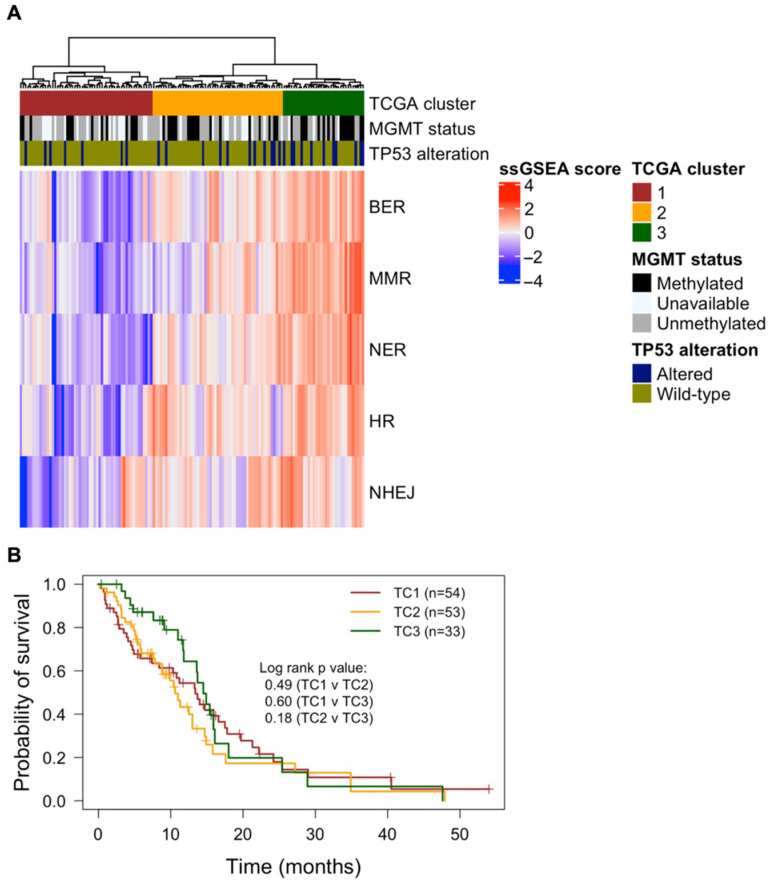
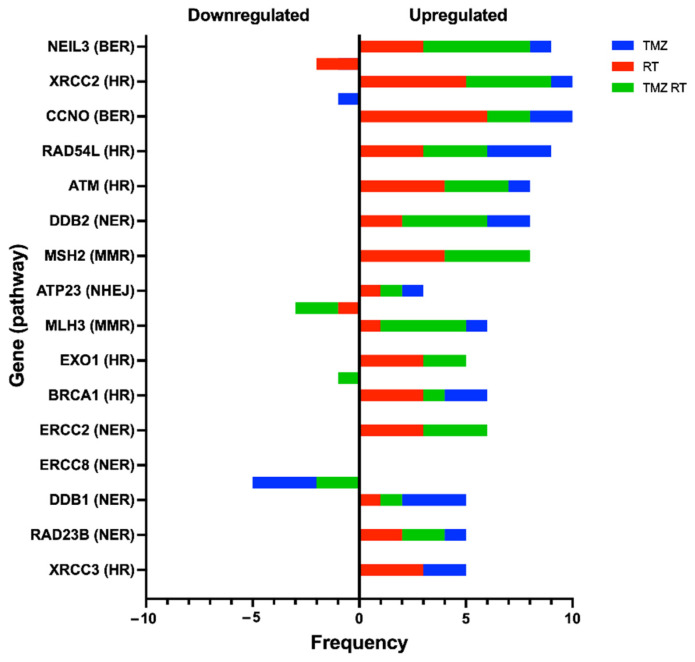
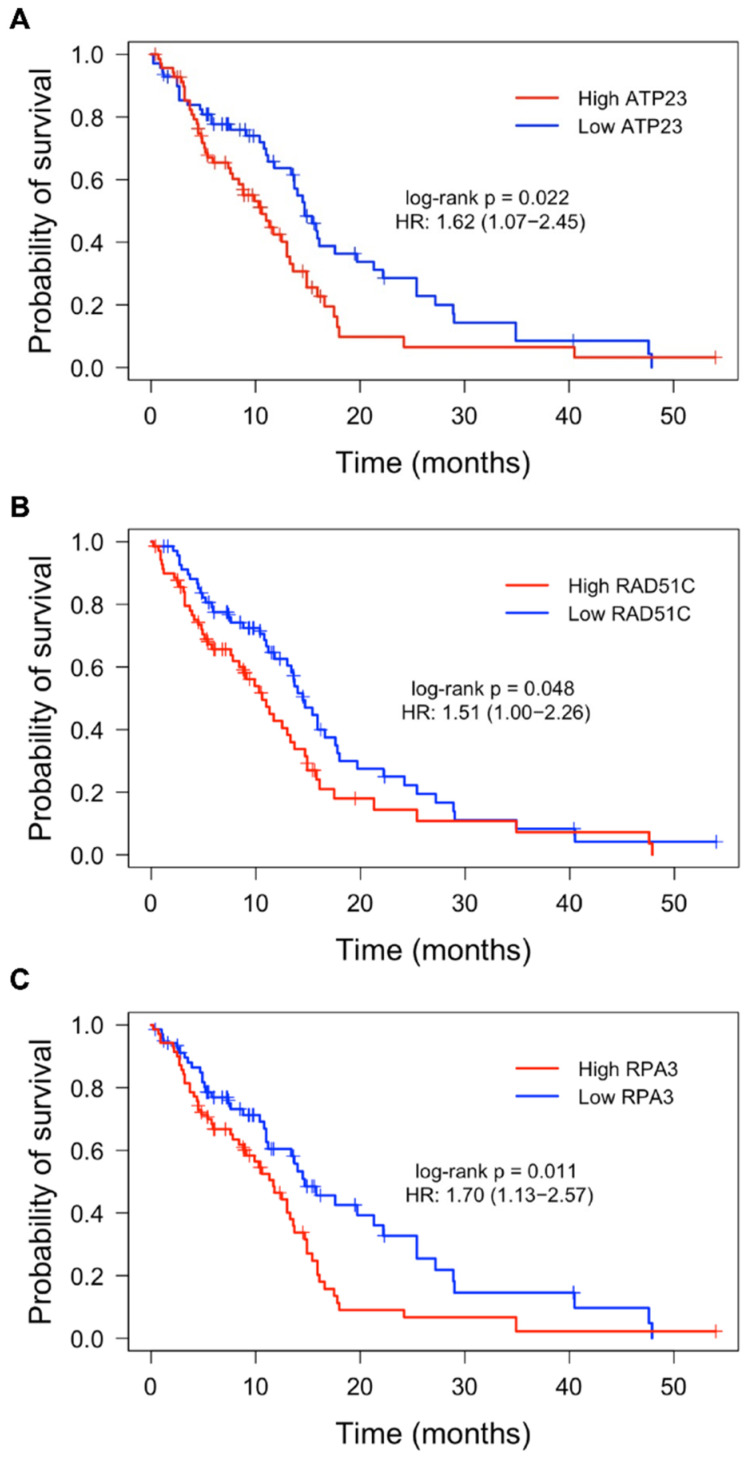
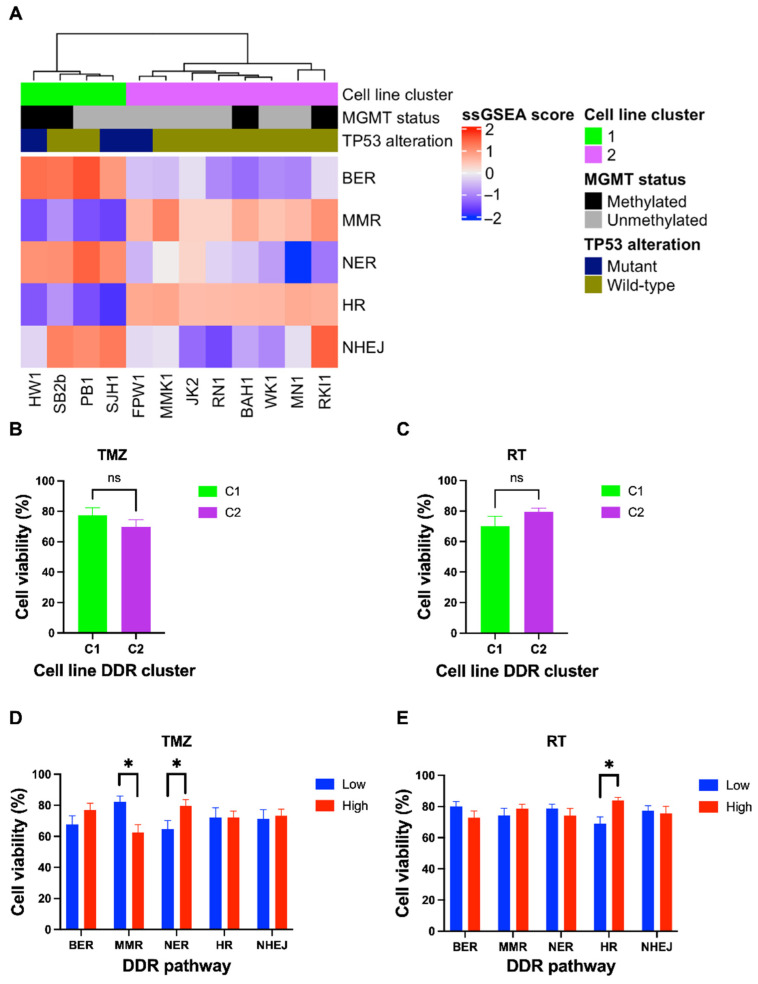
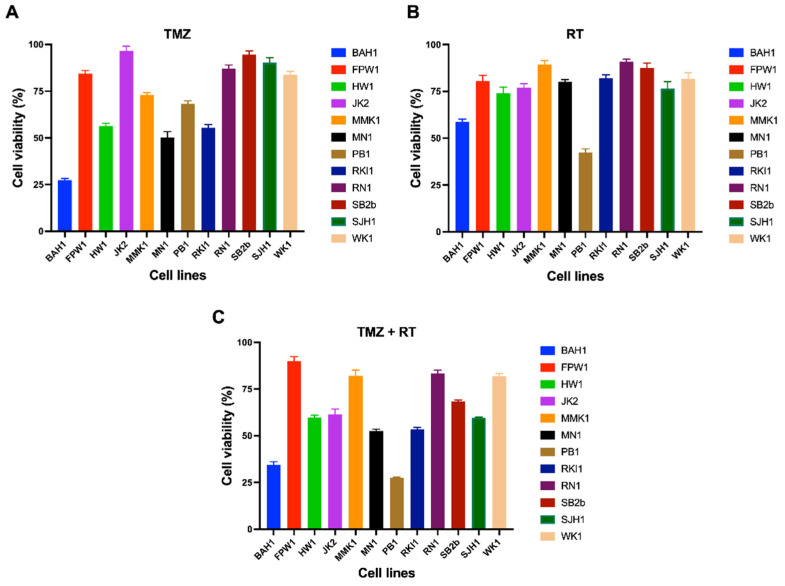
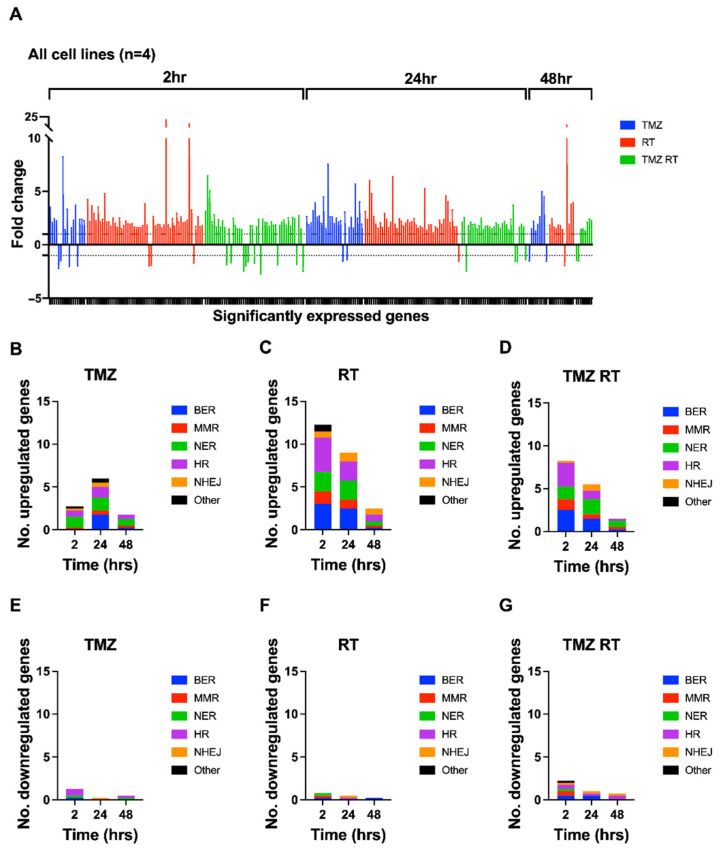
Glioblastoma is a highly aggressive, invasive and treatment-resistant tumour. The DNA damage response (DDR) provides tumour cells with enhanced ability to activate cell cycle arrest and repair treatment-induced DNA damage. We studied the expression of DDR, its relationship with standard treatment response and patient survival, and its activation after treatment. The transcriptomic profile of DDR pathways was characterised within a cohort of isocitrate dehydrogenase (IDH) wild-type glioblastoma from The Cancer Genome Atlas (TCGA) and 12 patient-derived glioblastoma cell lines. The relationship between DDR expression and patient survival and cell line response to temozolomide (TMZ) or radiation therapy (RT) was assessed. Finally, the expression of 84 DDR genes was examined in glioblastoma cells treated with TMZ and/or RT. Although distinct DDR cluster groups were apparent in the TCGA cohort and cell lines, no significant differences in OS and treatment response were observed. At the gene level, the high expression of , and independently associated with poor prognosis in glioblastoma patients. Finally, we observed a substantial upregulation of DDR genes after treatment with TMZ and/or RT, particularly in RT-treated glioblastoma cells, peaking within 24 h after treatment. Our results confirm the potential influence of DDR genes in patient outcome. The observation of DDR genes in response to TMZ and RT gives insight into the global response of DDR pathways after adjuvant treatment in glioblastoma, which may have utility in determining DDR targets for inhibition.
胶质母细胞瘤是一种高度侵袭性和耐药性的肿瘤。DNA 损伤反应 (DDR) 赋予肿瘤细胞增强的能力,以激活细胞周期阻滞和修复治疗诱导的 DNA 损伤。我们研究了 DDR 的表达,其与标准治疗反应和患者生存的关系,以及治疗后的激活情况。在癌症基因组图谱 (TCGA) 中 IDH 野生型胶质母细胞瘤的队列和 12 个患者来源的胶质母细胞瘤细胞系中,对 DDR 途径的转录组谱进行了特征描述。评估了 DDR 表达与患者生存和细胞系对替莫唑胺 (TMZ) 或放射治疗 (RT) 的反应之间的关系。最后,在接受 TMZ 和/或 RT 治疗的胶质母细胞瘤细胞中检查了 84 个 DDR 基因的表达。尽管在 TCGA 队列和细胞系中明显存在不同的 DDR 簇群,但在 OS 和治疗反应方面没有观察到显著差异。在基因水平上, 和 的高表达与胶质母细胞瘤患者的预后不良独立相关。最后,我们观察到 TMZ 和/或 RT 治疗后 DDR 基因的大量上调,特别是在 RT 治疗的胶质母细胞瘤细胞中,在治疗后 24 小时内达到峰值。我们的结果证实了 DDR 基因在患者预后中的潜在影响。观察到 TMZ 和 RT 对 DDR 基因的反应,深入了解了胶质母细胞瘤辅助治疗后 DDR 途径的全面反应,这可能有助于确定 DDR 抑制的靶点。