Department of Occupational and Environmental Health, Xiangya School of Public Health, Central South University, 410078, Changsha, People's Republic of China.
Department of Radiation Biology, Beijing Key Laboratory for Radiobiology, Beijing Institute of Radiation Medicine, AMMS, 100850, Beijing, People's Republic of China.
Signal Transduct Target Ther. 2020 May 1;5(1):60. doi: 10.1038/s41392-020-0150-x.
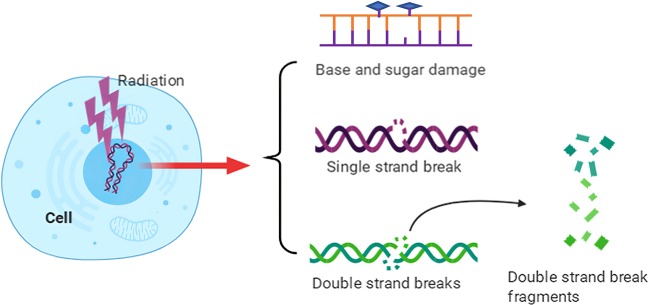
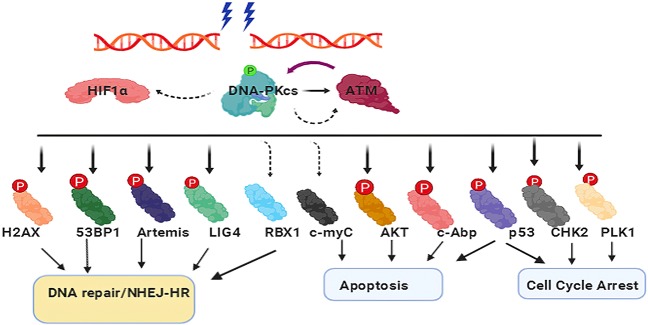
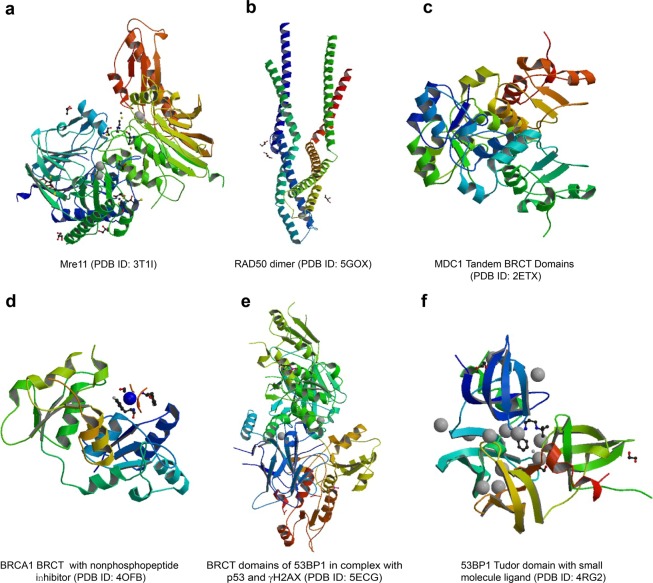
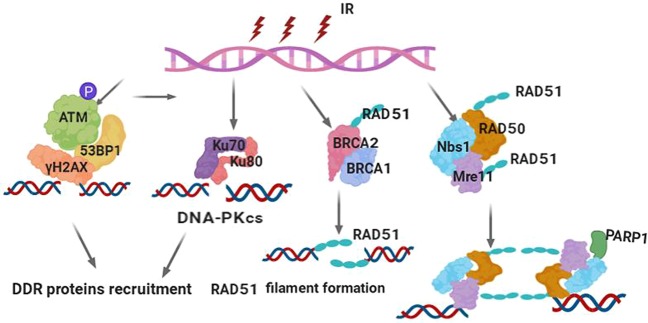
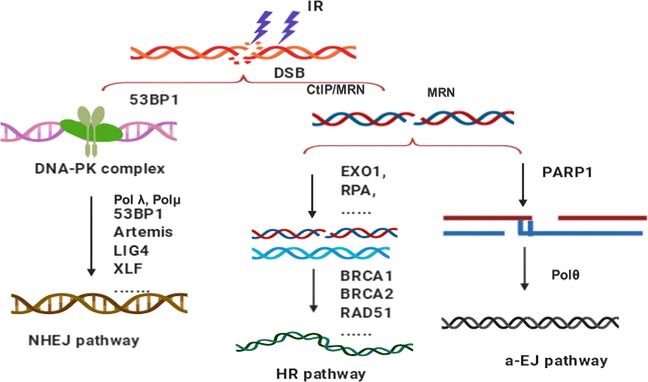
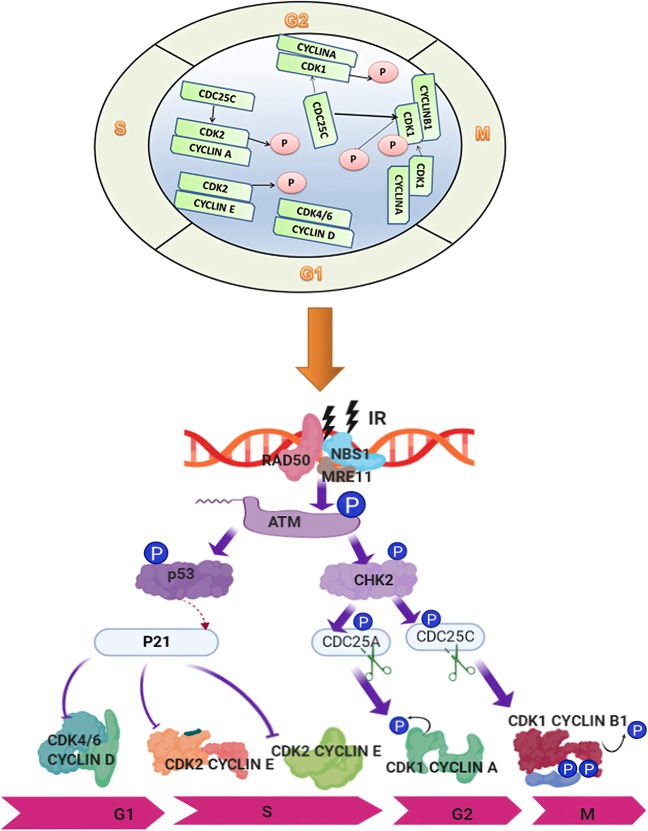
Radiotherapy is one of the most common countermeasures for treating a wide range of tumors. However, the radioresistance of cancer cells is still a major limitation for radiotherapy applications. Efforts are continuously ongoing to explore sensitizing targets and develop radiosensitizers for improving the outcomes of radiotherapy. DNA double-strand breaks are the most lethal lesions induced by ionizing radiation and can trigger a series of cellular DNA damage responses (DDRs), including those helping cells recover from radiation injuries, such as the activation of DNA damage sensing and early transduction pathways, cell cycle arrest, and DNA repair. Obviously, these protective DDRs confer tumor radioresistance. Targeting DDR signaling pathways has become an attractive strategy for overcoming tumor radioresistance, and some important advances and breakthroughs have already been achieved in recent years. On the basis of comprehensively reviewing the DDR signal pathways, we provide an update on the novel and promising druggable targets emerging from DDR pathways that can be exploited for radiosensitization. We further discuss recent advances identified from preclinical studies, current clinical trials, and clinical application of chemical inhibitors targeting key DDR proteins, including DNA-PKcs (DNA-dependent protein kinase, catalytic subunit), ATM/ATR (ataxia-telangiectasia mutated and Rad3-related), the MRN (MRE11-RAD50-NBS1) complex, the PARP (poly[ADP-ribose] polymerase) family, MDC1, Wee1, LIG4 (ligase IV), CDK1, BRCA1 (BRCA1 C terminal), CHK1, and HIF-1 (hypoxia-inducible factor-1). Challenges for ionizing radiation-induced signal transduction and targeted therapy are also discussed based on recent achievements in the biological field of radiotherapy.
放射治疗是治疗多种肿瘤的最常用对策之一。然而,癌细胞的放射抗性仍然是放射治疗应用的主要限制。人们一直在努力探索增敏靶点并开发放射增敏剂,以改善放射治疗的效果。DNA 双链断裂是电离辐射诱导的最致命损伤,可引发一系列细胞 DNA 损伤反应 (DDR),包括帮助细胞从辐射损伤中恢复的反应,如 DNA 损伤感应和早期转导途径的激活、细胞周期停滞和 DNA 修复。显然,这些保护 DDR 赋予了肿瘤放射抗性。靶向 DDR 信号通路已成为克服肿瘤放射抗性的一种有吸引力的策略,近年来已经取得了一些重要的进展和突破。在全面回顾 DDR 信号通路的基础上,我们提供了 DDR 通路中新兴的、有前途的可药物作用靶点的最新信息,这些靶点可用于放射增敏。我们进一步讨论了针对关键 DDR 蛋白的化学抑制剂的临床前研究、当前临床试验和临床应用中确定的最新进展,这些抑制剂包括 DNA-PKcs(DNA 依赖性蛋白激酶,催化亚基)、ATM/ATR(共济失调毛细血管扩张突变和 Rad3 相关)、MRN(MRE11-RAD50-NBS1 复合物)、PARP(多聚[ADP-核糖]聚合酶)家族、MDC1、Wee1、LIG4(连接酶 IV)、CDK1、BRCA1(BRCA1 C 末端)、CHK1 和 HIF-1(缺氧诱导因子-1)。还根据放射治疗生物学领域的最新成就讨论了电离辐射诱导的信号转导和靶向治疗的挑战。