Pauer Shiva, Rutjens Bastiaan T, Ruby Matthew B, Perino Grischa, van Harreveld Frenk
Department of Social Psychology, University of Amsterdam, 1001 NK Amsterdam, The Netherlands.
School of Psychology and Public Health, La Trobe University, Melbourne 3086, Australia.
Foods. 2022 Mar 23;11(7):921. doi: 10.3390/foods11070921.
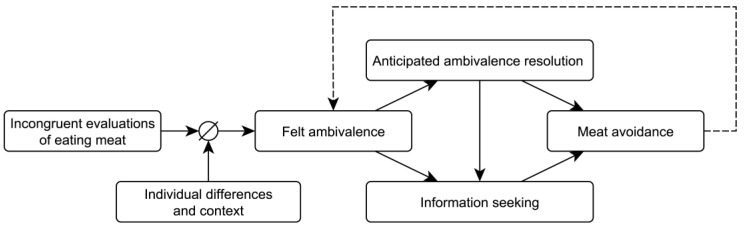
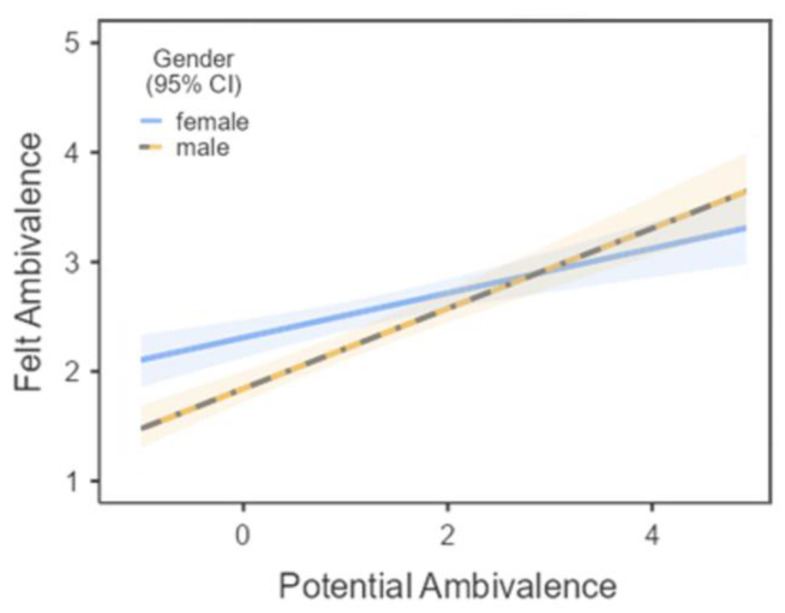
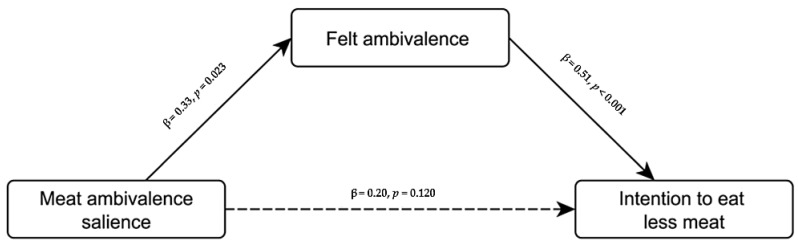
An increasing number of people are concerned about eating meat, despite enjoying doing so. In the present research, we examined whether the desire to resolve this ambivalence about eating meat leads to a reduction in meat consumption. Our model of ambivalence-motivated meat reduction proposes that the pervasive nature of evaluative conflict motivates meat avoidance, and we highlight two potential mechanisms involved: the anticipation of ambivalence reduction through behavioral change, and information seeking for contents that facilitate meat reduction. Study 1 drew on a cross-sectional 6-day food diary with 7485 observations in a quota sample to investigate why meat-related ambivalence arises and to demonstrate the correlation of ambivalence with meat reduction. Two experiments investigated the causal direction of this association by showing that ambivalence-induced discomfort motivated participants to eat less meat when they introspected on their preexisting incongruent evaluations (Study 2 and 3), which was mediated by the aforementioned mechanisms involved (Study 3; preregistered). The studies utilized diverse samples from Germany, England, and the US (total = 1192) and support the proposed model by indicating that behavioral change is an important coping strategy to resolve ambivalent discomfort in the context of meat consumption. Our model of ambivalence-motivated meat reduction contributes to theorizing on the consequences of ambivalence and the psychology of (not) eating meat.
尽管喜欢吃肉,但越来越多的人开始关注吃肉这件事。在本研究中,我们探究了想要解决这种对吃肉的矛盾心理的愿望是否会导致肉类消费量的减少。我们提出的矛盾心理驱动的肉类减少模型认为,评价冲突的普遍性会促使人们避免吃肉,并且我们强调了其中涉及的两种潜在机制:通过行为改变来预期矛盾心理的减少,以及寻找有助于减少肉类消费的信息。研究1利用了一个包含7485条观察数据的为期6天的横断面食物日记配额样本,来调查与肉类相关的矛盾心理产生的原因,并证明矛盾心理与肉类减少之间的相关性。两项实验通过表明当参与者反思他们先前不一致的评价时,矛盾心理引发的不适感会促使他们少吃肉,从而研究了这种关联的因果方向(研究2和3),这一过程由上述涉及的机制介导(研究3;预先注册)。这些研究使用了来自德国、英国和美国的不同样本(总计1192个),并通过表明行为改变是在肉类消费背景下解决矛盾心理不适的重要应对策略,来支持所提出的模型。我们的矛盾心理驱动的肉类减少模型有助于对矛盾心理的后果以及(不)吃肉的心理学进行理论化。