
氢氧化钠预处理橡胶颗粒混凝土的力学、微观结构及干燥收缩性能:基于响应面法的建模与优化
Mechanical, Microstructural and Drying Shrinkage Properties of NaOH-Pretreated Crumb Rubber Concrete: RSM-Based Modeling and Optimization.
作者信息
Appana Pretta Malaysia, Mohammed Bashar S, Abdulkadir Isyaka, Ali M O A, Liew M S
机构信息
Civil and Environmental Engineering Department, Faculty of Engineering, Universiti Teknologi PETRONAS (UTP), Seri Iskandar 32610, Perak, Malaysia.
Civil Engineering Department, Bayero University, Kano 700241, Nigeria.
出版信息
Materials (Basel). 2022 Apr 1;15(7):2588. doi: 10.3390/ma15072588.
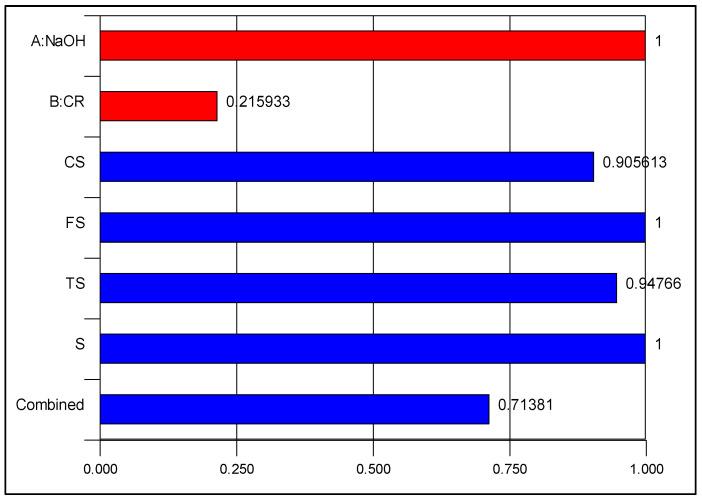
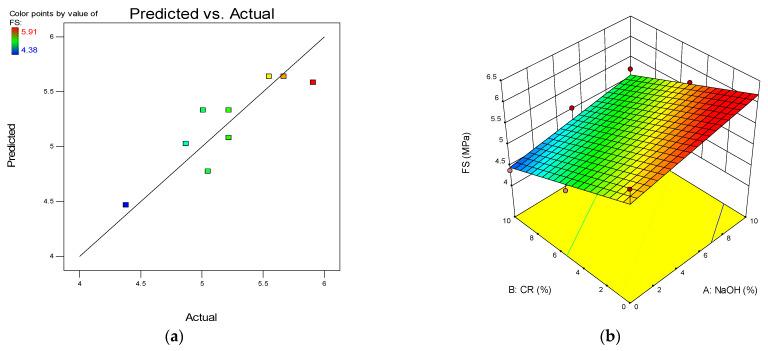
One of the primary causes of the low mechanical properties of rubberized concrete is the weak bond between crumb rubber (CR) and hardened cement paste. Many CR pretreatment techniques have been researched in an attempt to mitigate this problem. The NaOH pretreatment method is one of the most widely used, although the reported results are inconsistent due to the absence of standardized NaOH pretreatment concentrations and CR replacement levels. This study aims to develop models for predicting the mechanical and shrinkage properties of NaOH-pretreated CR concrete (NaOH-CRC) and conduct multi-objective optimization using response surface methodology (RSM). The RSM generated experimental runs using three levels (0, 5, and 10%) of both NaOH pretreatment concentration and the CR replacement level of fine aggregate by volume as the input factors. At 28 days, the concrete's compressive, flexural, and tensile strengths (CS, FS, and TS), as well as its drying shrinkage (S), were evaluated as the responses. The results revealed that higher CR replacements led to lower mechanical strengths and higher shrinkage. However, the strength loss and the shrinkage significantly reduced by 22%, 44%, 43%, and 60% for CS, FS, TS, and S, respectively, after the pretreatment. Using field-emission scanning electron microscopy (FESEM), the microstructural investigation indicated a significantly reduced interfacial transition zone (ITZ) with increasing NaOH pretreatment. The developed RSM models were evaluated using ANOVA and found to have high R values ranging from 78.7% to 98%. The optimization produced NaOH and CR levels of 10% and 2%, respectively, with high desirability of 71.4%.
橡胶混凝土力学性能低下的主要原因之一是橡胶颗粒(CR)与硬化水泥浆体之间的粘结力较弱。为了缓解这一问题,人们研究了许多CR预处理技术。NaOH预处理方法是应用最广泛的方法之一,不过由于缺乏标准化的NaOH预处理浓度和CR替代水平,所报道的结果并不一致。本研究旨在建立预测NaOH预处理CR混凝土(NaOH-CRC)力学性能和收缩性能的模型,并采用响应面法(RSM)进行多目标优化。RSM以NaOH预处理浓度和细集料体积CR替代水平的三个水平(0%、5%和10%)作为输入因素生成实验运行。在28天时,评估混凝土的抗压强度、抗折强度和抗拉强度(CS、FS和TS)以及干燥收缩率(S)作为响应。结果表明,较高的CR替代率导致较低的力学强度和较高的收缩率。然而,预处理后,CS、FS、TS和S的强度损失和收缩率分别显著降低了22%、44%、43%和60%。使用场发射扫描电子显微镜(FESEM)进行微观结构研究表明,随着NaOH预处理程度的增加,界面过渡区(ITZ)显著减小。使用方差分析(ANOVA)对所建立的RSM模型进行评估,发现其R值较高,范围为78.7%至98%。优化得到的NaOH和CR水平分别为10%和2%,可取性较高,为71.4%。




 Zotero 插件