Chrysostomou Varvara, Katifelis Hector, Gazouli Maria, Dimas Konstantinos, Demetzos Costas, Pispas Stergios
Section of Pharmaceutical Technology, Department of Pharmacy, School of Health Sciences, National and Kapodistrian University of Athens, Panepistimioupolis Zografou, 15771 Athens, Greece.
Theoretical and Physical Chemistry Institute, National Hellenic Research Foundation, 48 Vassileos Constantinou Avenue, 11635 Athens, Greece.
Materials (Basel). 2022 Apr 4;15(7):2650. doi: 10.3390/ma15072650.
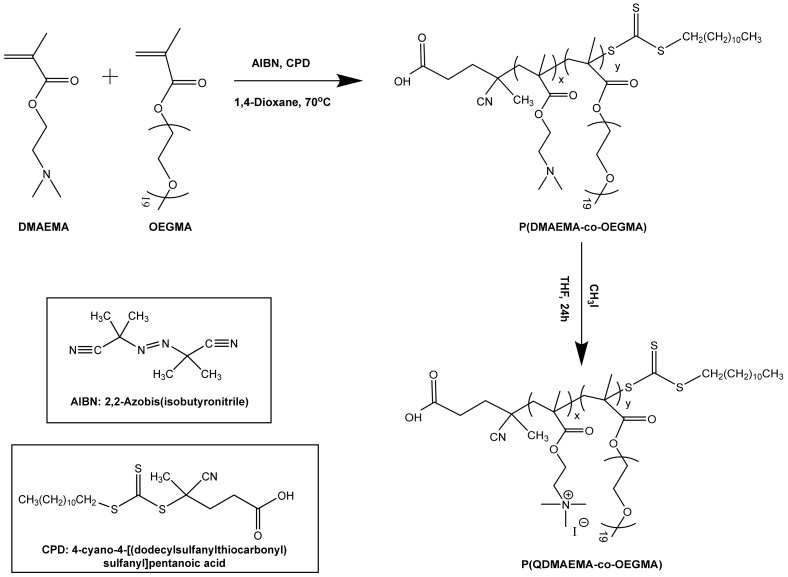
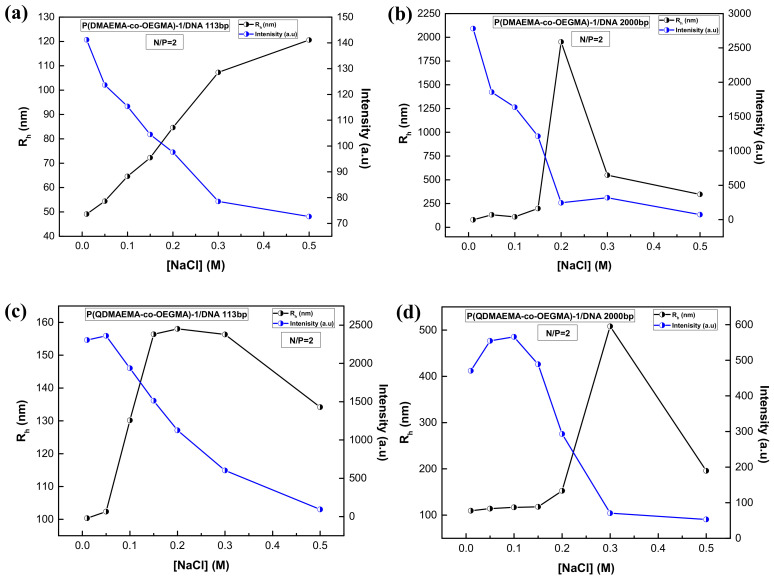
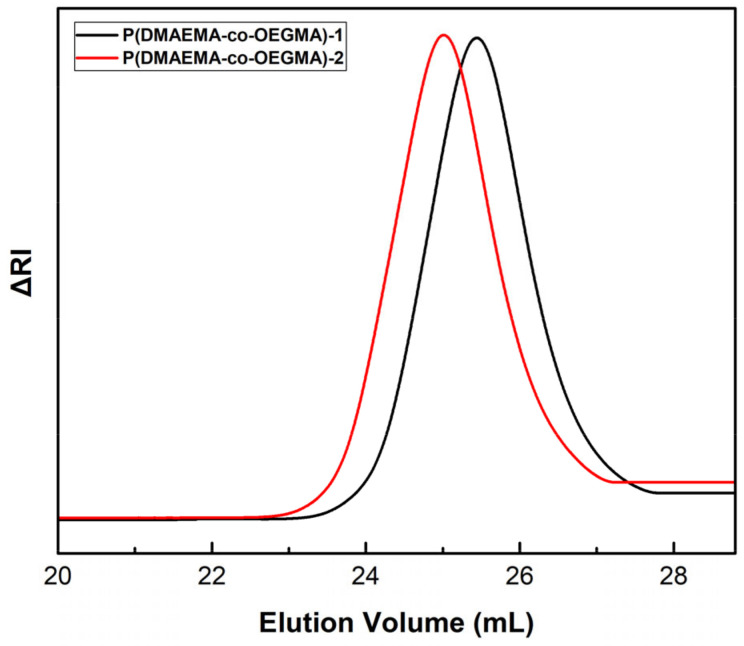
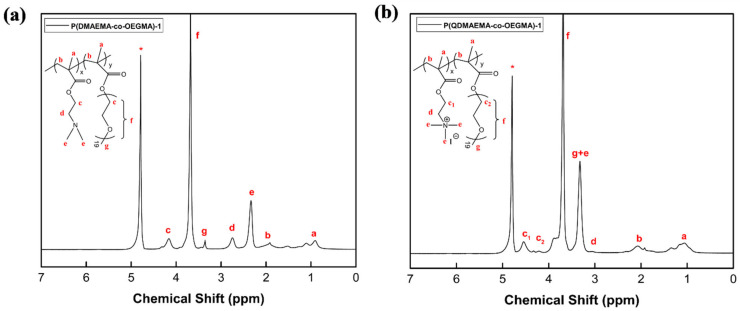
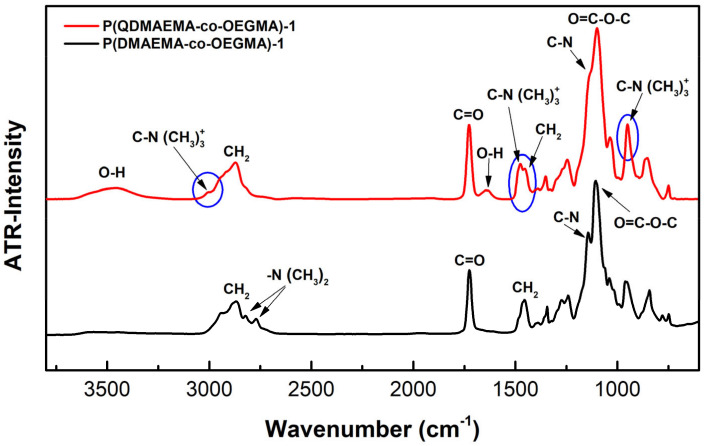
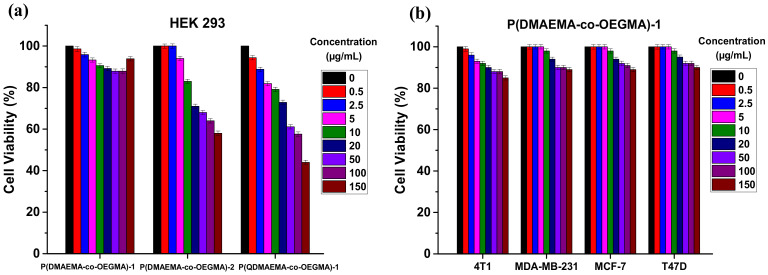
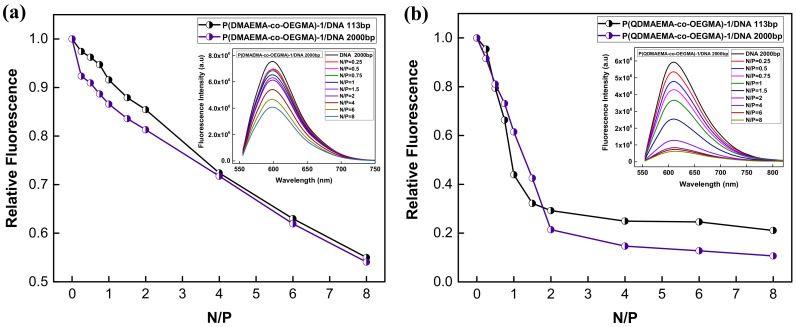
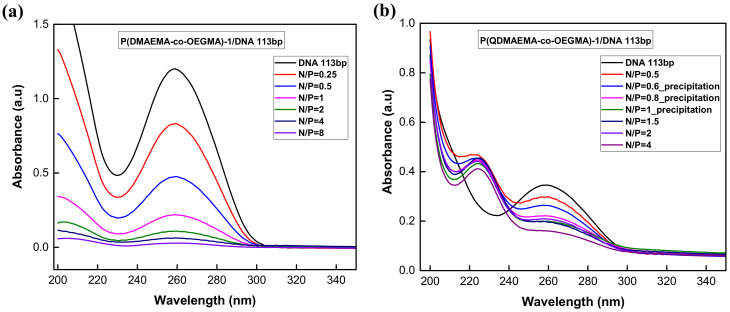
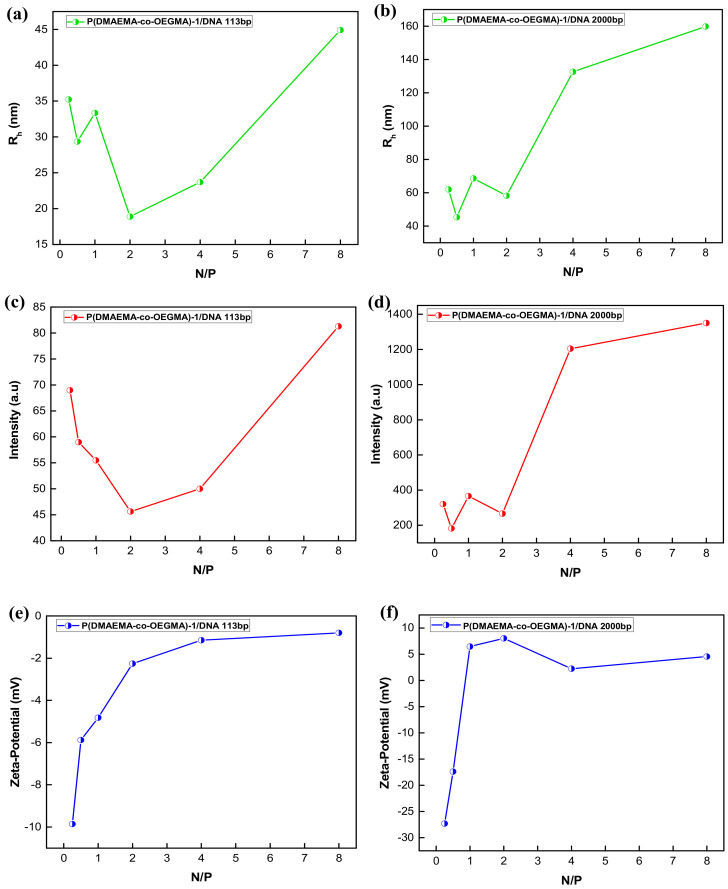
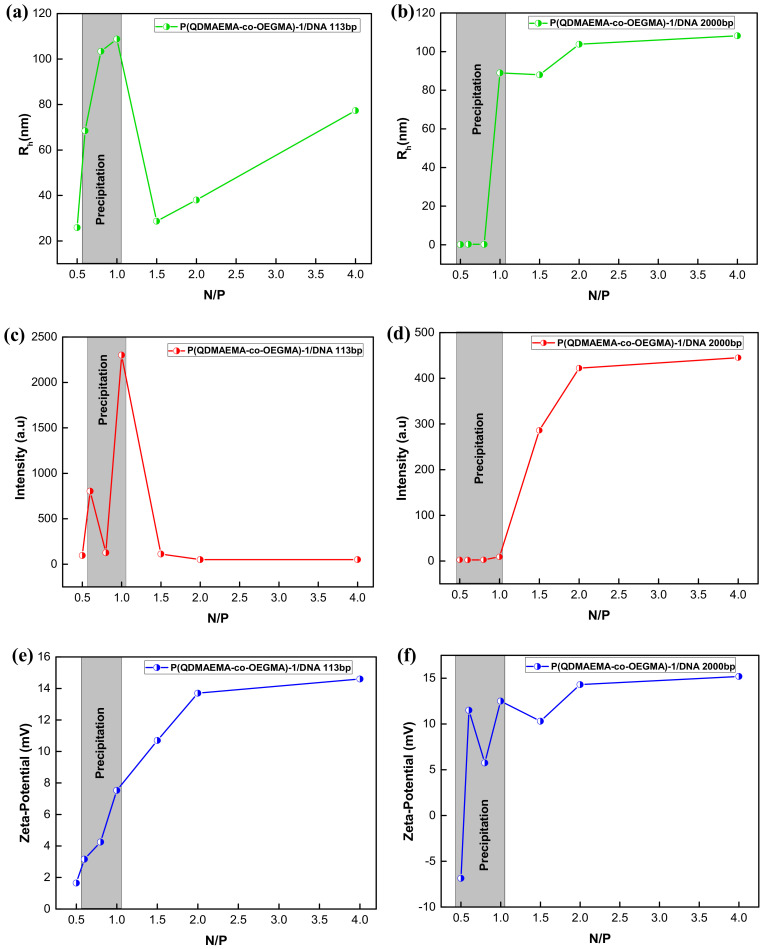
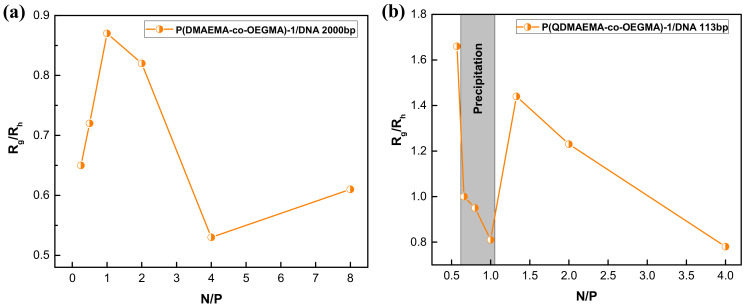
Research on the improvement and fabrication of polymeric systems as non-viral gene delivery carriers is required for their implementation in gene therapy. Random copolymers have not been extensively utilized for these purposes. In this regard, double hydrophilic poly[(2-(dimethylamino) ethyl methacrylate)-co-(oligo(ethylene glycol) methyl ether methacrylate] [P(DMAEMA-co-OEGMA)] random copolymers were synthesized via reversible addition-fragmentation chain transfer (RAFT) polymerization. The copolymers were further modified by quaternization of DMAEMA tertiary amine, producing the cationic P(QDMAEMA-co-OEGMA) derivatives. Fluorescence and ultraviolet-visible (UV-vis) spectroscopy revealed the efficient interaction of copolymers aggregates with linear DNAs of different lengths, forming polyplexes, with the quaternized copolymer aggregates exhibiting stronger binding affinity. Light scattering techniques evidenced the formation of polyplexes whose size, molar mass, and surface charge strongly depend on the N/P ratio (nitrogen (N) of the amine group of DMAEMA/QDMAEMA over phosphate (P) groups of DNA), DNA length, and length of the OEGMA chain. Polyplexes presented colloidal stability under physiological ionic strength as shown by dynamic light scattering. In vitro cytotoxicity of the empty nanocarriers was evaluated on HEK293 as a control cell line. P(DMAEMA-co-OEGMA) copolymer aggregates were further assessed for their biocompatibility on 4T1, MDA-MB-231, MCF-7, and T47D breast cancer cell lines presenting high cell viability rates.
为了将聚合物体系作为非病毒基因传递载体应用于基因治疗,需要对其进行改进和制备研究。无规共聚物尚未广泛用于这些目的。在这方面,通过可逆加成-断裂链转移(RAFT)聚合合成了双亲水聚[(甲基丙烯酸2-(二甲氨基)乙酯)-co-(聚乙二醇甲基醚甲基丙烯酸酯)][P(DMAEMA-co-OEGMA)]无规共聚物。通过DMAEMA叔胺的季铵化对共聚物进行进一步改性,制备了阳离子P(QDMAEMA-co-OEGMA)衍生物。荧光和紫外可见(UV-vis)光谱显示共聚物聚集体与不同长度的线性DNA有效相互作用,形成多聚体,季铵化共聚物聚集体表现出更强的结合亲和力。光散射技术证明了多聚体的形成,其尺寸、摩尔质量和表面电荷强烈依赖于N/P比(DMAEMA/QDMAEMA胺基的氮(N)与DNA磷酸(P)基团之比)、DNA长度和OEGMA链长度。动态光散射表明,在生理离子强度下,多聚体具有胶体稳定性。以HEK293作为对照细胞系评估了空纳米载体的体外细胞毒性。进一步评估了P(DMAEMA-co-OEGMA)共聚物聚集体对4T1、MDA-MB-231、MCF-7和T47D乳腺癌细胞系的生物相容性,这些细胞系具有较高的细胞活力率。