Department of Molecular Cell Biology and Oral Anatomy, Kyushu University Graduate School of Dental Science, Fukuoka 812-8582, Japan.
Int J Mol Sci. 2022 Mar 23;23(7):3479. doi: 10.3390/ijms23073479.
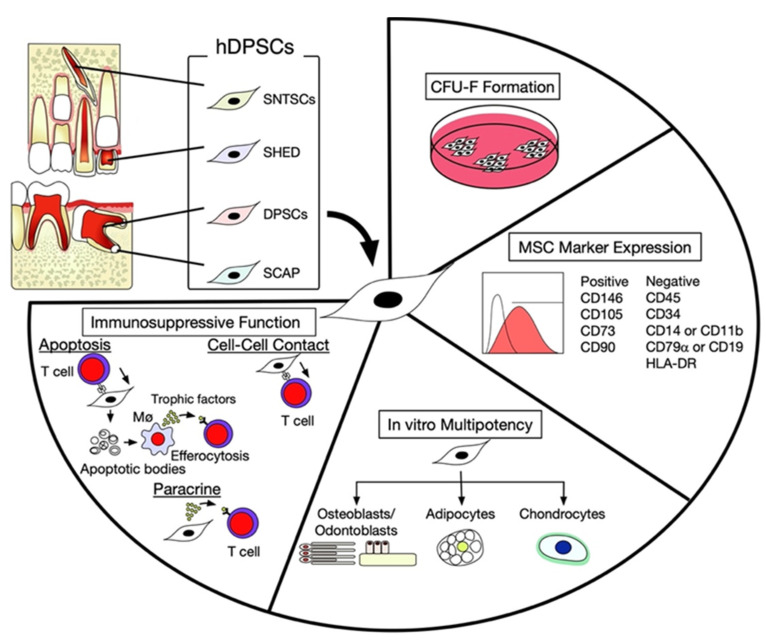
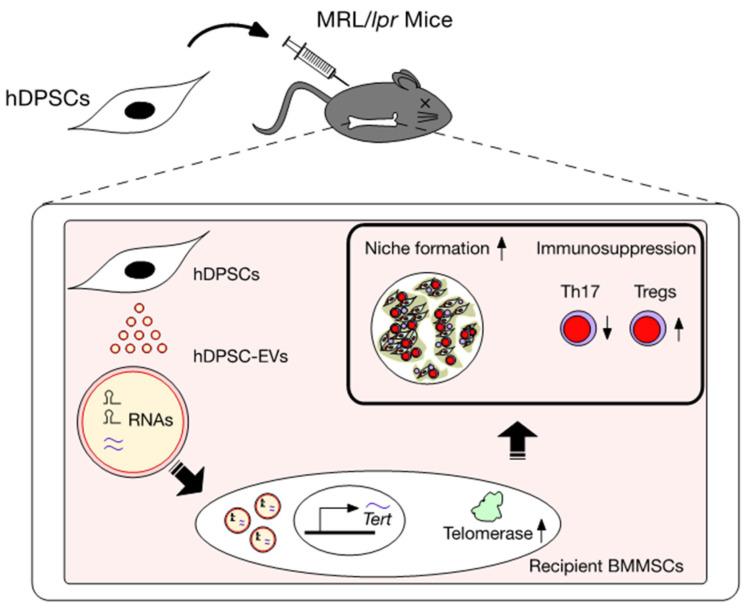
Recent advances in mesenchymal stem/stromal cell (MSC) research have led us to consider the feasibility of MSC-based therapy for various diseases. Human dental pulp-derived MSCs (hDPSCs) have been identified in the dental pulp tissue of deciduous and permanent teeth, and they exhibit properties with self-renewal and in vitro multipotency. Interestingly, hDPSCs exhibit superior immunosuppressive functions toward immune cells, especially T lymphocytes, both in vitro and in vivo. Recently, hDPSCs have been shown to have potent immunomodulatory functions in treating systemic lupus erythematosus (SLE) in the SLE MRL/ mouse model. However, the mechanisms underlying the immunosuppressive efficacy of hDPSCs remain unknown. This review aims to introduce a new target of hDPSC-based therapy on the recipient niche function in SLE.
近年来,间充质干细胞(MSC)研究的进展使我们开始考虑基于 MSC 的治疗方法治疗各种疾病的可行性。人牙髓来源的间充质干细胞(hDPSCs)已在乳恒牙牙髓组织中被鉴定出来,它们表现出自体更新和体外多能性的特性。有趣的是,hDPSCs 在体外和体内均表现出对免疫细胞(尤其是 T 淋巴细胞)的优越免疫抑制功能。最近,hDPSCs 在治疗系统性红斑狼疮(SLE)的 MRL/狼疮小鼠模型中显示出强大的免疫调节功能。然而,hDPSCs 的免疫抑制功效的机制尚不清楚。本综述旨在介绍基于 hDPSC 的治疗方法在 SLE 受者生态位功能方面的一个新靶点。