Center for Craniofacial Molecular Biology, University of Southern California School of Dentistry, 2250 Alcazar Street, CSA 103, Los Angeles, CA 90033, USA.
Stem Cell Res Ther. 2010 Mar 15;1(1):5. doi: 10.1186/scrt5.
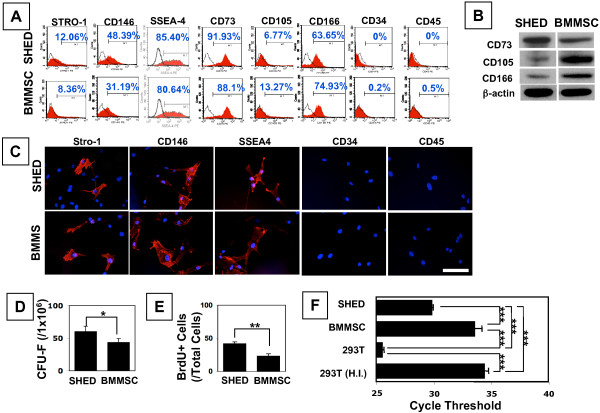
Stem cells from human exfoliated deciduous teeth (SHED) have been identified as a population of postnatal stem cells capable of differentiating into osteogenic and odontogenic cells, adipogenic cells, and neural cells. Herein we have characterized mesenchymal stem cell properties of SHED in comparison to human bone marrow mesenchymal stem cells (BMMSCs).
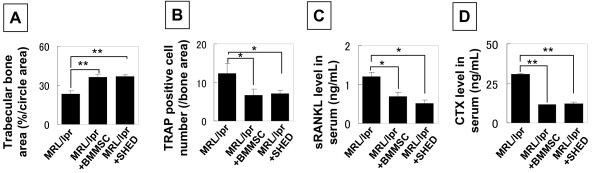
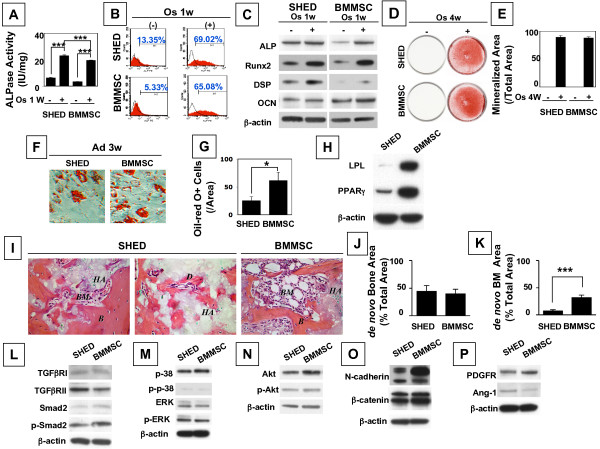
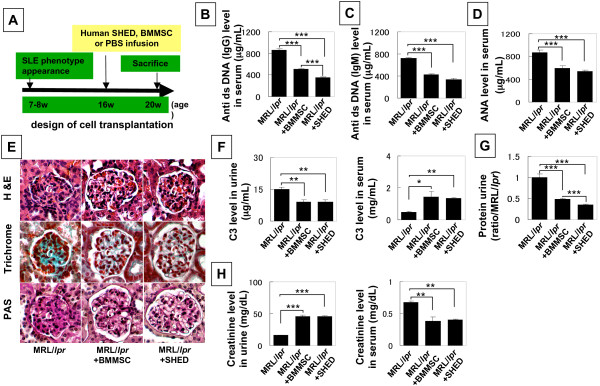
We used in vitro stem cell analysis approaches, including flow cytometry, inductive differentiation, telomerase activity, and Western blot analysis to assess multipotent differentiation of SHED and in vivo implantation to assess tissue regeneration of SHED. In addition, we utilized systemic SHED transplantation to treat systemic lupus erythematosus (SLE)-like MRL/lpr mice.
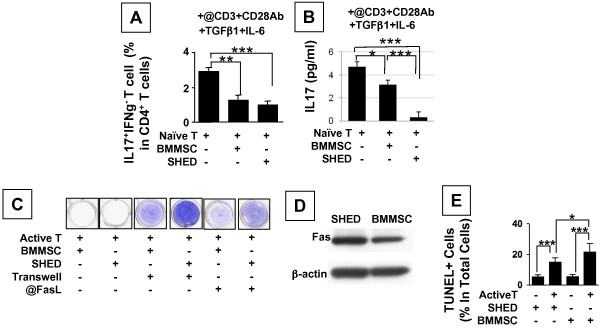
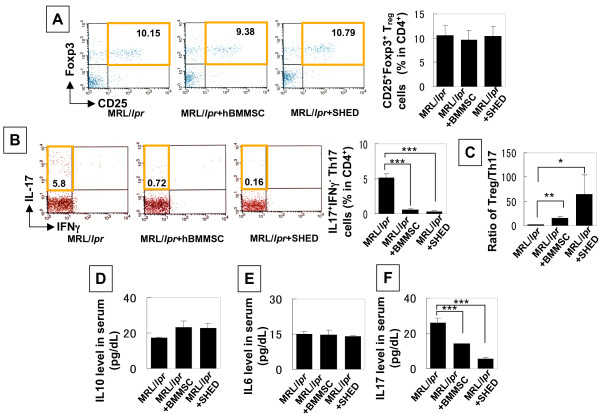
We found that SHED are capable of differentiating into osteogenic and adipogenic cells, expressing mesenchymal surface molecules (STRO-1, CD146, SSEA4, CD73, CD105, and CD166), and activating multiple signaling pathways, including TGFbeta, ERK, Akt, Wnt, and PDGF. Recently, BMMSCs were shown to possess an immunomodulatory function that leads to successful therapies for immune diseases. We examined the immunomodulatory properties of SHED in comparison to BMMSCs and found that SHED had significant effects on inhibiting T helper 17 (Th17) cells in vitro. Moreover, we found that SHED transplantation is capable of effectively reversing SLE-associated disorders in MRL/lpr mice. At the cellular level, SHED transplantation elevated the ratio of regulatory T cells (Tregs) via Th17 cells.
These data suggest that SHED are an accessible and feasible mesenchymal stem cell source for treating immune disorders like SLE.
人乳牙脱落干细胞(SHED)已被鉴定为一种具有多向分化潜能的成体干细胞,可分化为成骨细胞、成牙本质细胞、脂肪细胞和神经细胞。本文比较了 SHED 与骨髓间充质干细胞(BMMSCs)的间充质干细胞特性。
我们采用体外干细胞分析方法,包括流式细胞术、诱导分化、端粒酶活性和 Western blot 分析,评估 SHED 的多能性分化,以及体内植入评估 SHED 的组织再生。此外,我们利用系统性 SHED 移植治疗系统性红斑狼疮(SLE)样 MRL/lpr 小鼠。
我们发现 SHED 可分化为成骨细胞和脂肪细胞,表达间充质表面分子(STRO-1、CD146、SSEA4、CD73、CD105 和 CD166),并激活多个信号通路,包括 TGFβ、ERK、Akt、Wnt 和 PDGF。最近,BMMSCs 被证明具有免疫调节功能,可成功治疗免疫疾病。我们比较了 SHED 与 BMMSCs 的免疫调节特性,发现 SHED 具有显著抑制体外 Th17 细胞的作用。此外,我们发现 SHED 移植能够有效逆转 MRL/lpr 小鼠的 SLE 相关疾病。在细胞水平上,SHED 移植通过 Th17 细胞提高了调节性 T 细胞(Tregs)的比例。
这些数据表明,SHED 是一种可获得且可行的间充质干细胞来源,可用于治疗 SLE 等免疫疾病。