Department of Medicine, Division of Infectious Diseases, Boston Children's Hospital, Harvard Medical School, Boston, Massachusetts, USA.
mBio. 2022 Jun 28;13(3):e0379021. doi: 10.1128/mbio.03790-21. Epub 2022 Apr 14.
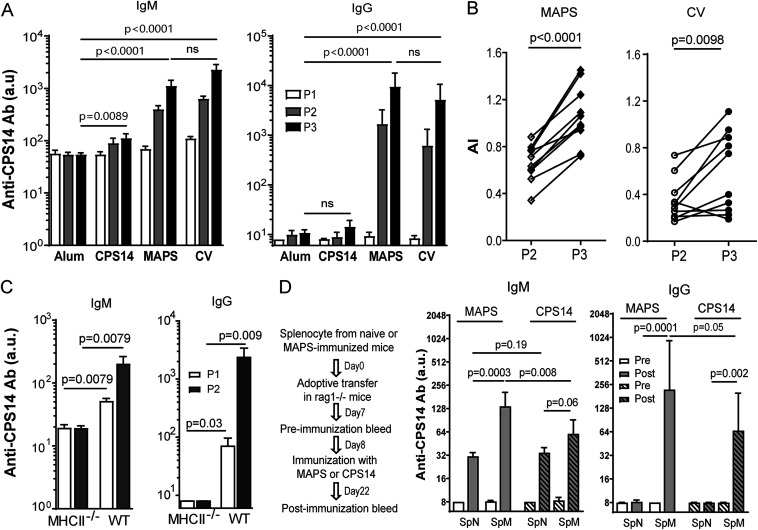
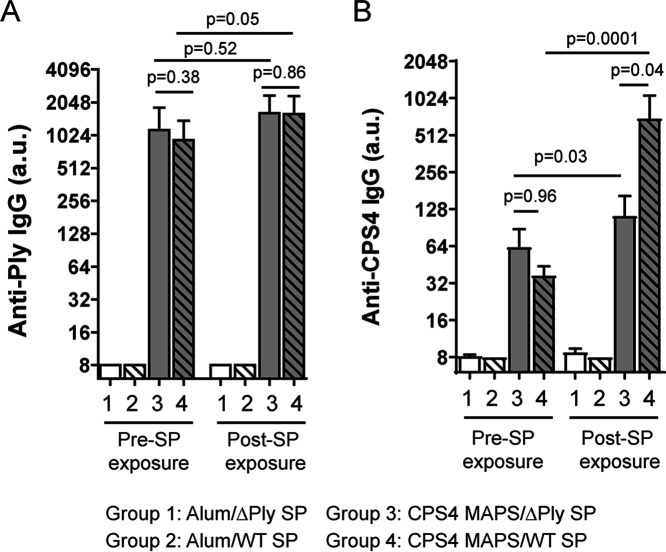
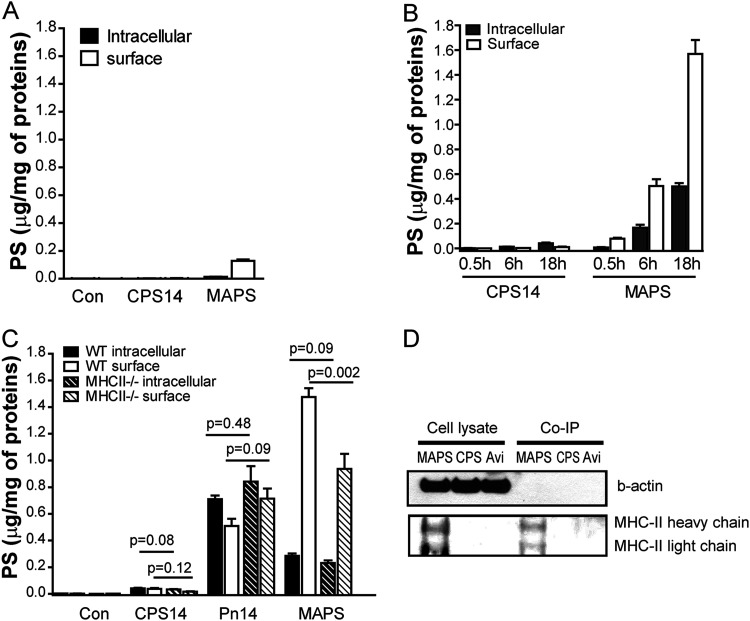
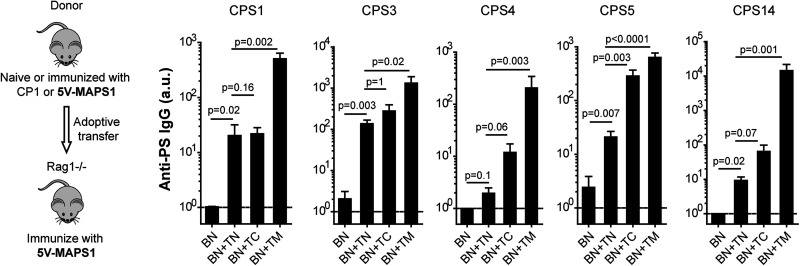
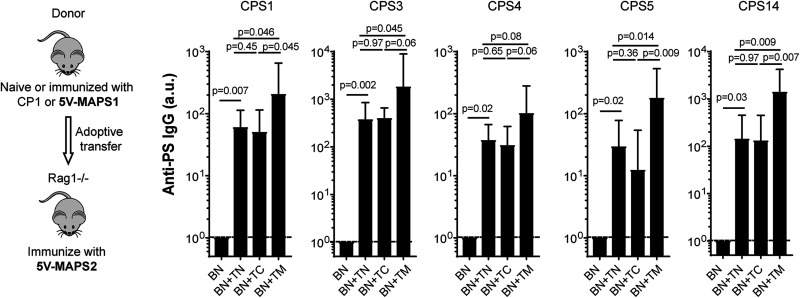
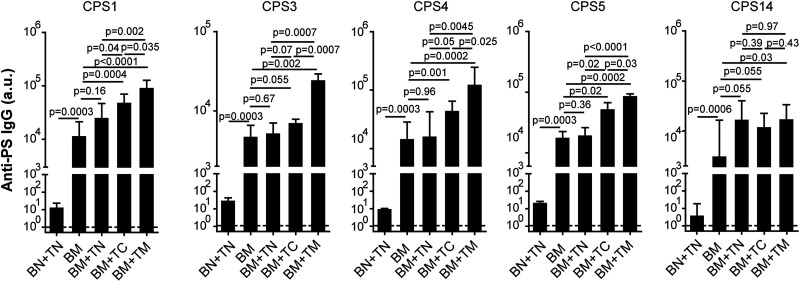
Capsular polysaccharides (CPSs) are important antigenic targets against bacterial infections. As T-independent antigens, however, CPSs elicit short-lived immune responses in adults and are poorly immunogenic in young children. Coupling CPS with protein carriers enhances anti-CPS responses and generates long-lasting immune memory. However, the mechanisms whereby carrier proteins accomplish this are not fully understood. Here, we dissect different mechanisms whereby carrier proteins enhance anti-CPS immunity. We show how coupling CPS with protein carriers modifies the interaction of CPS with antigen-presenting cells, enables a dual-activation mechanism for CPS-specific B cells via interaction with CPS- or carrier-specific T helper cells, and potentiates the recall of anti-CPS responses by engaging memory T helper cells during subsequent vaccination or bacterial exposure. Our findings provide new insights into the immunological basis of carrier-mediated anti-CPS immunity and may help in the design of more effective CPS-based vaccines. Polysaccharide capsules, the outermost shells of many bacterial pathogens, play a role in pathogenesis and protect bacteria against the immune system. Generating antipolysaccharide antibodies by vaccination has provided effective protection against infectious diseases caused by encapsulated bacteria. However, most pure polysaccharide preparations are poorly immunogenic, particularly in young children. To circumvent this problem, vaccines have been developed using polysaccharides associated with protein carriers. The precise mechanism whereby protein carriers enhance the immunogenicity of the polysaccharide remains unclear. The significance of our research is in elucidating the different roles played by carriers in facilitating polysaccharide processing and presentation, priming polysaccharide-specific B cells, and potentiating recall antipolysaccharide responses. Overall, our work provides new insights into the immunological basis of carrier-mediated antipolysaccharide immunity and may help in the design of more effective polysaccharide-based vaccines.
荚膜多糖(CPSs)是针对细菌感染的重要抗原性靶标。然而,作为 T 细胞非依赖性抗原,CPSs 在成年人中引起短暂的免疫反应,在幼儿中免疫原性差。将 CPS 与蛋白载体偶联可增强抗 CPS 反应并产生持久的免疫记忆。然而,载体蛋白实现这一目标的机制尚不完全清楚。在这里,我们剖析了载体蛋白增强抗 CPS 免疫的不同机制。我们展示了 CPS 与蛋白载体偶联如何改变 CPS 与抗原呈递细胞的相互作用,通过与 CPS 或载体特异性 T 辅助细胞的相互作用,为 CPS 特异性 B 细胞提供双重激活机制,并通过在随后的疫苗接种或细菌暴露期间结合记忆 T 辅助细胞来增强抗 CPS 反应的回忆。我们的发现为载体介导的抗 CPS 免疫的免疫学基础提供了新的见解,并可能有助于设计更有效的基于 CPS 的疫苗。多糖荚膜是许多细菌病原体的最外层外壳,在发病机制中起作用,并保护细菌免受免疫系统的攻击。通过疫苗接种产生抗多糖抗体为预防由囊封细菌引起的传染病提供了有效保护。然而,大多数纯多糖制剂的免疫原性较差,特别是在幼儿中。为了克服这个问题,已经开发了使用与蛋白载体相关的多糖的疫苗。载体蛋白增强多糖免疫原性的确切机制尚不清楚。我们研究的意义在于阐明载体在促进多糖加工和呈递、启动多糖特异性 B 细胞以及增强回忆抗多糖反应方面所起的不同作用。总体而言,我们的工作为载体介导的抗多糖免疫的免疫学基础提供了新的见解,并可能有助于设计更有效的基于多糖的疫苗。