Bren School of Environmental Science & Management, University of California, Santa Barbara, USA.
J Appl Microbiol. 2022 Aug;133(2):232-240. doi: 10.1111/jam.15577. Epub 2022 Apr 28.
The DNA marker HF183 is a partial 16S rRNA gene sequence highly specific to human-associated Bacteroides including Bacteroides dorei. While HF183 is used to assess human faecal contamination in aquatic environments worldwide, little is known about the existence of HF183 and B. dorei in human microbiomes outside of the human gastrointestinal tract and faeces.
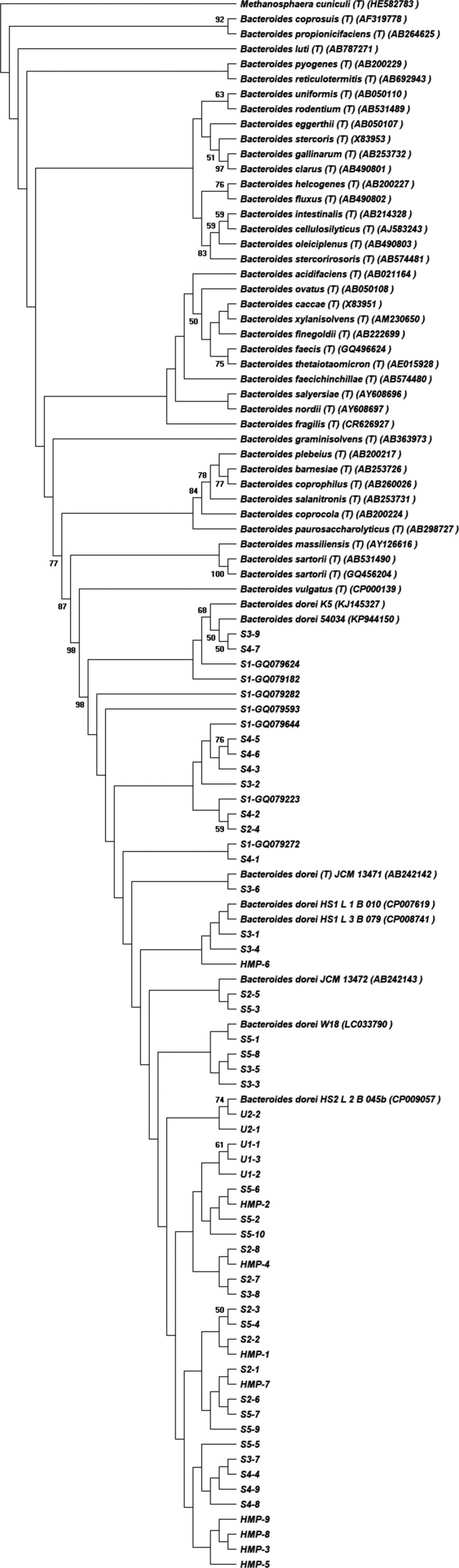
Previously published human skin and urine microbiome data sets from five independent human body skin studies, the Human Microbiome Project (HMP) and three independent human urine studies were analysed. The HF183 gene sequence was detected in all skin data sets, with the ratios of positive samples ranging from 0.5% to 36.3%. Popliteal fossa (knee), volar forearm and inguinal (groin) creases were identified as hot spots. HF183 was detected in two of three urine data sets, with ratios of positive samples ranging from 0% to 37.5%. All HF183-containing sequences from these data sets were classified as associated with B. dorei.
HF183 is widespread on human skin and present in urine.
Skin and urine microbiomes could be sources of HF183 to environmental waters. Such non-faecal sources of HF183 might explain low concentrations of HF183 in recreational waters when swimmers are present.
HF183 是一种部分 16S rRNA 基因序列,对包括多形拟杆菌(Bacteroides dorei)在内的人类相关拟杆菌具有高度特异性。虽然 HF183 被用于评估世界各地水生环境中的人类粪便污染,但对于 HF183 和 B. dorei 在人类胃肠道和粪便以外的微生物组中的存在知之甚少。
分析了来自五个独立人体皮肤研究、人类微生物组计划(HMP)和三个独立人体尿液研究的先前发表的人类皮肤和尿液微生物组数据集。在所有皮肤数据集均检测到 HF183 基因序列,阳性样本的比例范围为 0.5%至 36.3%。腘窝(膝盖)、掌侧前臂和腹股沟(腹股沟)褶皱被确定为热点。在三个尿液数据集的两个中检测到 HF183,阳性样本的比例范围为 0%至 37.5%。从这些数据集获得的所有含有 HF183 的序列均被归类为与 B. dorei 相关。
HF183 广泛存在于人类皮肤表面,并存在于尿液中。
皮肤和尿液微生物组可能是 HF183 进入环境水的来源。在有游泳者存在的情况下,HF183 在娱乐水中的浓度较低,这种非粪便来源的 HF183 可能可以解释这一现象。