• 文献检索
  • 文档翻译
  • 深度研究
  • 学术资讯
  • Suppr Zotero 插件Zotero 插件
  • 邀请有礼
  • 套餐&价格
  • 历史记录
应用&插件
Suppr Zotero 插件Zotero 插件浏览器插件Mac 客户端Windows 客户端微信小程序
定价
高级版会员购买积分包购买API积分包
服务
文献检索文档翻译深度研究API 文档MCP 服务
关于我们
关于 Suppr公司介绍联系我们用户协议隐私条款
关注我们

Suppr 超能文献

核心技术专利:CN118964589B侵权必究
粤ICP备2023148730 号-1Suppr @ 2026

文献检索

告别复杂PubMed语法,用中文像聊天一样搜索,搜遍4000万医学文献。AI智能推荐,让科研检索更轻松。

立即免费搜索

文件翻译

保留排版,准确专业,支持PDF/Word/PPT等文件格式,支持 12+语言互译。

免费翻译文档

深度研究

AI帮你快速写综述,25分钟生成高质量综述,智能提取关键信息,辅助科研写作。

立即免费体验

神经元特异性烯醇化酶和 S100 钙结合蛋白生物标志物对心脏骤停后复苏儿童死亡率预测的价值。

The Value of the Biomarkers Neuron-Specific Enolase and S100 Calcium-Binding Protein for Prediction of Mortality in Children Resuscitated After Cardiac Arrest.

机构信息

Department of Anesthesia and Intensive Care, Bispebjerg Hospital, Copenhagen, Denmark.

Department of Cardiology, Copenhagen University Hospital Rigshospitalet, Copenhagen, Denmark.

出版信息

Pediatr Cardiol. 2022 Oct;43(7):1659-1665. doi: 10.1007/s00246-022-02899-9. Epub 2022 Apr 16.

DOI:10.1007/s00246-022-02899-9
PMID:35429240
原文链接:https://pmc.ncbi.nlm.nih.gov/articles/PMC9489552/
Abstract

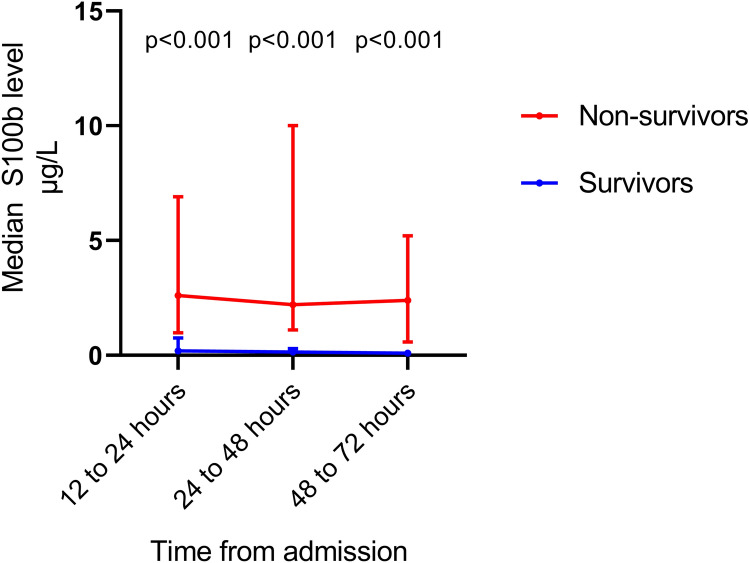
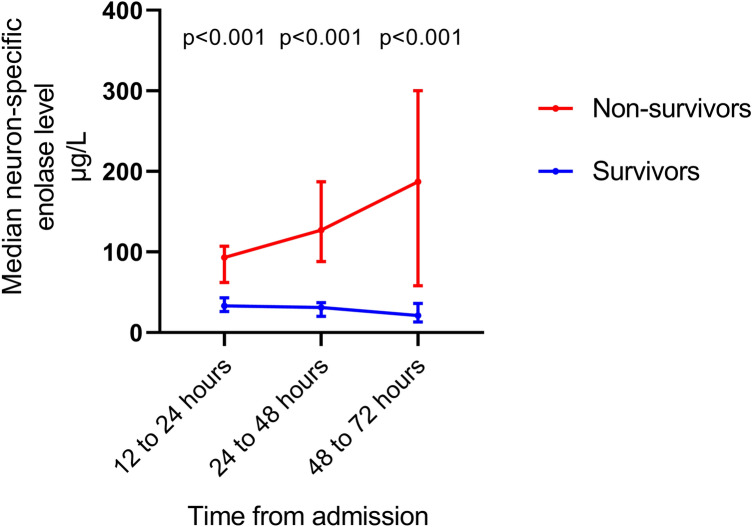
The aim of the present study was to assess the ability of the biomarkers neuron-specific enolase (NSE) and S100 calcium-binding protein b (S100b) to predict 30 day mortality in children resuscitated from cardiac arrest (CA). It was a prospective observational study at a single tertiary heart centre. Consecutive children were admitted after resuscitated in-hospital and out-of-hospital CA. Levels of NSE and S100b were analyzed from 12 to 24 hours, from 24 to 48 hours, and from 48 to 72 hours after admission. The primary endpoint was 30-day mortality. Differences in biomarker levels between survivors and non-survivors were analyzed with the Mann-Whitney U test. Receiver operating characteristics (ROC) curves were applied to assess the predictive ability of the biomarkers and the areas under the ROC curves (AUC) were presented. A total of 32 resuscitated CA patients were included, and 12 (38%) patients died within 30 days after resuscitation. We observed significantly higher levels of NSE and S100b in non-survivors compared to survivors at all timepoints from 12 to 72 hours after CA. NSE achieved AUCs from 0.91-0.98 for prediction of 30 day mortality, whereas S100b achieved AUCs from 0.93-0.94. An NSE cut-off of 61 μg/L sampled between 12-24 hours from admission achieved a sensitivity of 80% and a specificity of 100% for prediction of 30 day mortality. In children resuscitated from CA, the biomarkers NSE and S100b appear to be solid predictors of mortality after 30 days.

摘要

本研究旨在评估神经元特异性烯醇化酶(NSE)和 S100 钙结合蛋白 b(S100b)这两种生物标志物预测心肺复苏后儿童心搏骤停(CA)30 天死亡率的能力。这是一项在单一三级心脏中心进行的前瞻性观察性研究。连续入选在院内和院外 CA 后复苏的儿童。从入院后 12 至 24 小时、24 至 48 小时和 48 至 72 小时分析 NSE 和 S100b 的水平。主要终点为 30 天死亡率。采用 Mann-Whitney U 检验分析幸存者和非幸存者之间生物标志物水平的差异。应用受试者工作特征(ROC)曲线评估生物标志物的预测能力,并呈现 ROC 曲线下面积(AUC)。共纳入 32 例复苏后 CA 患儿,其中 12 例(38%)患儿在复苏后 30 天内死亡。我们观察到,与幸存者相比,非幸存者在 CA 后 12 至 72 小时的所有时间点上的 NSE 和 S100b 水平均显著升高。NSE 对 30 天死亡率的预测 AUC 值为 0.91-0.98,而 S100b 的 AUC 值为 0.93-0.94。入院后 12-24 小时内采样的 NSE 截断值为 61μg/L 时,对 30 天死亡率的预测具有 80%的敏感性和 100%的特异性。在心肺复苏后复苏的儿童中,NSE 和 S100b 这两种生物标志物似乎是 30 天后死亡率的可靠预测指标。
https://cdn.ncbi.nlm.nih.gov/pmc/blobs/de24/9489552/9eb1b244e725/246_2022_2899_Fig2_HTML.jpg
https://cdn.ncbi.nlm.nih.gov/pmc/blobs/de24/9489552/d447e5179e87/246_2022_2899_Fig1_HTML.jpg
https://cdn.ncbi.nlm.nih.gov/pmc/blobs/de24/9489552/9eb1b244e725/246_2022_2899_Fig2_HTML.jpg
https://cdn.ncbi.nlm.nih.gov/pmc/blobs/de24/9489552/d447e5179e87/246_2022_2899_Fig1_HTML.jpg
https://cdn.ncbi.nlm.nih.gov/pmc/blobs/de24/9489552/9eb1b244e725/246_2022_2899_Fig2_HTML.jpg

相似文献

1
The Value of the Biomarkers Neuron-Specific Enolase and S100 Calcium-Binding Protein for Prediction of Mortality in Children Resuscitated After Cardiac Arrest.神经元特异性烯醇化酶和 S100 钙结合蛋白生物标志物对心脏骤停后复苏儿童死亡率预测的价值。
Pediatr Cardiol. 2022 Oct;43(7):1659-1665. doi: 10.1007/s00246-022-02899-9. Epub 2022 Apr 16.
2
The biomarkers neuron-specific enolase and S100b measured the day following admission for severe accidental hypothermia have high predictive values for poor outcome.入院后第 1 天检测到神经元特异性烯醇化酶和 S100b 这两种生物标志物,对严重意外低体温患者的不良预后具有较高的预测价值。
Resuscitation. 2017 Dec;121:49-53. doi: 10.1016/j.resuscitation.2017.10.006. Epub 2017 Oct 7.
3
Serum biomarkers of brain injury to classify outcome after pediatric cardiac arrest*.儿童心脏骤停后用于分类结局的脑损伤血清生物标志物*。
Crit Care Med. 2014 Mar;42(3):664-74. doi: 10.1097/01.ccm.0000435668.53188.80.
4
Combining NSE and S100B with clinical examination findings to predict survival after resuscitation from cardiac arrest.将 NSE 和 S100B 与临床检查结果相结合,预测心脏骤停复苏后的存活率。
Resuscitation. 2014 Aug;85(8):1025-9. doi: 10.1016/j.resuscitation.2014.04.020. Epub 2014 Apr 30.
5
Protein S100B as a reliable tool for early prognostication after cardiac arrest.蛋白质S100B作为心脏骤停后早期预后评估的可靠工具。
Resuscitation. 2020 Nov;156:251-259. doi: 10.1016/j.resuscitation.2020.08.010. Epub 2020 Aug 25.
6
Utility of neuron-specific enolase in traumatic brain injury; relations to S100B levels, outcome, and extracranial injury severity.神经元特异性烯醇化酶在创伤性脑损伤中的作用;与S100B水平、预后及颅外损伤严重程度的关系。
Crit Care. 2016 Sep 8;20:285. doi: 10.1186/s13054-016-1450-y.
7
[Role of neuron specific enolase and S100 protein in evaluation of brain damage in patients resuscitated from cardiac arrest].[神经元特异性烯醇化酶和S100蛋白在评估心脏骤停复苏患者脑损伤中的作用]
Zhongguo Wei Zhong Bing Ji Jiu Yi Xue. 2007 Dec;19(12):749-52.
8
Prognostic value of serum biomarkers of cerebral injury in classifying neurological outcome after paediatric resuscitation.血清脑损伤标志物对儿科复苏后神经功能预后的分类价值。
Resuscitation. 2018 Jan;122:113-120. doi: 10.1016/j.resuscitation.2017.09.012. Epub 2017 Sep 20.
9
Modeling serum level of s100β and bispectral index to predict outcome after cardiac arrest.建立 S100β 蛋白和脑电双频指数模型预测心搏骤停患者预后。
J Am Coll Cardiol. 2013 Aug 27;62(9):851-8. doi: 10.1016/j.jacc.2013.04.039. Epub 2013 May 15.
10
Usefulness of early plasma S-100B protein and Neuron-Specific Enolase measurements to identify cerebrovascular etiology of out-of-hospital cardiac arrest.早期血浆 S-100B 蛋白和神经元特异性烯醇化酶测定对识别院外心脏骤停的脑血管病因的作用。
Resuscitation. 2018 Sep;130:61-66. doi: 10.1016/j.resuscitation.2018.07.004. Epub 2018 Jul 5.

引用本文的文献

1
The utility of brain biomarkers in predicting survival and neurological outcomes in pediatric patients after cardiac arrest: A systematic review and meta-analysis.脑生物标志物在预测小儿心脏骤停患者生存及神经功能结局中的应用:一项系统评价与荟萃分析
Cardiol J. 2025;32(2):130-141. doi: 10.5603/cj.103883. Epub 2025 Mar 10.
2
The Effects of Ionotropic GABA Receptor Blockage on the Brain in Rats with Induced Sepsis.离子型γ-氨基丁酸受体阻断对诱导性脓毒症大鼠脑的影响。
Mol Neurobiol. 2025 Mar;62(3):3544-3555. doi: 10.1007/s12035-024-04505-w. Epub 2024 Sep 23.
3
Utility of melatonin on brain injury, synaptic transmission, and energy metabolism in rats with sepsis.

本文引用的文献

1
European Resuscitation Council Guidelines 2021: Paediatric Life Support.欧洲复苏委员会指南 2021:儿科生命支持。
Resuscitation. 2021 Apr;161:327-387. doi: 10.1016/j.resuscitation.2021.02.015. Epub 2021 Mar 24.
2
European Resuscitation Council and European Society of Intensive Care Medicine Guidelines 2021: Post-resuscitation care.欧洲复苏委员会和欧洲重症监护医学学会2021年指南:复苏后护理。
Resuscitation. 2021 Apr;161:220-269. doi: 10.1016/j.resuscitation.2021.02.012. Epub 2021 Mar 24.
3
Effect of sedation on quantitative electroencephalography after cardiac arrest.
褪黑素对脓毒症大鼠脑损伤、突触传递及能量代谢的作用
Naunyn Schmiedebergs Arch Pharmacol. 2025 Feb;398(2):1509-1519. doi: 10.1007/s00210-024-03337-8. Epub 2024 Aug 6.
4
2023 International Consensus on Cardiopulmonary Resuscitation and Emergency Cardiovascular Care Science With Treatment Recommendations: Summary From the Basic Life Support; Advanced Life Support; Pediatric Life Support; Neonatal Life Support; Education, Implementation, and Teams; and First Aid Task Forces.2023 年国际心肺复苏和紧急心血管护理科学共识及治疗推荐:基础生命支持、高级生命支持、儿科生命支持、新生儿生命支持、教育、实施和团队以及急救任务组的总结。
Circulation. 2023 Dec 12;148(24):e187-e280. doi: 10.1161/CIR.0000000000001179. Epub 2023 Nov 9.
5
Different neuroprognostication thresholds of neuron-specific enolase in shockable and non-shockable out-of-hospital cardiac arrest: a prospective multicenter observational study in Korea (the KORHN-PRO registry).不同神经预后神经元特异性烯醇化酶在可电击和不可电击院外心脏骤停中的界值:韩国前瞻性多中心观察研究(KORHN-PRO 登记研究)。
Crit Care. 2023 Aug 9;27(1):313. doi: 10.1186/s13054-023-04603-6.
心脏骤停后镇静对定量脑电图的影响。
Resuscitation. 2018 Mar;124:132-137. doi: 10.1016/j.resuscitation.2017.11.068. Epub 2017 Dec 2.
4
The biomarkers neuron-specific enolase and S100b measured the day following admission for severe accidental hypothermia have high predictive values for poor outcome.入院后第 1 天检测到神经元特异性烯醇化酶和 S100b 这两种生物标志物,对严重意外低体温患者的不良预后具有较高的预测价值。
Resuscitation. 2017 Dec;121:49-53. doi: 10.1016/j.resuscitation.2017.10.006. Epub 2017 Oct 7.
5
Prognostic value of serum biomarkers of cerebral injury in classifying neurological outcome after paediatric resuscitation.血清脑损伤标志物对儿科复苏后神经功能预后的分类价值。
Resuscitation. 2018 Jan;122:113-120. doi: 10.1016/j.resuscitation.2017.09.012. Epub 2017 Sep 20.
6
Single versus Serial Measurements of Neuron-Specific Enolase and Prediction of Poor Neurological Outcome in Persistently Unconscious Patients after Out-Of-Hospital Cardiac Arrest - A TTM-Trial Substudy.院外心脏骤停后持续昏迷患者神经元特异性烯醇化酶的单次测量与系列测量及不良神经预后预测——一项目标温度管理试验的子研究
PLoS One. 2017 Jan 18;12(1):e0168894. doi: 10.1371/journal.pone.0168894. eCollection 2017.
7
Neuroprotective Effects of the Glucagon-Like Peptide-1 Analog Exenatide After Out-of-Hospital Cardiac Arrest: A Randomized Controlled Trial.胰高血糖素样肽-1 类似物艾塞那肽对院外心脏骤停后神经保护作用的随机对照试验。
Circulation. 2016 Dec 20;134(25):2115-2124. doi: 10.1161/CIRCULATIONAHA.116.024088. Epub 2016 Nov 12.
8
Neuron-Specific Enolase as a Predictor of Death or Poor Neurological Outcome After Out-of-Hospital Cardiac Arrest and Targeted Temperature Management at 33°C and 36°C.神经元特异性烯醇化酶作为院外心脏骤停后目标温度管理在 33°C 和 36°C 时死亡或不良神经结局的预测因子。
J Am Coll Cardiol. 2015 May 19;65(19):2104-14. doi: 10.1016/j.jacc.2015.03.538.
9
Serum biomarkers of brain injury to classify outcome after pediatric cardiac arrest*.儿童心脏骤停后用于分类结局的脑损伤血清生物标志物*。
Crit Care Med. 2014 Mar;42(3):664-74. doi: 10.1097/01.ccm.0000435668.53188.80.
10
Predictors of poor neurological outcome in adult comatose survivors of cardiac arrest: a systematic review and meta-analysis. Part 2: Patients treated with therapeutic hypothermia.心搏骤停后昏迷的成年幸存者不良神经结局的预测因素:系统评价和荟萃分析。第 2 部分:接受治疗性低温治疗的患者。
Resuscitation. 2013 Oct;84(10):1324-38. doi: 10.1016/j.resuscitation.2013.06.020. Epub 2013 Jul 3.