Department of Surgery, Peking Union Medical College Hospital, Chinese Academy of Medical Sciences and Peking Union Medical College, 1 Shuaifuyuan, Wangfujing, Beijing, 100730, China.
BMC Surg. 2022 Apr 17;22(1):143. doi: 10.1186/s12893-022-01472-8.
Occult breast cancer (OBC) is a special type of breast cancer. Because of its rarity, clinicopathological information is still insufficient, causing a controversial condition about its treatment recommendation. Thus, we aimed to clarify major clinicopathological information, treatment strategies and prognosis of OBC based on a large population.
We retrospectively collected adult female OBC population from Surveillance, Epidemiology, and End Results database. We divided the whole cohort into two groups based on surgical treatment in-breast. Descriptive analysis of 18 clinicopathological variables was conducted. Survival analysis was performed based on different clinicopathological factors. Univariate and multivariate Cox regression analysis was performed to identify potential independent predictor for prognosis of OBC.
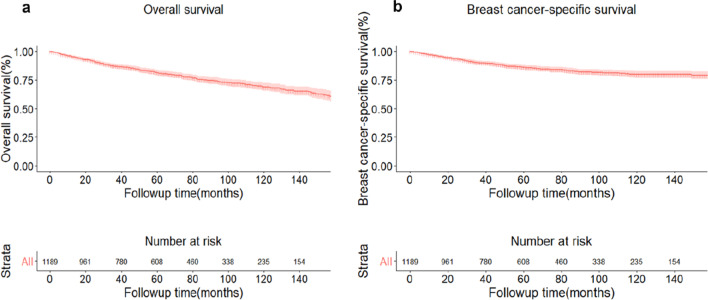
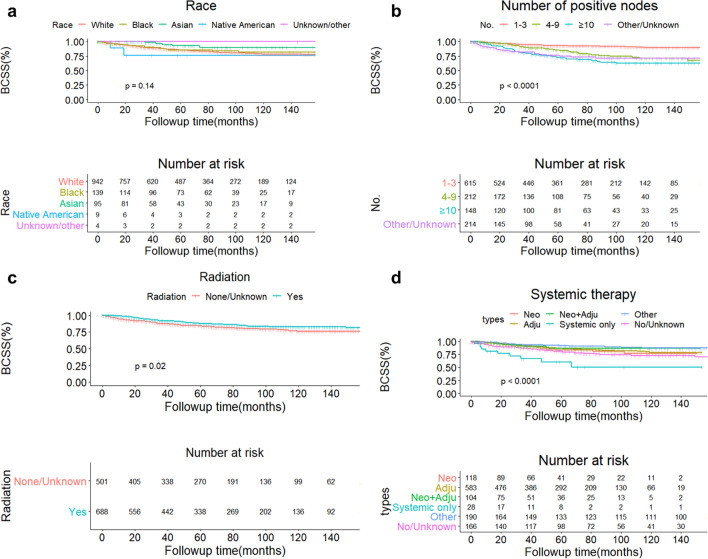
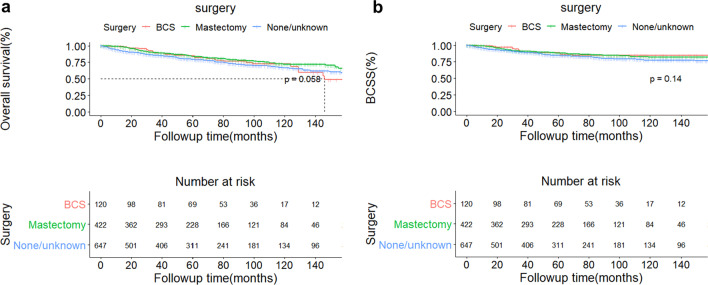
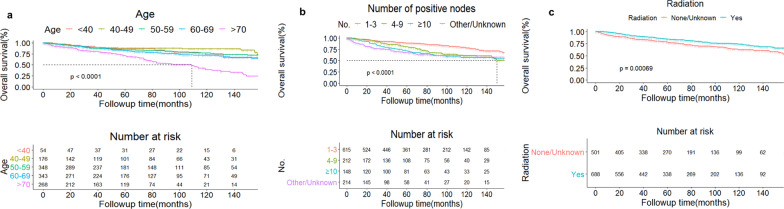
1189 OBC patients were in final analysis and most of them were diagnosed as an early-stage carcinoma. Patients received breast-conserving treatment (BCT) was nearly two times of ones received mastectomy. Patients receiving radiotherapy in BCT group were significantly more than patients receiving radiotherapy in mastectomy group (61.76 vs. 50.9%, P < 0.001). After a median follow-up period of 62 months, 5-year and 10-year overall survival (OS) of all subjects was 81.6% and 68.8%, respectively. No significant difference in OS and breast-cancer specific survival (BCSS) was found between mastectomy and local breast-conserving surgery. Older age and larger number of positive lymph nodes causes a worse prognosis whereas radiotherapy brought a better clinical outcome for OBC patients.
OBC has a generally good prognosis. Less-intensive surgery does not negatively impact clinical outcomes of OBC while additional radiotherapy is totally beneficial to prolong OS and BCSS.
隐匿性乳腺癌(OBC)是一种特殊类型的乳腺癌。由于其罕见性,临床病理信息仍然不足,导致其治疗建议存在争议。因此,我们旨在基于大量人群阐明 OBC 的主要临床病理信息、治疗策略和预后。
我们从监测、流行病学和最终结果数据库中回顾性地收集了成年女性 OBC 人群。我们根据手术治疗方式将整个队列分为两组,进行 18 项临床病理变量的描述性分析。根据不同的临床病理因素进行生存分析。进行单变量和多变量 Cox 回归分析,以确定 OBC 预后的潜在独立预测因素。
最终纳入了 1189 例 OBC 患者,其中大多数患者被诊断为早期癌。接受保乳治疗(BCT)的患者几乎是接受乳房切除术的两倍。在 BCT 组中接受放疗的患者明显多于在乳房切除术组中接受放疗的患者(61.76%比 50.9%,P < 0.001)。在中位随访 62 个月后,所有患者的 5 年和 10 年总生存率(OS)分别为 81.6%和 68.8%。乳房切除术和局部保乳手术之间的 OS 和乳腺癌特异性生存率(BCSS)无显著差异。年龄较大和阳性淋巴结数量较多导致预后较差,而放疗对 OBC 患者的临床结局有更好的影响。
OBC 的总体预后良好。非强化手术不会对 OBC 的临床结局产生负面影响,而额外的放疗完全有利于延长 OS 和 BCSS。