Robeson Michael S, Manna Kanishka, Randolph Christopher, Byrum Stephanie, Hakkak Reza
Department of Biomedical Informatics, University of Arkansas for Medical Sciences, Little Rock, AR, United States.
Department of Biochemistry and Molecular Biology, University of Arkansas for Medical Sciences, Little Rock, AR, United States.
Front Microbiol. 2022 Mar 30;13:834776. doi: 10.3389/fmicb.2022.834776. eCollection 2022.
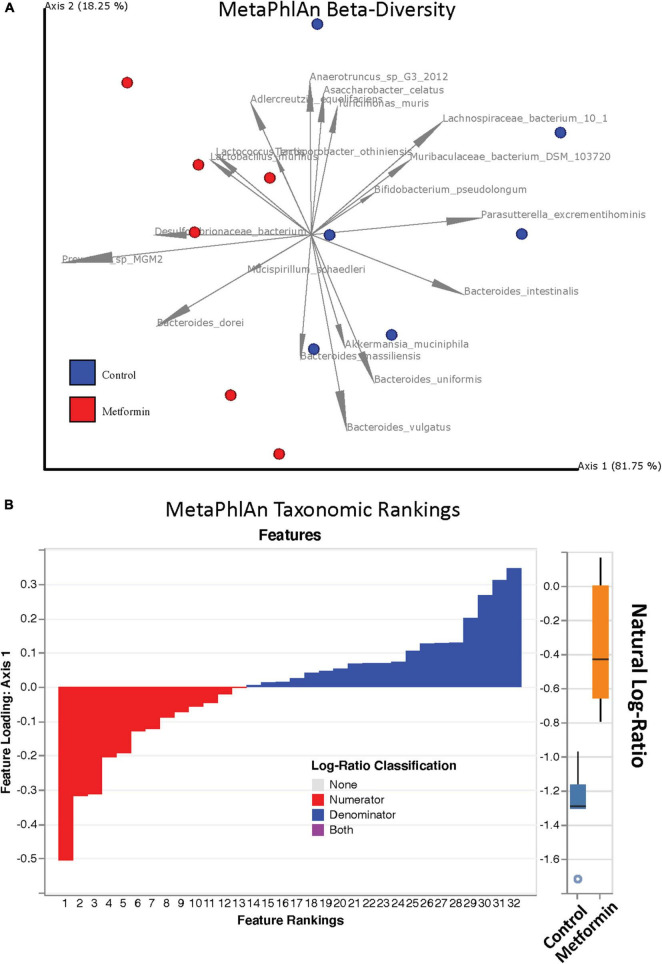
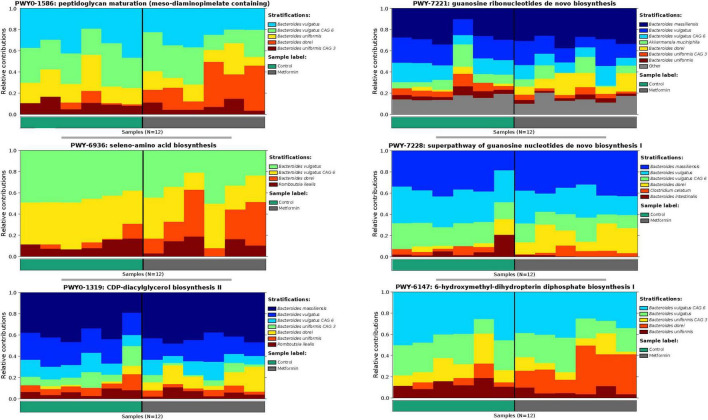
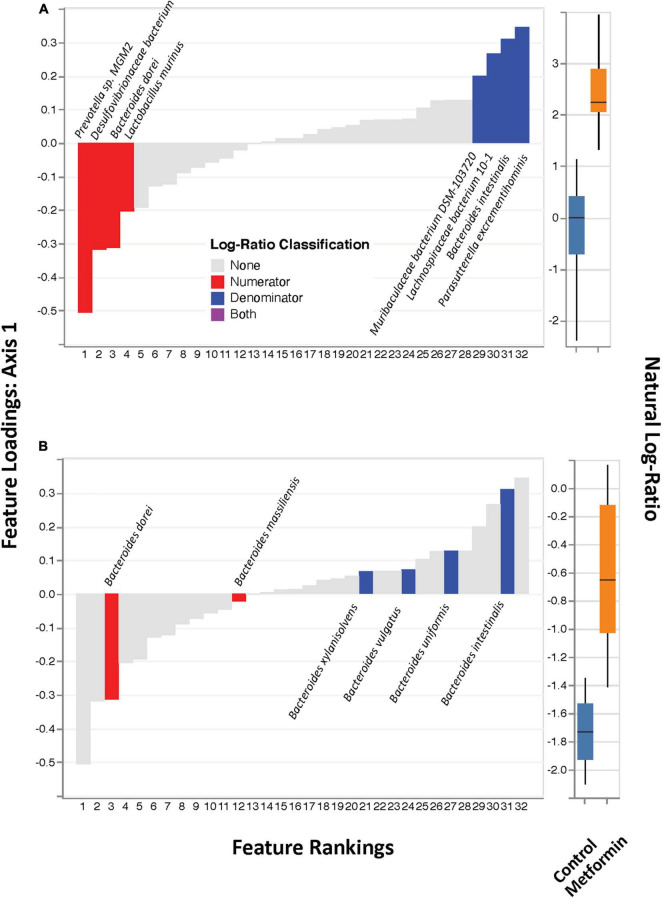
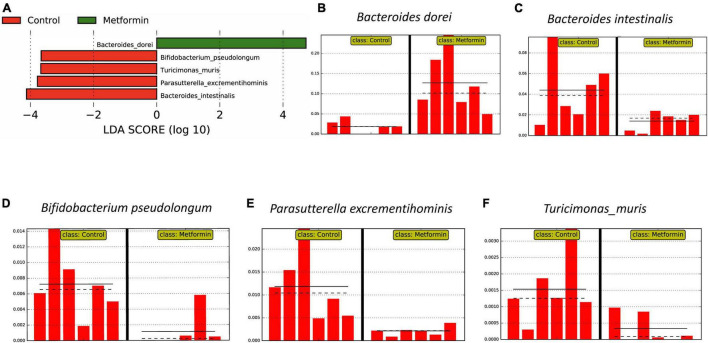
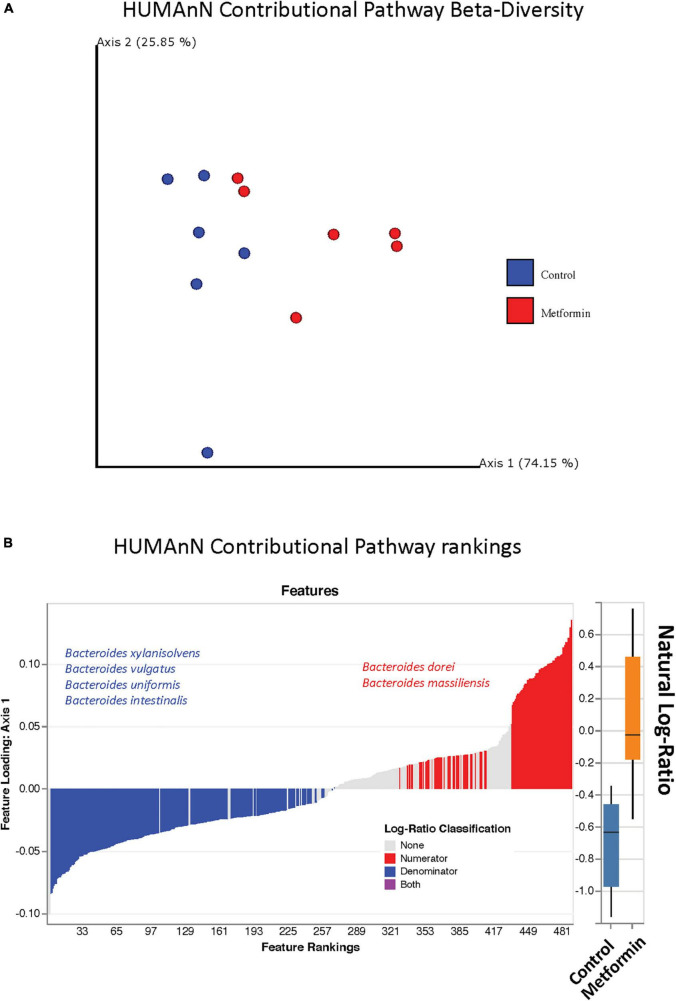
Obesity is the leading cause of health-related diseases in the United States and World. Previously, we reported that obesity can change gut microbiota using the Zucker rat model. Metformin is an oral anti-hyperglycemic agent approved by the FDA to treat type 2 diabetes (T2D) in adults and children older than 10 years of age. The correlation of short-term metformin treatment and specific alterations to the gut microbiota in obese models is less known. Short-term metformin has been shown to reduce liver steatosis. Here we investigate the effects of short-term metformin treatment on population of gut microbiota profile in an obese rat model. Five week old obese ( = 12) female Zucker rats after 1 week of acclimation, received AIN-93 G diet for 8 weeks and then rats were randomly assigned into two groups (6 rats/group): (1) obese without metformin (ObC), or (2) obese with metformin (ObMet). Metformin was mixed with AIN-93G diet at 1,000 mg/kg of diet. Rats were weighed twice per week. All rats were sacrificed at the end of metformin treatment at 10 weeks and fecal samples were collected and kept at -80°C. Total microbial DNA was collected directly from the fecal samples used for shotgun-metagenomics sequencing and subsequently analyzed using MetaPlAn and HUMAnN. After stringent data filtering and quality control we found significant differences ( = 0.0007) in beta diversity (Aitchison distances) between the ObC vs. ObMet groups. Supervised and unsupervised analysis of the log-ratios and vs. all other spp., revealed that and were enriched in the ObMet group, while the remaining spp. where enriched in the ObC group ( = 0.002). The contributional diversity of pathways is also significantly associated by treatment group ( = 0.008). In summary, in the obese Zucker rat model, short-term metformin treatment changes the gut microbiota profile, particularly altering the composition spp. between ObC and ObMet.
肥胖是美国乃至全球与健康相关疾病的主要成因。此前,我们利用Zucker大鼠模型报道了肥胖会改变肠道微生物群。二甲双胍是一种经美国食品药品监督管理局(FDA)批准的口服抗高血糖药物,用于治疗10岁及以上成人和儿童的2型糖尿病(T2D)。短期使用二甲双胍治疗与肥胖模型中肠道微生物群的特定改变之间的相关性尚鲜为人知。短期使用二甲双胍已被证明可减轻肝脏脂肪变性。在此,我们研究短期使用二甲双胍治疗对肥胖大鼠模型中肠道微生物群谱的影响。5周龄肥胖(n = 12)雌性Zucker大鼠在适应1周后,接受AIN - 93 G饮食8周,然后将大鼠随机分为两组(每组6只大鼠):(1)未使用二甲双胍的肥胖组(ObC),或(2)使用二甲双胍的肥胖组(ObMet)。将二甲双胍以1000 mg/kg的剂量混入AIN - 93G饮食中。每周称重大鼠两次。在10周的二甲双胍治疗结束时处死所有大鼠,并收集粪便样本,保存在 - 80°C。直接从用于鸟枪法宏基因组测序的粪便样本中收集总微生物DNA,随后使用MetaPlAn和HUMAnN进行分析。经过严格的数据过滤和质量控制后,我们发现ObC组与ObMet组之间在β多样性(艾奇逊距离)上存在显著差异(P = 0.0007)。对log比值 与 以及所有其他 属进行监督和无监督分析,结果显示 和 在ObMet组中富集,而其余 属在ObC组中富集(P = 0.002)。通路的贡献多样性也与治疗组显著相关(P = 0.008)。总之,在肥胖的Zucker大鼠模型中,短期使用二甲双胍治疗会改变肠道微生物群谱,特别是改变ObC组和ObMet组之间的 属组成。