• 文献检索
  • 文档翻译
  • 深度研究
  • 学术资讯
  • Suppr Zotero 插件Zotero 插件
  • 邀请有礼
  • 套餐&价格
  • 历史记录
应用&插件
Suppr Zotero 插件Zotero 插件浏览器插件Mac 客户端Windows 客户端微信小程序
定价
高级版会员购买积分包购买API积分包
服务
文献检索文档翻译深度研究API 文档MCP 服务
关于我们
关于 Suppr公司介绍联系我们用户协议隐私条款
关注我们

Suppr 超能文献

核心技术专利:CN118964589B侵权必究
粤ICP备2023148730 号-1Suppr @ 2026

文献检索

告别复杂PubMed语法,用中文像聊天一样搜索,搜遍4000万医学文献。AI智能推荐,让科研检索更轻松。

立即免费搜索

文件翻译

保留排版,准确专业,支持PDF/Word/PPT等文件格式,支持 12+语言互译。

免费翻译文档

深度研究

AI帮你快速写综述,25分钟生成高质量综述,智能提取关键信息,辅助科研写作。

立即免费体验

用于矿棉绝缘的低甲醛粘合剂:综述

Low Formaldehyde Binders for Mineral Wool Insulation: A Review.

作者信息

Bennett Thomas M, Allan John F, Garden Jennifer A, Shaver Michael P

机构信息

School of Natural Sciences Department of Materials The University of Manchester Manchester M13 9PL UK.

Superglass Insulation Ltd. Thistle Industrial Estate, Kerse Rd Stirling FK7 7QQ UK.

出版信息

Glob Chall. 2022 Jan 12;6(4):2100110. doi: 10.1002/gch2.202100110. eCollection 2022 Apr.

DOI:10.1002/gch2.202100110
PMID:35433028
原文链接:https://pmc.ncbi.nlm.nih.gov/articles/PMC8995714/
Abstract

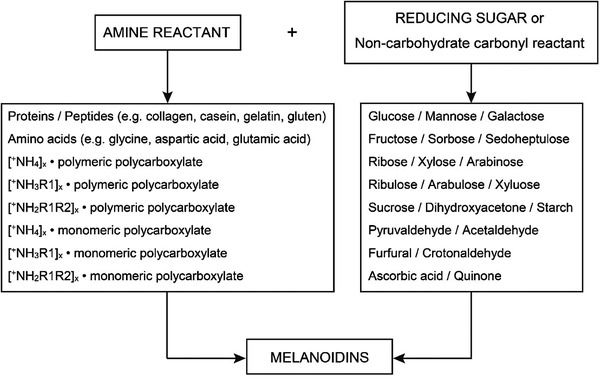
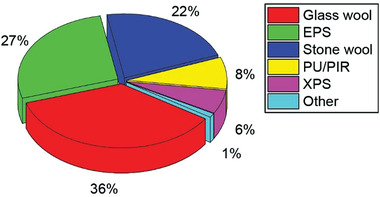
Insulating materials are ubiquitous in a built environment and play a critical role in reducing the energy consumed to maintain habitable indoor environments. Mineral wool insulation (MWI) products, including glass, stone, and slag variants, are the most widely used class of insulating materials in Europe and account for more than 50% of the total market by volume. MWI typically consists of two key components: a mesh of inorganic fibers that are several micrometers in diameter, and an organic thermosetting adhesive commonly referred to as the "binder." Traditional phenol-formaldehyde-urea (PFU) binders used in the manufacture of MWI are increasingly being scrutinized for the formaldehyde released during their manufacture and service lifetime. The recent classification of formaldehyde as a carcinogen by various safety organizations has accelerated a paradigm shift within the industry toward alternative binder technologies that minimize or indeed eliminate formaldehyde emissions. This review examines more recent strategies for achieving low- or zero-added formaldehyde binders for MWI, with a particular focus on the patent literature. The chemistry underpinning traditional PFU binders is presented and compared to new strategies involving scavenging molecules that decrease formaldehyde emissions, as well as zero-added formaldehyde binder technologies such as polyester, Maillard, and epoxide thermosets.

摘要

绝缘材料在建筑环境中无处不在,对于降低维持适宜居住的室内环境所需的能耗起着关键作用。矿物棉绝缘(MWI)产品,包括玻璃、石材和矿渣变体,是欧洲使用最广泛的一类绝缘材料,按体积计算占总市场的50%以上。MWI通常由两个关键成分组成:直径为几微米的无机纤维网,以及通常被称为“粘合剂”的有机热固性粘合剂。用于制造MWI的传统酚醛-脲(PFU)粘合剂在其制造和使用寿命期间释放的甲醛越来越受到审查。各安全组织最近将甲醛列为致癌物,加速了该行业向替代粘合剂技术的范式转变,这些技术可最大限度减少或确实消除甲醛排放。本综述研究了实现MWI低添加或零添加甲醛粘合剂的最新策略,特别关注专利文献。介绍了传统PFU粘合剂的基础化学,并与涉及减少甲醛排放的清除分子的新策略以及聚酯、美拉德和环氧化物热固性等零添加甲醛粘合剂技术进行了比较。
https://cdn.ncbi.nlm.nih.gov/pmc/blobs/2f82/8995714/74ef8d3add48/GCH2-6-2100110-g008.jpg
https://cdn.ncbi.nlm.nih.gov/pmc/blobs/2f82/8995714/cb58db05f494/GCH2-6-2100110-g007.jpg
https://cdn.ncbi.nlm.nih.gov/pmc/blobs/2f82/8995714/841103315dcc/GCH2-6-2100110-g001.jpg
https://cdn.ncbi.nlm.nih.gov/pmc/blobs/2f82/8995714/e8d130fd1dd5/GCH2-6-2100110-g021.jpg
https://cdn.ncbi.nlm.nih.gov/pmc/blobs/2f82/8995714/735ce272f8c4/GCH2-6-2100110-g013.jpg
https://cdn.ncbi.nlm.nih.gov/pmc/blobs/2f82/8995714/880b53b25989/GCH2-6-2100110-g014.jpg
https://cdn.ncbi.nlm.nih.gov/pmc/blobs/2f82/8995714/cffff87c0df3/GCH2-6-2100110-g018.jpg
https://cdn.ncbi.nlm.nih.gov/pmc/blobs/2f82/8995714/d75839449748/GCH2-6-2100110-g016.jpg
https://cdn.ncbi.nlm.nih.gov/pmc/blobs/2f82/8995714/3b5f7a1926ca/GCH2-6-2100110-g006.jpg
https://cdn.ncbi.nlm.nih.gov/pmc/blobs/2f82/8995714/12348a230815/GCH2-6-2100110-g009.jpg
https://cdn.ncbi.nlm.nih.gov/pmc/blobs/2f82/8995714/fbc8ffd21188/GCH2-6-2100110-g017.jpg
https://cdn.ncbi.nlm.nih.gov/pmc/blobs/2f82/8995714/667d462aaed1/GCH2-6-2100110-g002.jpg
https://cdn.ncbi.nlm.nih.gov/pmc/blobs/2f82/8995714/2c3a55dec3ab/GCH2-6-2100110-g020.jpg
https://cdn.ncbi.nlm.nih.gov/pmc/blobs/2f82/8995714/46c8bc5a5aab/GCH2-6-2100110-g024.jpg
https://cdn.ncbi.nlm.nih.gov/pmc/blobs/2f82/8995714/e415b0ec8a21/GCH2-6-2100110-g019.jpg
https://cdn.ncbi.nlm.nih.gov/pmc/blobs/2f82/8995714/a3b862e2cc31/GCH2-6-2100110-g015.jpg
https://cdn.ncbi.nlm.nih.gov/pmc/blobs/2f82/8995714/3f24aabf5ca9/GCH2-6-2100110-g005.jpg
https://cdn.ncbi.nlm.nih.gov/pmc/blobs/2f82/8995714/a331bcc5b1c1/GCH2-6-2100110-g003.jpg
https://cdn.ncbi.nlm.nih.gov/pmc/blobs/2f82/8995714/8ecbacc028cb/GCH2-6-2100110-g010.jpg
https://cdn.ncbi.nlm.nih.gov/pmc/blobs/2f82/8995714/74ef8d3add48/GCH2-6-2100110-g008.jpg
https://cdn.ncbi.nlm.nih.gov/pmc/blobs/2f82/8995714/cb58db05f494/GCH2-6-2100110-g007.jpg
https://cdn.ncbi.nlm.nih.gov/pmc/blobs/2f82/8995714/841103315dcc/GCH2-6-2100110-g001.jpg
https://cdn.ncbi.nlm.nih.gov/pmc/blobs/2f82/8995714/e8d130fd1dd5/GCH2-6-2100110-g021.jpg
https://cdn.ncbi.nlm.nih.gov/pmc/blobs/2f82/8995714/735ce272f8c4/GCH2-6-2100110-g013.jpg
https://cdn.ncbi.nlm.nih.gov/pmc/blobs/2f82/8995714/880b53b25989/GCH2-6-2100110-g014.jpg
https://cdn.ncbi.nlm.nih.gov/pmc/blobs/2f82/8995714/cffff87c0df3/GCH2-6-2100110-g018.jpg
https://cdn.ncbi.nlm.nih.gov/pmc/blobs/2f82/8995714/d75839449748/GCH2-6-2100110-g016.jpg
https://cdn.ncbi.nlm.nih.gov/pmc/blobs/2f82/8995714/3b5f7a1926ca/GCH2-6-2100110-g006.jpg
https://cdn.ncbi.nlm.nih.gov/pmc/blobs/2f82/8995714/12348a230815/GCH2-6-2100110-g009.jpg
https://cdn.ncbi.nlm.nih.gov/pmc/blobs/2f82/8995714/fbc8ffd21188/GCH2-6-2100110-g017.jpg
https://cdn.ncbi.nlm.nih.gov/pmc/blobs/2f82/8995714/667d462aaed1/GCH2-6-2100110-g002.jpg
https://cdn.ncbi.nlm.nih.gov/pmc/blobs/2f82/8995714/2c3a55dec3ab/GCH2-6-2100110-g020.jpg
https://cdn.ncbi.nlm.nih.gov/pmc/blobs/2f82/8995714/46c8bc5a5aab/GCH2-6-2100110-g024.jpg
https://cdn.ncbi.nlm.nih.gov/pmc/blobs/2f82/8995714/e415b0ec8a21/GCH2-6-2100110-g019.jpg
https://cdn.ncbi.nlm.nih.gov/pmc/blobs/2f82/8995714/a3b862e2cc31/GCH2-6-2100110-g015.jpg
https://cdn.ncbi.nlm.nih.gov/pmc/blobs/2f82/8995714/3f24aabf5ca9/GCH2-6-2100110-g005.jpg
https://cdn.ncbi.nlm.nih.gov/pmc/blobs/2f82/8995714/a331bcc5b1c1/GCH2-6-2100110-g003.jpg
https://cdn.ncbi.nlm.nih.gov/pmc/blobs/2f82/8995714/8ecbacc028cb/GCH2-6-2100110-g010.jpg
https://cdn.ncbi.nlm.nih.gov/pmc/blobs/2f82/8995714/74ef8d3add48/GCH2-6-2100110-g008.jpg

相似文献

1
Low Formaldehyde Binders for Mineral Wool Insulation: A Review.用于矿棉绝缘的低甲醛粘合剂:综述
Glob Chall. 2022 Jan 12;6(4):2100110. doi: 10.1002/gch2.202100110. eCollection 2022 Apr.
2
Dissolution of Stone Wool Fibers with Phenol-urea-formaldehyde Binder in a Synthetic Lung Fluid.酚醛-尿素-甲醛黏合剂结合人工合成肺液对矿渣棉纤维的溶解作用。
Chem Res Toxicol. 2019 Dec 16;32(12):2398-2410. doi: 10.1021/acs.chemrestox.9b00179. Epub 2019 Nov 15.
3
Investigation of the occurrence of binder material on airborne respirable mineral wool fibers.关于粘结剂材料在空气中可吸入矿物棉纤维上的出现情况的调查。
J Occup Environ Hyg. 2023 May-Jun;20(5-6):240-253. doi: 10.1080/15459624.2023.2205470. Epub 2023 May 31.
4
Occupational risk resulting from exposure to mineral wool when installing insulation in buildings.在建筑物中安装绝缘材料时,因接触矿棉而产生的职业风险。
Int J Occup Med Environ Health. 2020 Oct 20;33(6):757-769. doi: 10.13075/ijomeh.1896.01637. Epub 2020 Oct 8.
5
Recycling of mineral wool waste as supplementary cementitious material through thermochemical treatment.矿棉废料的热化学处理回收作为补充胶凝材料。
Waste Manag Res. 2024 Sep;42(9):806-813. doi: 10.1177/0734242X241237199. Epub 2024 May 2.
6
Investigation of the usage of centrifuging waste of mineral wool melt (CMWW), contaminated with phenol and formaldehyde, in manufacturing of ceramic products.研究使用离心分离法处理受酚醛污染的矿物棉熔体(CMWW)废料,以制造陶瓷制品。
Waste Manag. 2014 Aug;34(8):1488-94. doi: 10.1016/j.wasman.2014.01.010. Epub 2014 Feb 22.
7
Technological innovations review in reducing formaldehyde emissions through adhesives and formaldehyde scavengers for building materials.通过用于建筑材料的粘合剂和甲醛清除剂减少甲醛排放的技术创新综述
Environ Res. 2025 May 15;273:121242. doi: 10.1016/j.envres.2025.121242. Epub 2025 Feb 26.
8
Environmental Impact of the Reclaimed Sand Addition to Molding Sand with Furan and Phenol-Formaldehyde Resin-A Comparison.呋喃和酚醛树脂型砂中添加再生砂的环境影响——一项比较
Materials (Basel). 2020 Oct 1;13(19):4395. doi: 10.3390/ma13194395.
9
Risk assessment of boron in glass wool insulation.玻璃棉绝缘材料中硼的风险评估。
Environ Sci Pollut Res Int. 2009 Jan;16(1):73-8. doi: 10.1007/s11356-008-0062-8. Epub 2008 Nov 8.
10
Eco-Friendly Inorganic Binders: A Key Alternative for Reducing Harmful Emissions in Molding and Core-Making Technologies.环保型无机粘结剂:减少模塑和制芯技术中有害排放的关键选择。
Int J Mol Sci. 2024 May 17;25(10):5496. doi: 10.3390/ijms25105496.

本文引用的文献

1
Research status, industrial application demand and prospects of phenolic resin.酚醛树脂的研究现状、工业应用需求及前景
RSC Adv. 2019 Sep 17;9(50):28924-28935. doi: 10.1039/c9ra06487g. eCollection 2019 Sep 13.
2
Data on formaldehyde sources, formaldehyde concentrations and air exchange rates in European housings.欧洲房屋中甲醛来源、甲醛浓度及空气交换率的数据。
Data Brief. 2018 Nov 24;22:400-435. doi: 10.1016/j.dib.2018.11.096. eCollection 2019 Feb.
3
Design of whey protein nanostructures for incorporation and release of nutraceutical compounds in food.
乳清蛋白纳米结构的设计用于在食品中掺入和释放营养化合物。
Crit Rev Food Sci Nutr. 2017 May 3;57(7):1377-1393. doi: 10.1080/10408398.2014.993749.
4
Formaldehyde in the indoor environment.室内环境中的甲醛。
Chem Rev. 2010 Apr 14;110(4):2536-72. doi: 10.1021/cr800399g.
5
Enzymatic polymer synthesis: an opportunity for green polymer chemistry.酶促聚合物合成:绿色聚合物化学的一个机遇。
Chem Rev. 2009 Nov;109(11):5288-353. doi: 10.1021/cr900165z.
6
Comparison of analytical techniques for the determination of aldehydes in test chambers.试验箱中醛类测定分析技术的比较
Chemosphere. 2008 Nov;73(8):1351-6. doi: 10.1016/j.chemosphere.2008.06.054. Epub 2008 Aug 22.