Department of Immunobiology, University of Arizona College of Medicine-Tucson, Tucson, AZ 85724.
Arizona Center on Aging, University of Arizona College of Medicine-Tucson, Tucson, AZ 85724.
Proc Natl Acad Sci U S A. 2022 Apr 26;119(17):e2121028119. doi: 10.1073/pnas.2121028119. Epub 2022 Apr 19.
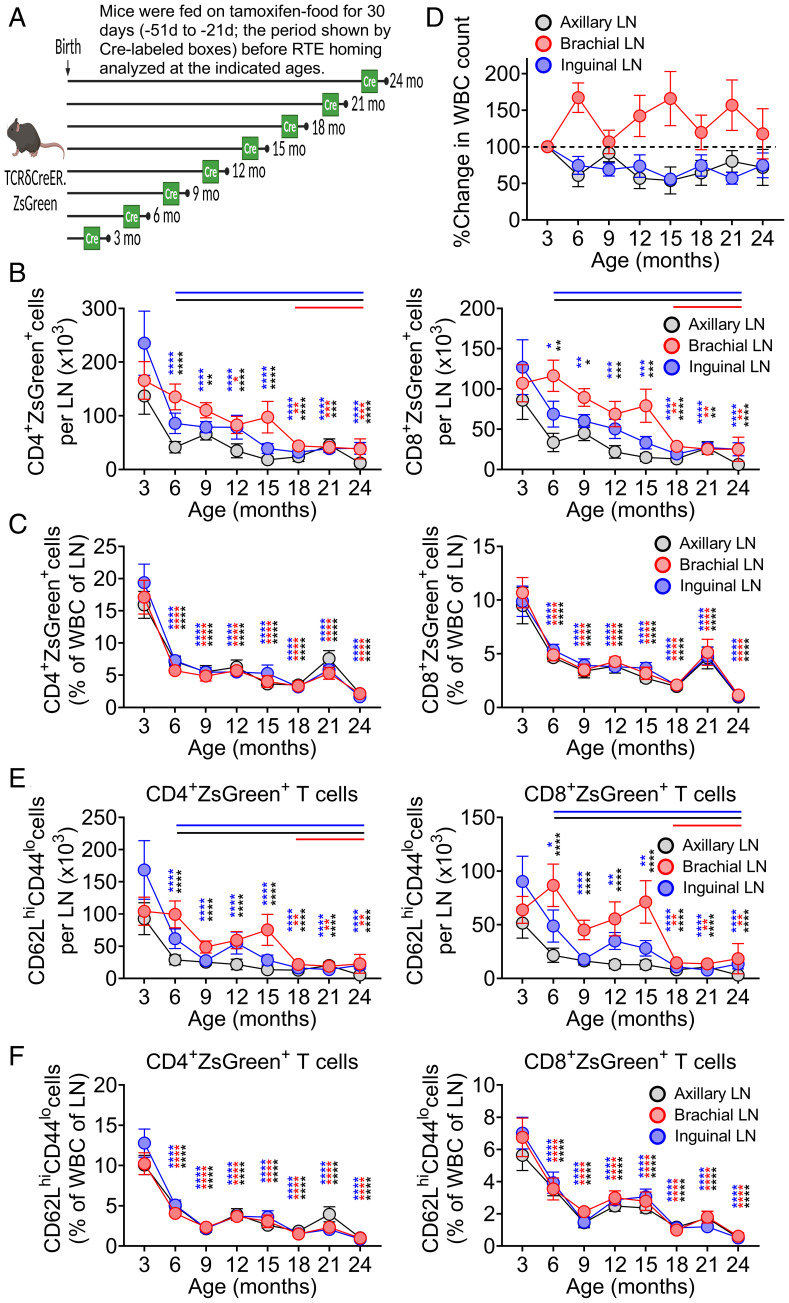
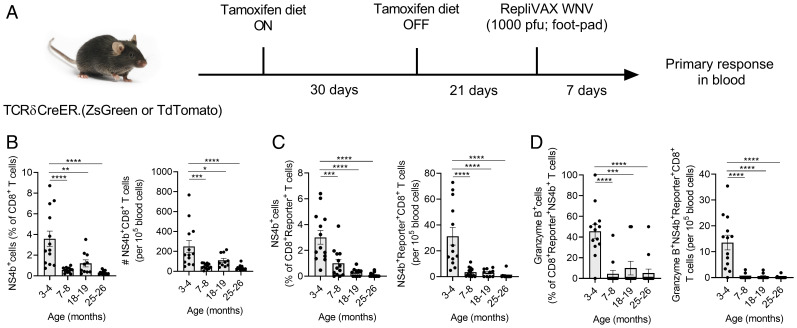
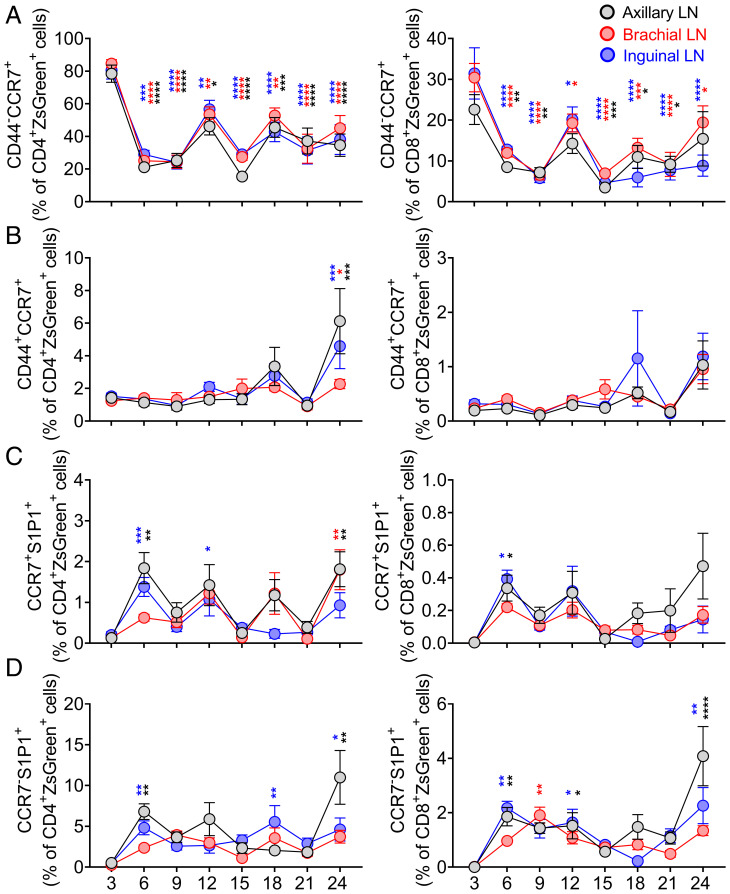
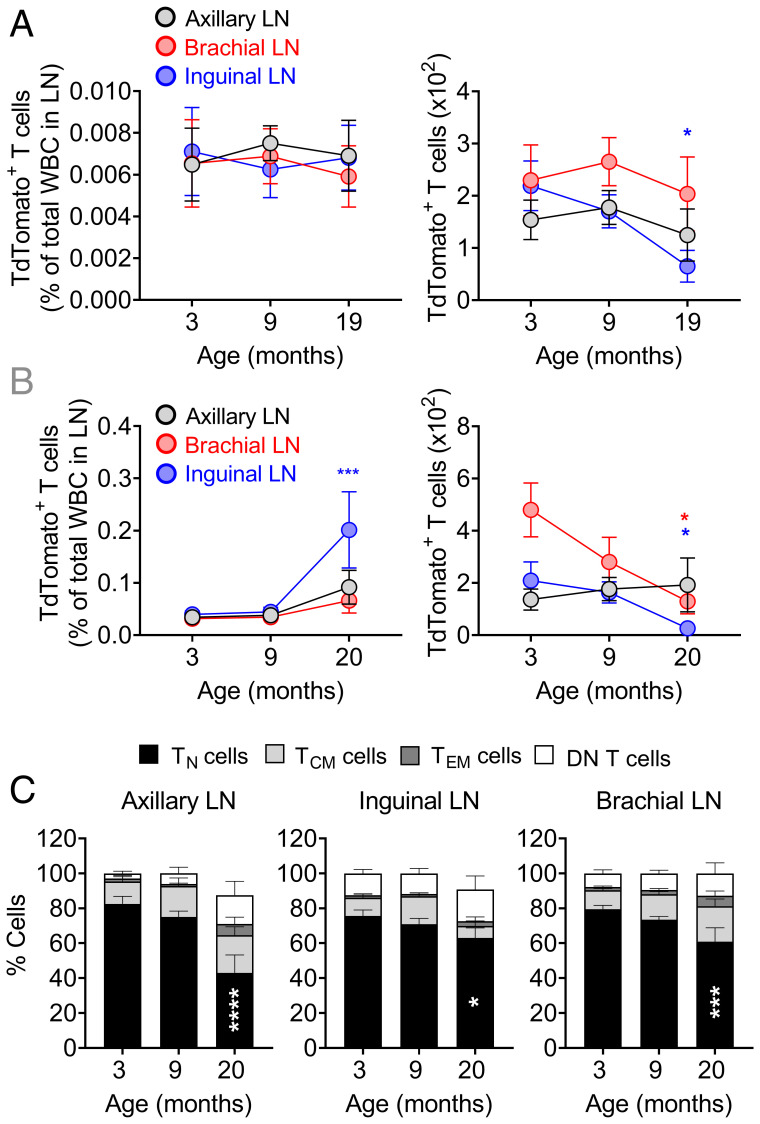
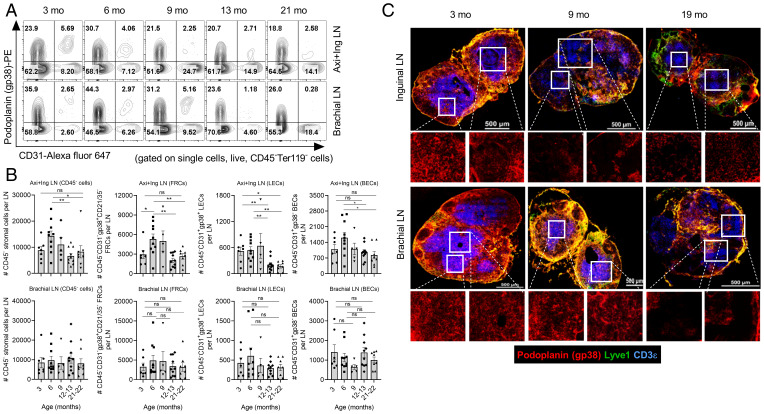
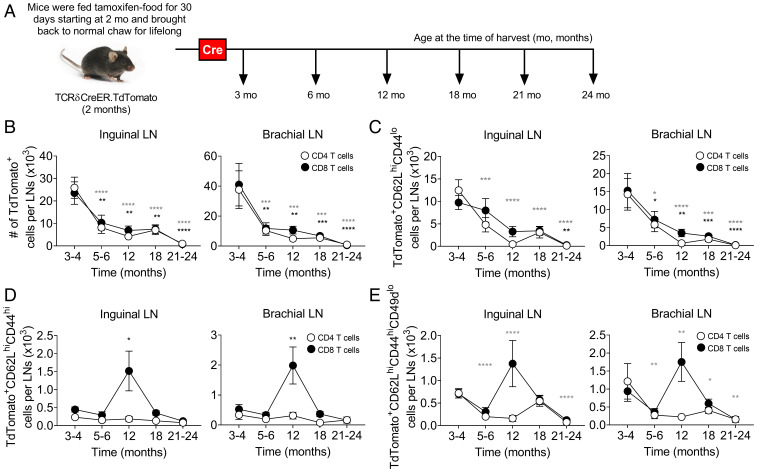
Secondary lymphoid organs (SLOs) (including the spleen and lymph nodes [LNs]) are critical both for the maintenance of naive T (TN) lymphocytes and for the initiation and coordination of immune responses. How they age, including the exact timing, extent, physiological relevance, and the nature of age-related changes, remains incompletely understood. We used “time stamping” to indelibly mark newly generated naive T cells (also known as recent thymic emigrants) (RTEs) in mice, and followed their presence, phenotype, and retention in SLOs. We found that SLOs involute asynchronously. Skin-draining LNs atrophied by 6 to 9 mo in life, whereas deeper tissue-draining LNs atrophied by 18 to 20 mo, as measured by the loss of both TN numbers and the fibroblastic reticular cell (FRC) network. Time-stamped RTEs at all ages entered SLOs and successfully completed postthymic differentiation, but the capacity of older SLOs to maintain TN numbers was reduced with aging, and that trait did not depend on the age of TNs. However, in SLOs of older mice, these cells exhibited an emigration phenotype (CCR7loS1P1hi), which correlated with an increase of the cells of the same phenotype in the blood. Finally, upon intradermal immunization, RTEs generated in mice barely participated in de novo immune responses and failed to produce well-armed effector cells detectable in blood as early as by 7 to 8 mo of age. These results highlight changes in structure and function of superficial secondary lymphoid organs in laboratory mice that are earlier than expected and are consistent with the long-appreciated reduction of cutaneous immunity with aging.
次级淋巴器官(SLO)(包括脾脏和淋巴结[LN])对于维持幼稚 T(TN)淋巴细胞以及启动和协调免疫反应至关重要。它们如何衰老,包括确切的时间、程度、生理相关性以及与年龄相关的变化的性质,仍然不完全清楚。我们使用“时间标记”来不可磨灭地标记新生的幼稚 T 细胞(也称为最近胸腺移民)(RTE)在小鼠中,并跟踪它们在 SLO 中的存在、表型和保留。我们发现 SLO 会异步萎缩。皮肤引流 LN 在生命的 6 到 9 个月时萎缩,而深层组织引流 LN 在 18 到 20 个月时萎缩,这是通过 TN 数量和纤维母细胞网状细胞(FRC)网络的丧失来衡量的。所有年龄段的时间标记 RTE 进入 SLO 并成功完成胸腺后分化,但随着年龄的增长,老年 SLO 维持 TN 数量的能力降低,而这种特征并不取决于 TN 的年龄。然而,在老年小鼠的 SLO 中,这些细胞表现出迁出表型(CCR7loS1P1hi),这与血液中相同表型的细胞增加相关。最后,在皮内免疫接种后,在小鼠中产生的 RTE 几乎没有参与新的免疫反应,并且早在 7 到 8 个月大时就无法在血液中检测到武装良好的效应细胞。这些结果强调了实验室小鼠浅表次级淋巴器官的结构和功能的变化比预期的更早,并且与随着年龄增长而减弱的皮肤免疫作用相一致。