Wong Kuan Un, Shi Jingxuan, Li Peng, Wang Haitao, Jia Yanwei, Deng Chuxia, Jiang Lianmei, Wong Ada Hang-Heng
Cancer Centre, Faculty of Health Sciences, University of Macau, Macau SAR, China.
Key Laboratory of Regenerative Biology, South China Institute for Stem Cell Biology and Regenerative Medicine, Guangzhou Institutes of Biomedicine and Health, Chinese Academy of Sciences, Guangzhou, Guangdong 510530, China.
Antib Ther. 2022 Mar 24;5(2):85-99. doi: 10.1093/abt/tbac008. eCollection 2022 Apr.
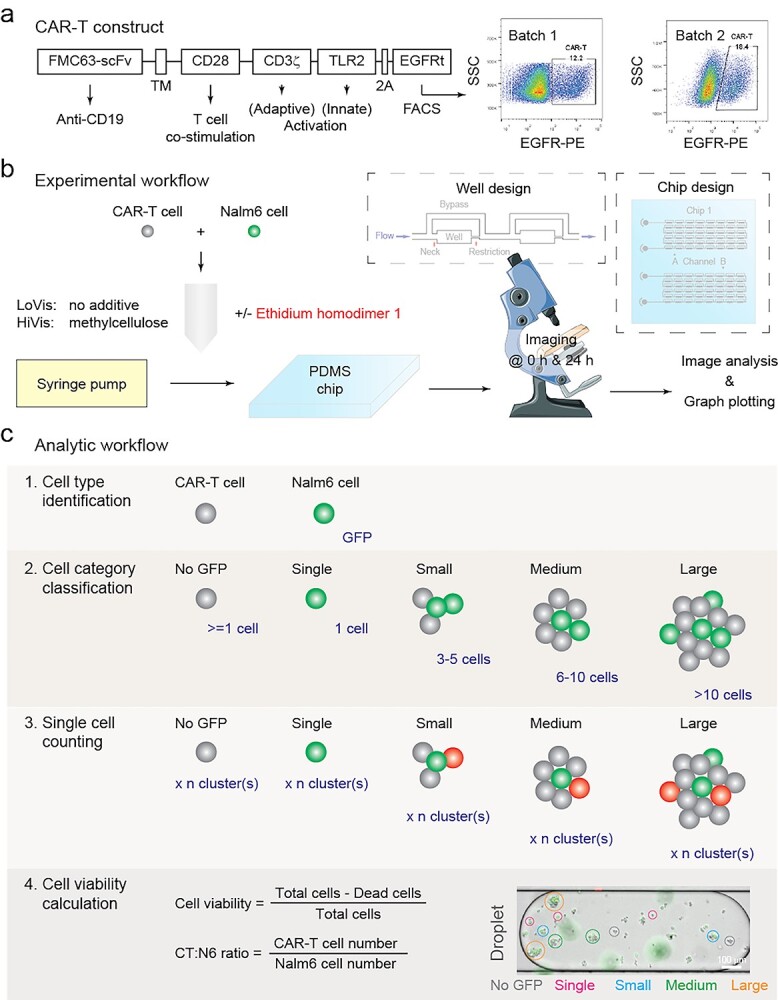
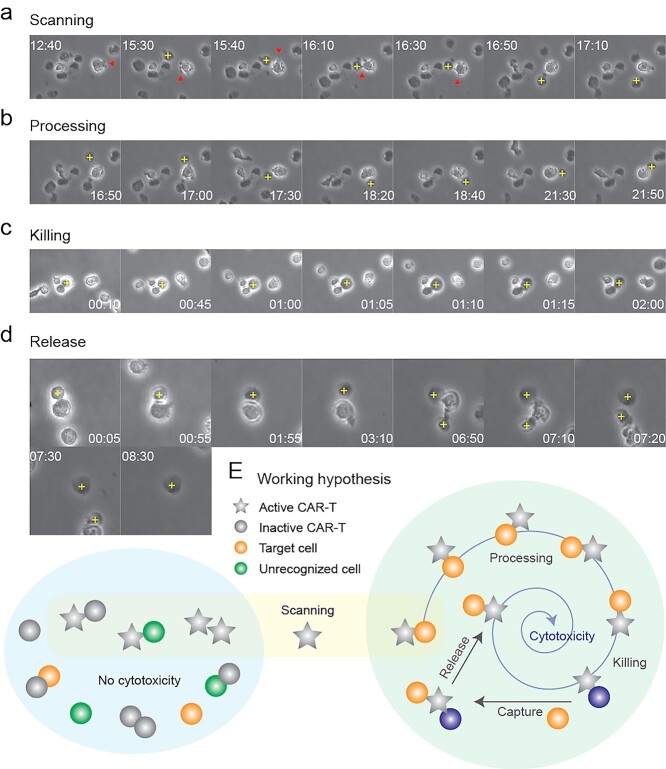
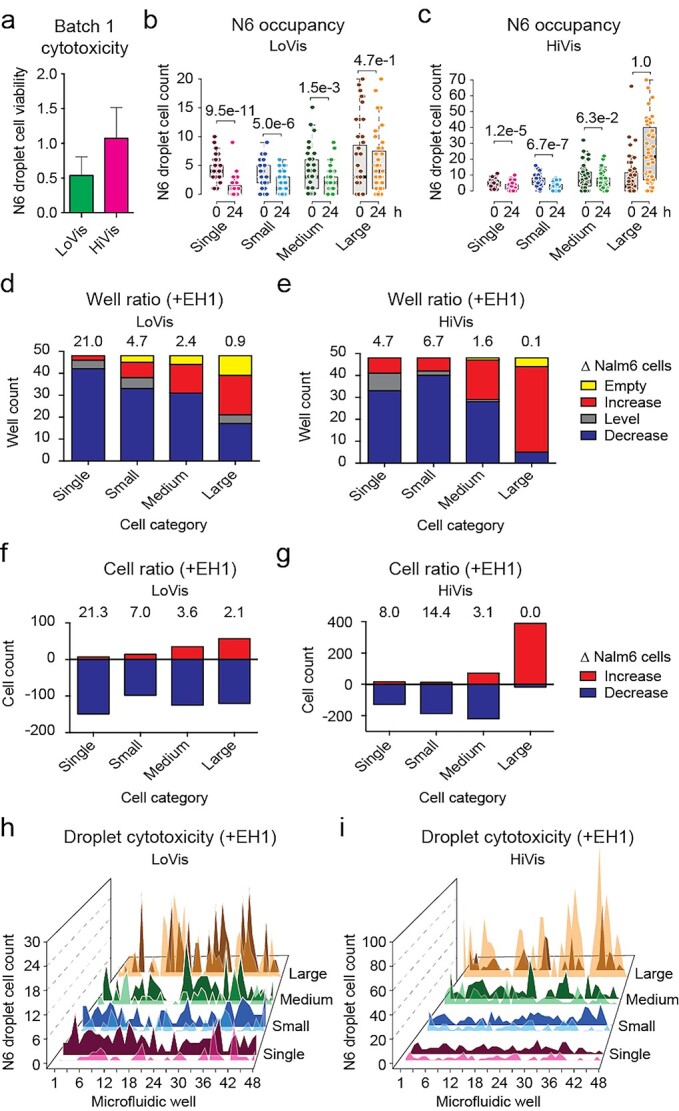
Chimeric antigen receptor T (CAR-T) cells are cytotoxic T cells engineered to specifically kill cancer cells expressing specific target receptor(s). Prior CAR-T efficacy tests include CAR expression analysis by qPCR or ELISA, in vitro measurement of interferon-γ (IFNγ) or interleukin-2 (IL-2), and xenograft models. However, the in vitro measurements did not reflect CAR-T cytotoxicity, whereas xenograft models are low throughput and costly. Here, we presented a robust in vitro droplet microfluidic assay for CAR-T cytotoxicity assessment. This method not only enabled assessment of CAR-T cytotoxic activity under different fluid viscosity conditions, but also facilitated measurement of CAR-T expansion and dissection of mechanism of action via phenotype analysis in vitro. Furthermore, our data suggested that label-free cytotoxicity analysis is feasible by acquiring data before and after treatment. Hence, this study presented a novel in vitro method for assessment of cellular cytotoxicity that could potentially be applied to any cytotoxicity experiment with varying solvent composition.
嵌合抗原受体T(CAR-T)细胞是经过工程改造的细胞毒性T细胞,能够特异性杀死表达特定靶受体的癌细胞。先前的CAR-T疗效测试包括通过qPCR或ELISA进行CAR表达分析、体外测量干扰素-γ(IFNγ)或白细胞介素-2(IL-2)以及异种移植模型。然而,体外测量无法反映CAR-T的细胞毒性,而异种移植模型通量低且成本高。在此,我们提出了一种用于CAR-T细胞毒性评估的强大的体外微滴微流控检测方法。该方法不仅能够在不同流体粘度条件下评估CAR-T细胞毒性活性,还通过体外表型分析促进了CAR-T扩增的测量和作用机制的剖析。此外,我们的数据表明,通过获取处理前后的数据进行无标记细胞毒性分析是可行的。因此,本研究提出了一种用于评估细胞毒性的新型体外方法,该方法可能适用于任何具有不同溶剂组成的细胞毒性实验。