Department of Oncology, The Second Affiliated Hospital of Xi'an Jiaotong University, Xi'an, Shaanxi, China.
Department of Surgical Oncology, The First Affiliated Hospital of Xi'an Jiaotong University, Xi'an, Shaanxi, China.
Cancer Med. 2022 Oct;11(20):3886-3901. doi: 10.1002/cam4.4755. Epub 2022 Apr 20.
Breast cancer (BC) is the most common malignant tumor worldwide. Apoptosis and hypoxia are involved in the progression of BC, but reliable biomarkers for these have not been developed. We hope to explore a gene signature that combined apoptosis and hypoxia-related genes (AHGs) to predict BC prognosis and immune infiltration.
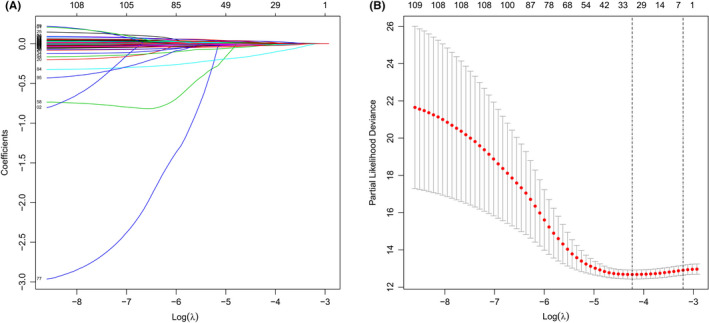
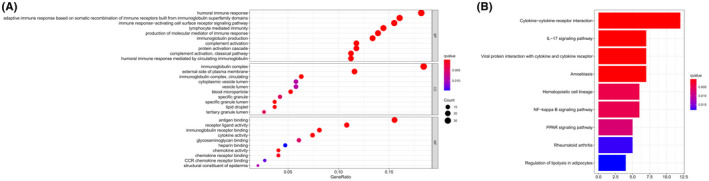
We collected the mRNA expression profiles and clinical data information of BC patients from The Cancer Genome Atlas database. The gene signature based on AHGs was constructed using the univariate Cox regression, least absolute shrinkage and selection operator, and multivariate Cox regression analysis. The associations between risk scores, immune infiltration, and immune checkpoint gene expression were studied using single-sample gene set enrichment analysis. Besides, gene signature and independent clinicopathological characteristics were combined to establish a nomogram. Finally, Gene Ontology (GO) and Kyoto Encyclopedia of Genes and Genomes (KEGG) were performed on the potential functions of AHGs.
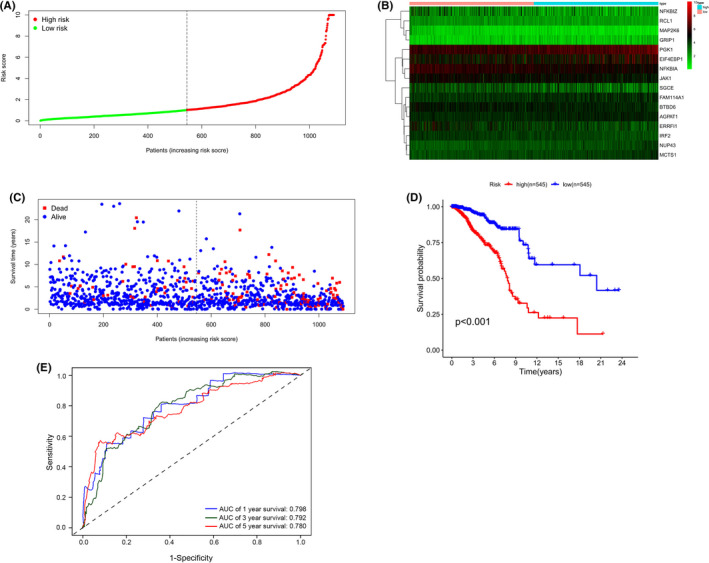
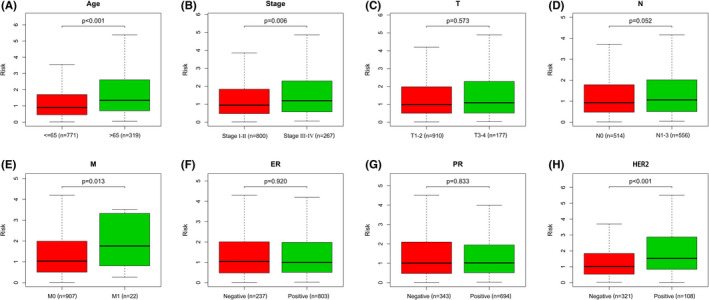
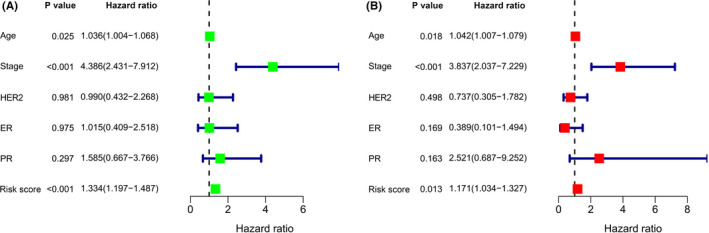
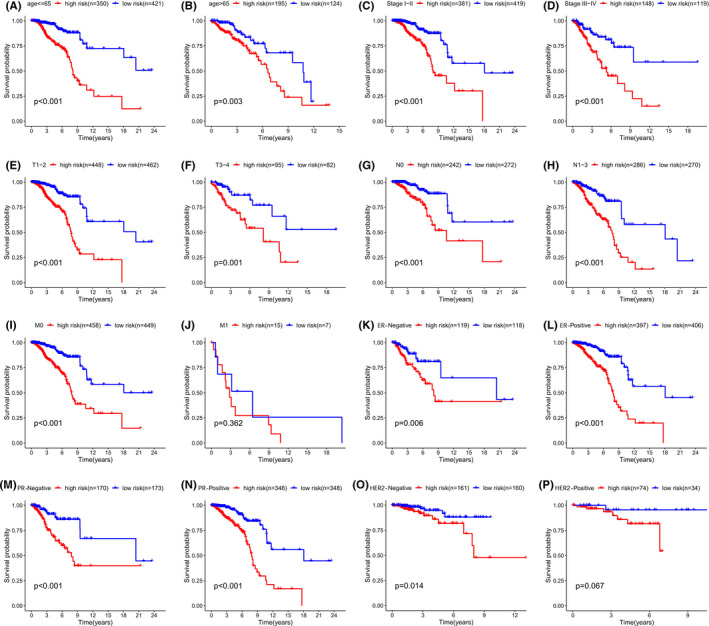
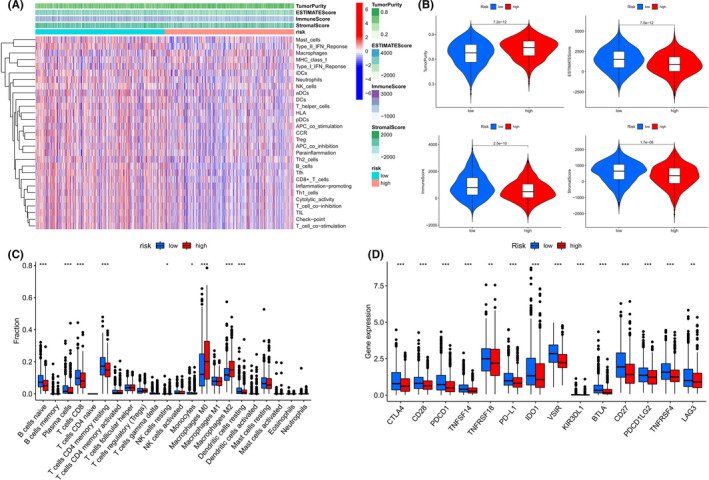
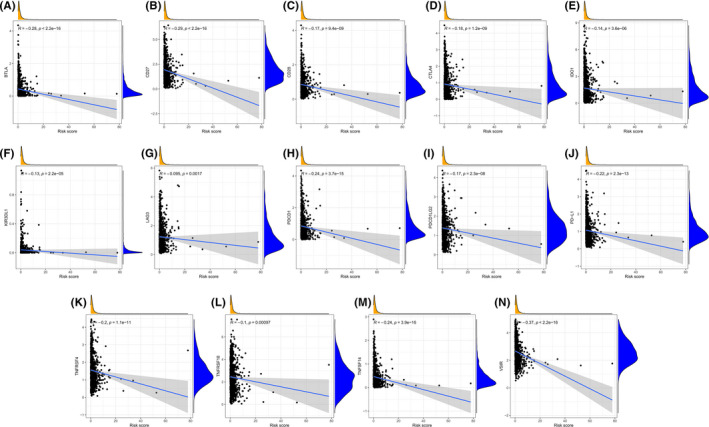
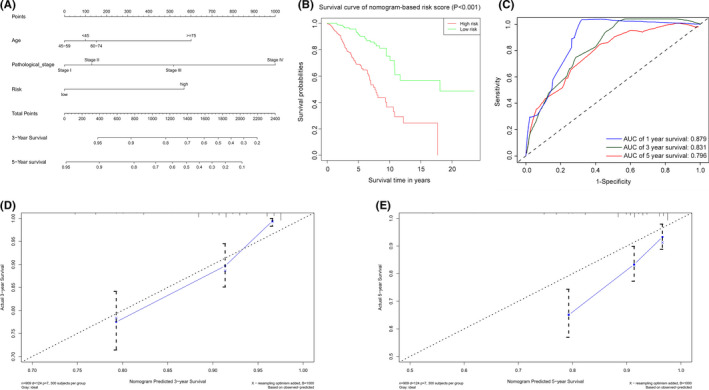
We identified a 16-AHG signature (AGPAT1, BTBD6, EIF4EBP1, ERRFI1, FAM114A1, GRIP1, IRF2, JAK1, MAP2K6, MCTS1, NFKBIA, NFKBIZ, NUP43, PGK1, RCL1, and SGCE) that could independently predict BC prognosis. The median score of the risk model divided the patients into two subgroups. By contrast, patients in the high-risk group had poorer prognosis, less abundance of immune cell infiltration, and expression of immune checkpoint genes. The gene signature and nomogram had good predictive effects on the overall survival of BC patients. GO and KEGG analyses revealed that the differential expression of AHGs may be closely related to tumor immunity.
We established and verified a 16-AHG BC signature which may help predict prognosis, assess potential immunotherapy benefits, and provide inspiration for future research on the functions and mechanisms of AHGs in BC.
乳腺癌(BC)是全球最常见的恶性肿瘤。细胞凋亡和缺氧参与了 BC 的进展,但尚未开发出可靠的用于预测这些的生物标志物。我们希望探索一种综合了细胞凋亡和缺氧相关基因(AHGs)的基因特征,以预测 BC 的预后和免疫浸润。
我们从癌症基因组图谱(TCGA)数据库中收集了 BC 患者的 mRNA 表达谱和临床数据信息。使用单变量 Cox 回归、最小绝对值收缩和选择算子(LASSO)以及多变量 Cox 回归分析构建了基于 AHGs 的基因特征。使用单样本基因集富集分析研究了风险评分与免疫浸润和免疫检查点基因表达之间的关联。此外,将基因特征与独立的临床病理特征相结合,建立了一个诺模图。最后,对 AHGs 的潜在功能进行了基因本体论(GO)和京都基因与基因组百科全书(KEGG)分析。
我们确定了一个由 16 个 AHG 组成的基因特征(AGPAT1、BTBD6、EIF4EBP1、ERRFI1、FAM114A1、GRIP1、IRF2、JAK1、MAP2K6、MCTS1、NFKBIA、NFKBIZ、NUP43、PGK1、RCL1 和 SGCE),可以独立预测 BC 的预后。风险模型的中位数将患者分为两个亚组。相比之下,高风险组的患者预后较差,免疫细胞浸润程度较低,免疫检查点基因的表达水平也较低。基因特征和诺模图对 BC 患者的总生存具有良好的预测效果。GO 和 KEGG 分析表明,AHGs 的差异表达可能与肿瘤免疫密切相关。
我们建立并验证了一个 16-AHG 的 BC 基因特征,它可能有助于预测预后、评估潜在的免疫治疗获益,并为未来研究 AHGs 在 BC 中的功能和机制提供启示。