Department of Orthopaedics, Maggiore Hospital, Largo Nigrisoli 2, 40100, Bologna, Italy.
Department of Clinical Research and D&R, Permedica S.P.A, Via Como 38, 23807, Merate, Italy.
BMC Musculoskelet Disord. 2022 Apr 20;23(1):373. doi: 10.1186/s12891-022-05280-2.
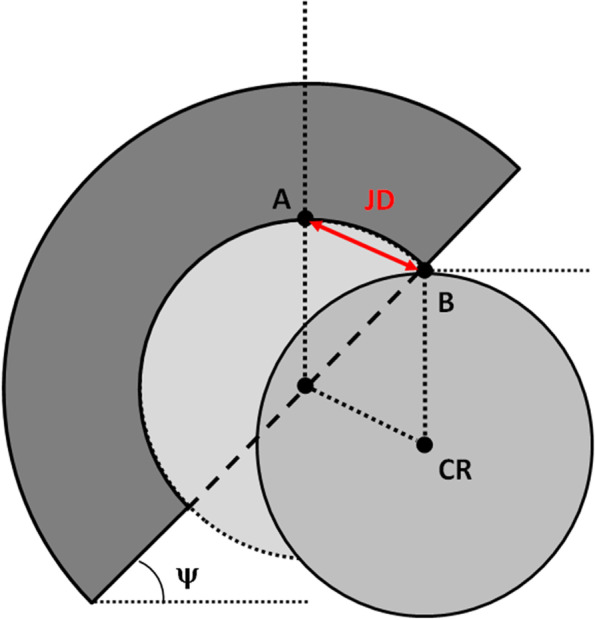
Use of dual mobility (DM) in total hip arthroplasty has gained popularity due to the ability to reduce dislocation through increased jumping distance and impingement-free arc of movement. Recently, modular dual mobility (modDM) systems were introduced to give the possibility to use DM with standard metal-backed shells, however few has been studied to date regarding how jumping distance and the center of rotation change with modDM. The objective of this study was to evaluate, through analytical simulation, how jumping distance, center of rotation and arc of movement change between DM and standard cups with modDM or fixed bearings (FB).
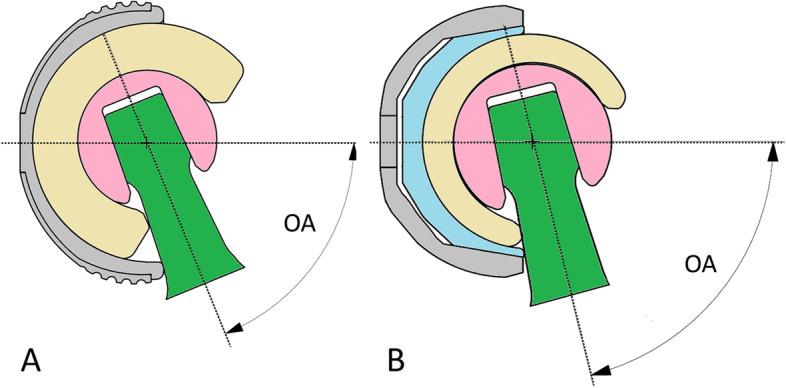
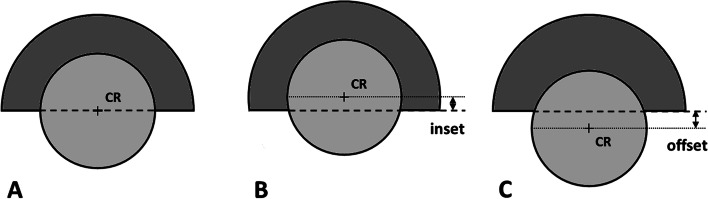
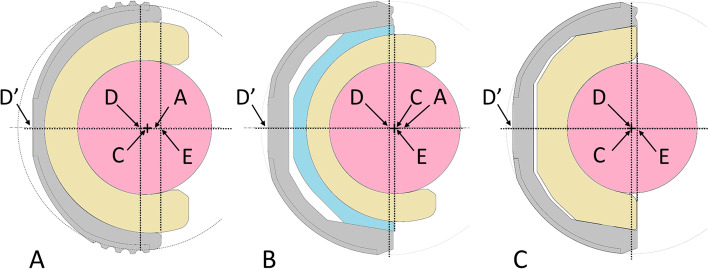
3D-models of DM and standard press-fit cups with modDM or FB liners were used to simulate DM, modDM and FB implant configurations, matched for same cup size, according to same cup position and different femoral head diameters. Jumping distance was calculated and center of rotation lateralization and oscillation angles were measured for each size of these three implant configurations.
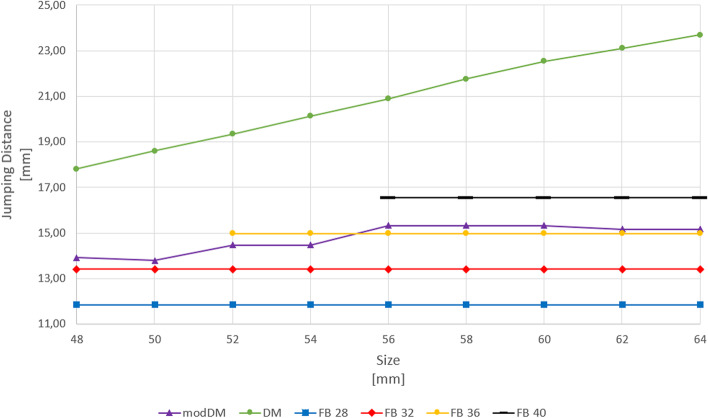
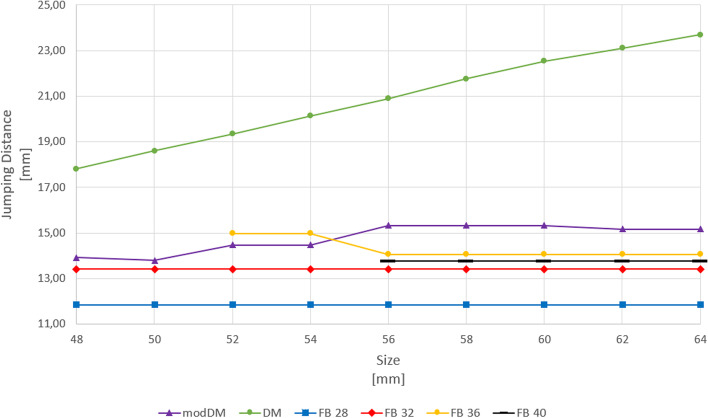
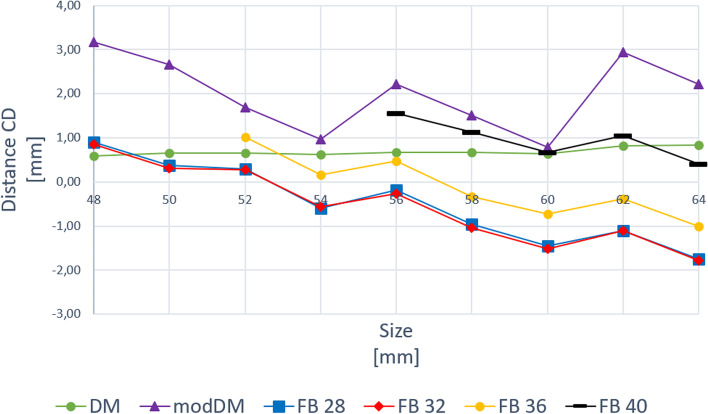
Jumping distance with modDM was reduced by -3.9 mm to -8.6 mm in comparison with DM, from 48 to 64 mm size, but resulted comparable to polyethylene 36 mm FB and increased by + 1.1 mm and + 1.4 mm than ceramic 36 and 40 mm FBs for sizes > 54 mm. ModDM lateralized the center of rotation up to + 2.5 mm and + 4.0 mm in comparison with DM and FBs, respectively. Oscillation angle with modDM resulted higher than + 16°, + 23°, + 17° and + 14° in comparison to DM, 28 mm, 32 mm and 36 mm FB cups, respectively, for 56 mm cup size.
According to its specific design, modDM might change hip stability parameters in comparison to DM, worsening jumping distance and center of rotation position, but increasing arc of movement. As not restoring stability parameters in the same fashion, modDM implants should be properly used when DM cups are not feasible.
由于增加跳跃距离和无撞击运动弧的能力,双动(DM)在全髋关节置换术中的应用越来越受欢迎。最近,出现了模块化双动(modDM)系统,为使用 DM 与标准金属背壳提供了可能性,但是迄今为止,关于 modDM 如何改变跳跃距离和旋转中心的研究很少。本研究的目的是通过分析模拟来评估,在 DM 和标准压配合杯之间,modDM 或固定轴承(FB)如何改变跳跃距离、旋转中心和运动弧。
使用 DM 和 modDM 或 FB 衬垫的标准压配合杯的 3D 模型来模拟 DM、modDM 和 FB 植入物的配置,这些配置的匹配相同的杯尺寸,根据相同的杯位置和不同的股骨头直径。对于这些三种植入物配置的每个尺寸,计算跳跃距离,并测量旋转中心的侧移和摆动角度。
与 DM 相比,modDM 的跳跃距离减少了-3.9 毫米至-8.6 毫米,从 48 毫米至 64 毫米的尺寸,但与 36 毫米聚乙烯 FB 相比相当,对于大于 54 毫米的尺寸,增加了+1.1 毫米和+1.4 毫米,高于 36 毫米和 40 毫米陶瓷 FB。与 DM 和 FB 相比,modDM 将旋转中心侧向移动了+2.5 毫米和+4.0 毫米。与 DM 和 28 毫米、32 毫米和 36 毫米 FB 杯相比,modDM 的摆动角度分别高出+16°、+23°、+17°和+14°,对于 56 毫米杯尺寸。
根据其特定设计,与 DM 相比,modDM 可能会改变髋关节稳定性参数,从而降低跳跃距离和旋转中心位置,但增加运动弧。由于不能以相同的方式恢复稳定性参数,因此在无法使用 DM 杯时,应正确使用 modDM 植入物。