Department of Alcohol, Tobacco and Drugs, Norwegian Institute of Public Health, POB 222 Skøyen, 0213, Oslo, Norway.
BMC Public Health. 2022 Apr 20;22(1):792. doi: 10.1186/s12889-022-13199-5.
Improved knowledge regarding socio-demographic correlates of people with substance use disorders (SUDs) is essential to better plan and provide adequate services for SUD patients and their families, and to improve our understanding of the complex mechanisms underlying progression into and development of various SUDs. This study aimed to: i) describe demographic, economic, and social correlates of people with SUDs in comparison with those of the general population and ii) compare these correlates across SUDs from licit versus illicit substances, as well as across specific SUDs.
A national population-based case-control study included all SUD patients enrolled in specialized drug treatment in Norway in 2009-2010 (N = 31 245) and a population control sample, frequency-matched on age and gender (N = 31 275). Data on education level, labour market participation, income level and sources, and family/living arrangement were obtained by linkages to national registers.
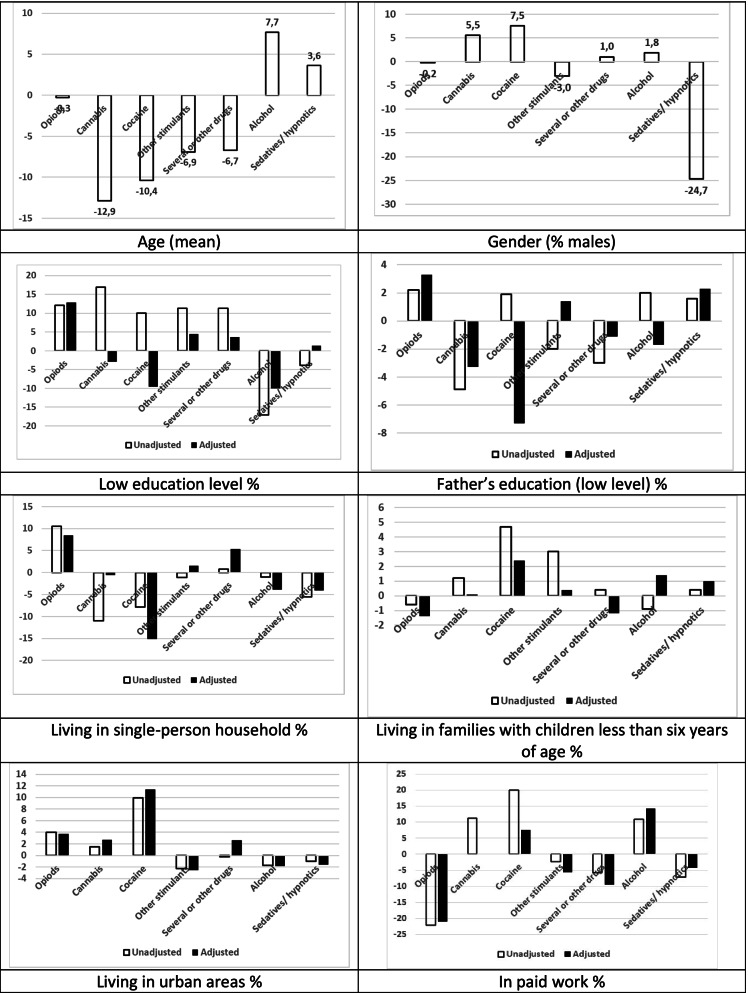
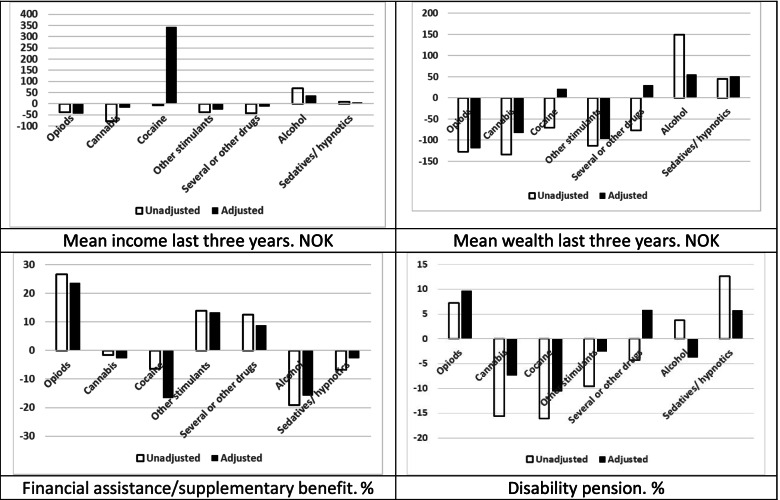
Demographic, economic, and social correlates of SUD patients differed substantially from those of the general population, and across specific SUDs. Among SUD patients, those with illicit - as compared to licit - SUDs were younger (mean quotient = 0.72 [0.71-0.72]), more often had low education level (RR = 1.68 [1.63-1.73]), were less often in paid work (RR = 0.74 [0.72-0.76]) and had lower income (mean quotient = 0.61 [0.60-0.62]). Comparison of patients with different SUD diagnoses revealed substantial demographic differences, including the relatively low mean age among cannabis patients and the high share of females among sedatives/hypnotics patients. Opioid patients stood out by being older, and more often out of work, receiving social security benefits, and living alone. Cocaine and alcohol patients were more often better educated, included in the work force, and had a better financial situation.
Findings revealed substantial and important differences in socio-demographic correlates between SUD patients and the general population, between SUD patients with illicit and with licit substance use, and across specific SUD patient groups.
了解物质使用障碍(SUD)患者的社会人口统计学相关因素对于更好地为 SUD 患者及其家属规划和提供适当的服务至关重要,并且有助于我们更好地理解导致各种 SUD 发展和演变的复杂机制。本研究旨在:i)描述 SUD 患者与普通人群相比的人口统计学、经济和社会相关因素,以及 ii)比较源自合法与非法物质的 SUD 以及特定 SUD 之间的这些相关因素。
一项全国性的基于人群的病例对照研究纳入了 2009-2010 年在挪威接受专门药物治疗的所有 SUD 患者(n=31245)和人口对照样本(n=31275),按照年龄和性别进行频率匹配。通过与国家登记册的链接获取关于教育程度、劳动力市场参与、收入水平和来源以及家庭/生活安排的数据。
SUD 患者的人口统计学、经济和社会相关因素与普通人群有很大不同,而且在特定的 SUD 之间也存在差异。在 SUD 患者中,与合法物质相比,非法物质 SUD 患者更年轻(平均商数=0.72 [0.71-0.72]),受教育程度更低(RR=1.68 [1.63-1.73]),从事有偿工作的比例较低(RR=0.74 [0.72-0.76]),收入较低(平均商数=0.61 [0.60-0.62])。不同 SUD 诊断患者之间的比较显示出显著的人口统计学差异,包括大麻患者的相对较低的平均年龄和镇静剂/催眠药患者中较高的女性比例。阿片类药物患者的年龄较大,更经常失业,领取社会保障福利,独居。可卡因和酒精患者受教育程度更高,更有可能就业,财务状况更好。
研究结果表明,SUD 患者与普通人群之间、源自合法与非法物质的 SUD 患者之间以及特定 SUD 患者群体之间在社会人口统计学相关因素方面存在显著且重要的差异。