Sharma Sachin Kumar, Agnihotri Savita, Kala Niranjan, Telles Shirley
Patanjali Research Foundation, Haridwar, Uttarakhand, India.
Int J Yoga. 2022 Jan-Apr;15(1):76-79. doi: 10.4103/ijoy.ijoy_188_21. Epub 2022 Mar 20.
Understanding the way nonexercisers view the benefits and barriers to physical exercise helps promote physical exercise. This study reports perceived benefits and negative outcomes of yoga perceived by yoga-naïve persons.
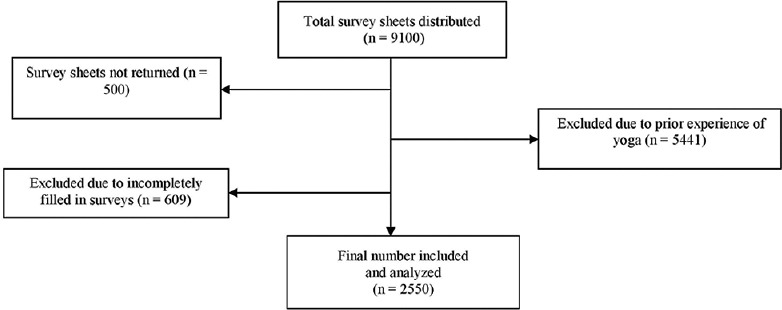
The 2550 yoga-naïve respondents of both sexes (m:f = 2162:388; group mean age ± SD 23.5 ± 12.6 years) participated in a convenience sampling in-person survey conducted to determine the perceived benefits and negative outcomes of yoga.
Among 2550 respondents, 97.4% believed yoga practice had benefits. The three most common perceived benefits of yoga were improvement in (i) physical health (39.8%), (ii) cognitive functions (32.8%), and (iii) mental health (20.4%). Among the respondents, 1.4% believed that yoga had negative outcomes. The three most common perceived negative outcomes were (i) apprehension that wrong methods may be harmful (0.24%), (ii) apprehension that excessive practice may harm (0.24%), and (iii) laziness (0.12%).
The most common perceived benefit of yoga practice was "improvement in physical health," with "apprehension that wrong or excessive practice could be harmful" as the most common perceived negative outcomes of yoga.
了解非运动者对体育锻炼益处和障碍的看法有助于促进体育锻炼。本研究报告了初次接触瑜伽者所感知到的瑜伽的益处和负面结果。
2550名初次接触瑜伽的男女受访者(男∶女 = 2162∶388;组平均年龄±标准差23.5±12.6岁)参与了一项为确定瑜伽的感知益处和负面结果而进行的便利抽样面对面调查。
在2550名受访者中,97.4%的人认为练习瑜伽有益处。瑜伽最常被感知到的三个益处是:(i)身体健康改善(39.8%),(ii)认知功能改善(32.8%),以及(iii)心理健康改善(20.4%)。在受访者中,1.4%的人认为瑜伽有负面结果。最常被感知到的三个负面结果是:(i)担心错误方法可能有害(0.24%),(ii)担心过度练习可能有害(0.24%),以及(iii)懒惰(0.12%)。
练习瑜伽最常被感知到的益处是“身体健康改善”,而“担心错误或过度练习可能有害”是瑜伽最常被感知到的负面结果。