Alamoudi Rana A, Basudan Shahad, Mahboub Mona, Baghlaf Khlood
Pediatric Dentistry Department, Faculty of Dentistry, King Abdulaziz University, Jeddah, Saudi Arabia.
General Dentist, Private Sector, Jeddah, Saudi Arabia.
Clin Cosmet Investig Dent. 2022 Apr 13;14:95-102. doi: 10.2147/CCIDE.S353514. eCollection 2022.
BACKGROUND/PURPOSE: The novel coronavirus disease (COVID-19) outbreak has affected individuals worldwide. Considering the nature of dental treatments and direct exposure to saliva, blood, aerosols, or droplets from infected individuals, dentists are at significant risk of COVID-19 infection. Therefore, to decrease aerosol-generating procedures, minimally invasive dentistry (MID) is recommended during this pandemic. The goal of this research was to compare the flow of patients during a pandemic at a single university hospital in Jeddah City, Saudi Arabia, and to retrospectively assess the impact of the COVID-19 pandemic on pediatric dental treatments including MID.
This study was a retrospective cross-sectional analysis of pediatric patient records, dental procedures performed, and minimally invasive techniques using the database of the King Abdul-Aziz University Dental Hospital (R4) system during the period of COVID 19 pandemic compared to the same period in the previous year.
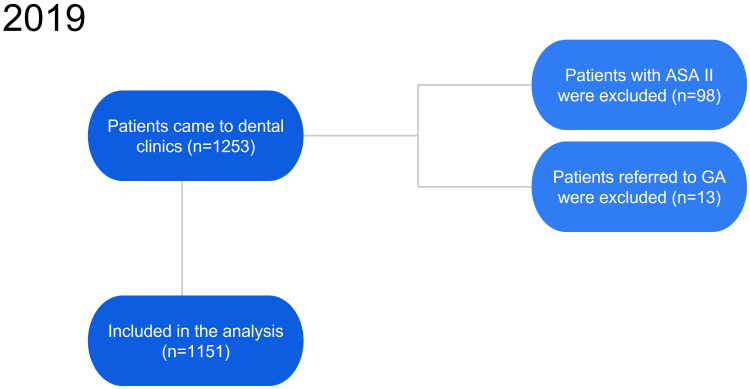
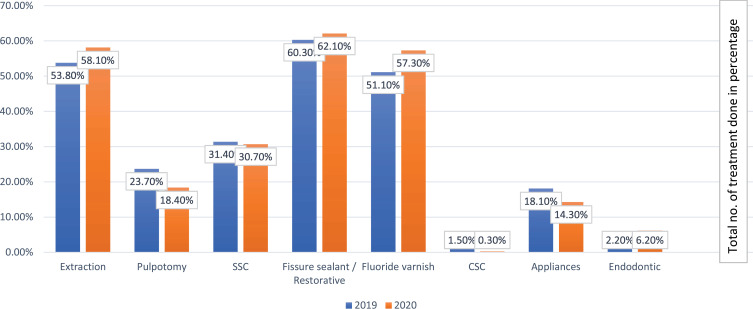
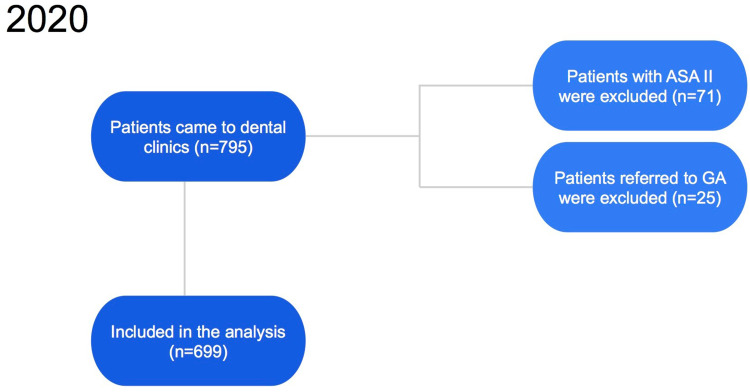
During the COVID-19 pandemic, pediatric dental patient flow included only 699 patients compared to 1151 patients during the same period in the previous year. The most common pediatric dental procedures performed during the pandemic period were simple restorative treatments, including fissure sealants, followed by dental extractions, and fluoride varnish applications. During the pandemic period, more minimally invasive treatments were performed, including the Hall technique, silver diamine fluoride, resin infiltration, and atraumatic restorative techniques.
Based on this data, the COVID-19 pandemic had an impact on dental patient flow and the type of dental procedures performed on children. Minimally invasive treatments that minimize air generation are recommended; however, to establish the long-term effectiveness of minimally invasive treatments in pediatric dentistry, more follow-up studies with bigger sample sizes are required. More recommendations regarding conservative pediatric dental management after the COVID-19 era are suggested.
背景/目的:新型冠状病毒病(COVID-19)疫情已影响到全球各地的个人。考虑到牙科治疗的性质以及直接接触受感染个体的唾液、血液、气溶胶或飞沫,牙医面临着感染COVID-19的重大风险。因此,为减少产生气溶胶的操作,在此次大流行期间建议采用微创牙科(MID)。本研究的目的是比较沙特阿拉伯吉达市一家大学医院在大流行期间的患者流量,并回顾性评估COVID-19大流行对包括MID在内的儿童牙科治疗的影响。
本研究是一项回顾性横断面分析,利用阿卜杜勒-阿齐兹国王大学牙科医院(R4)系统的数据库,对比了COVID-19大流行期间与上一年同期的儿科患者记录、所进行的牙科操作以及微创技术。
在COVID-19大流行期间,儿科牙科患者流量仅为699例,而上一年同期为1151例。大流行期间最常见的儿科牙科操作是简单修复治疗,包括窝沟封闭,其次是拔牙和涂氟。在大流行期间,进行了更多的微创治疗,包括霍尔技术、氟化银氨、树脂渗透和非创伤性修复技术。
基于这些数据,COVID-19大流行对牙科患者流量以及儿童所进行的牙科操作类型产生了影响。建议采用能减少空气产生的微创治疗;然而,为确定微创治疗在儿童牙科中的长期有效性,需要更多样本量更大的随访研究。还提出了关于COVID-19时代后保守儿童牙科管理的更多建议。