Tripathy Satyaswarup, Mohapatra Devi Prasad, Sahu Ranjit Kumar, Mohsina Subair, Sharma Ramesh Kumar, Khan Subhendu, Renu Sharda, Singh Chandra Kunwari, Nair Suraj R, Koliath Shijina, Pathan Imran
Department of Plastic Surgery, Post Graduate Institute of Medical Education and Research, Chandigarh, Punjab, India.
Department of Plastic Surgery, Jawaharlal Institute of Postgraduate Medical Education and Research, Puducherry, India.
Indian J Plast Surg. 2022 Feb 9;55(1):45-53. doi: 10.1055/s-0041-1735425. eCollection 2022 Feb.
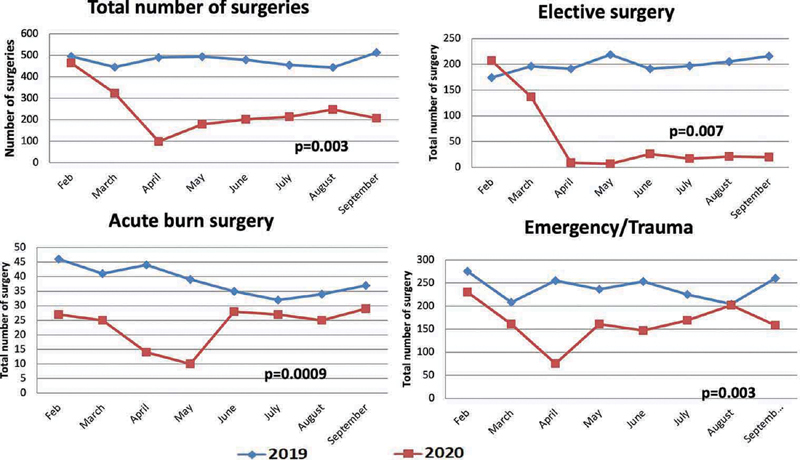
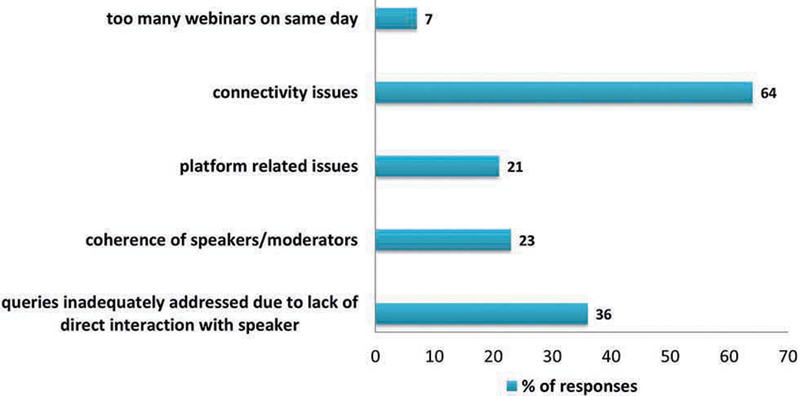
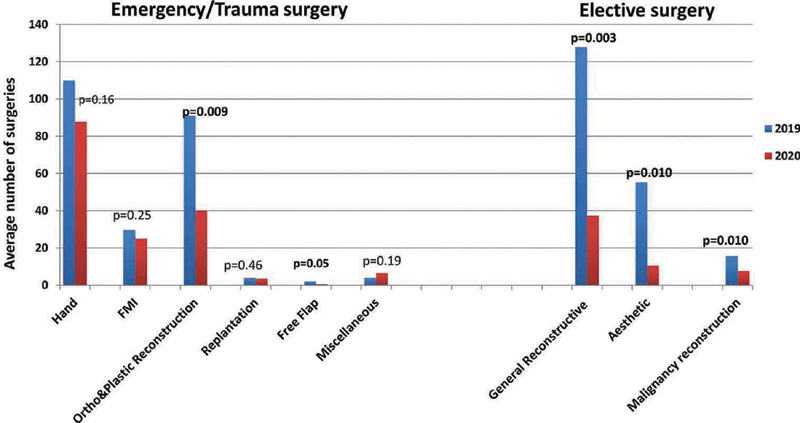
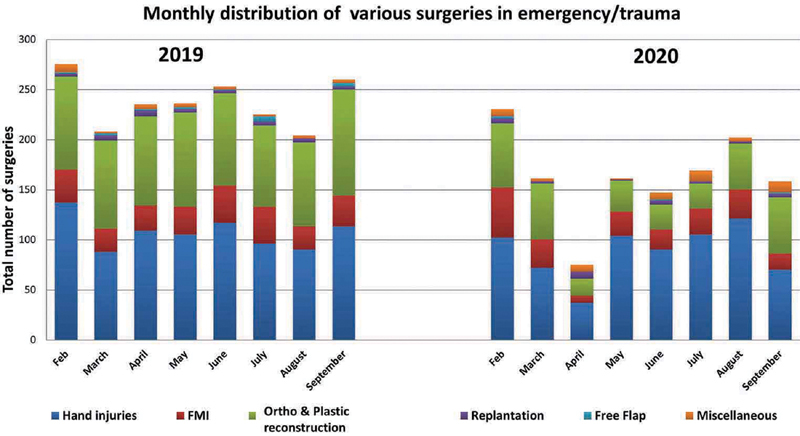
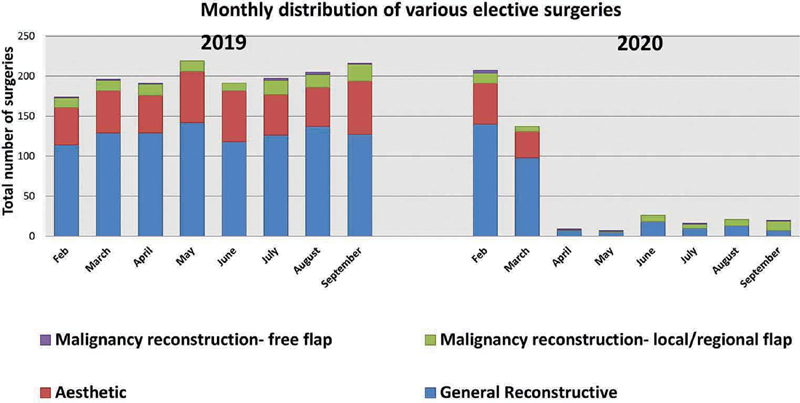
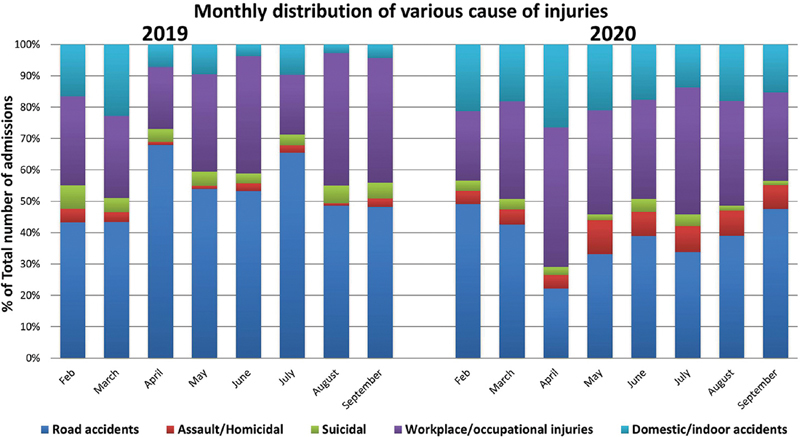
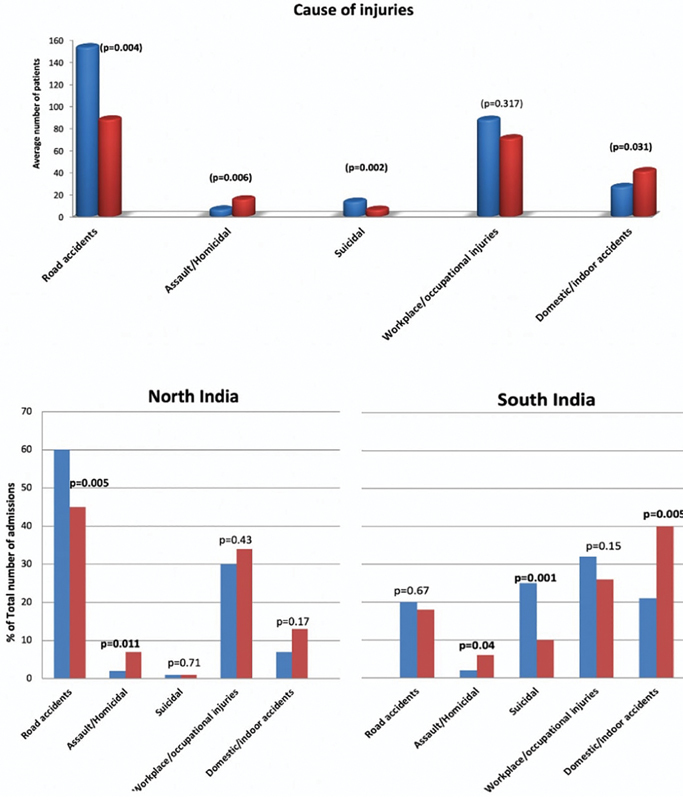
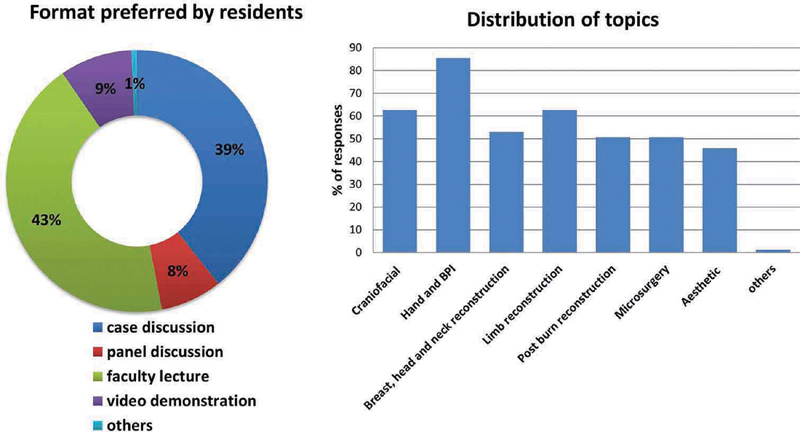
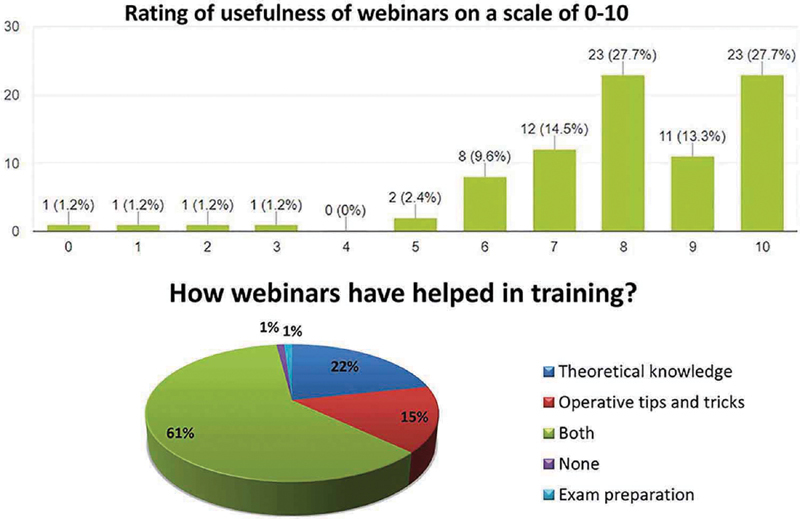
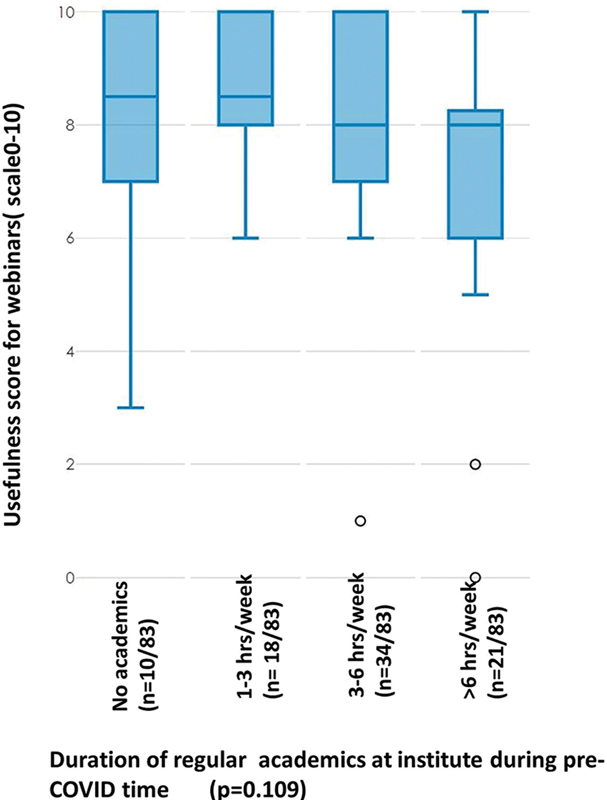
The study was carried out to quantify the changes induced by the pandemic in plastic surgery practice and training and to study the impact of the webinars on plastic surgery education from a residents' perspective. In this multicentric study, the number and type of surgeries, cause of injuries, and their regional variation during the coronavirus disease 2019 (COVID-19) period (February-September 2020) were compared with pre-COVID-19 time. An online survey on the impact of webinars was conducted for plastic surgery trainees across the country. There was a significant reduction in total number of surgeries ( = 0.003). The procedures for hand ( = 0.156), faciomaxillary injuries ( = 0.25), and replantations ( = 0.46) were comparable; there was a significant reduction in combined orthopedic-plastic-surgical procedures ( = 0.009) during the pandemic. There was a significant reduction in road accidents ( = 0.007) and suicidal injuries ( = 0.002) and increase in assault ( = 0.03) and domestic accidents ( = 0.01) during the COVID-19 period. A usefulness score of >8 was given for the webinars by 68.7% residents. There was no significant difference in perception of utility when correlated with the academic program at their institutes ( = 0.109); 92% opined webinars should continue in post-COVID times. There was a drastic reduction in number of elective and emergency procedures during the COVID-19 time, negatively affecting resident training program. Majority of residents felt that webinars could prove a useful adjunct to training in formal training program in post-COVID-19 scenario.
本研究旨在量化疫情对整形手术实践和培训所带来的变化,并从住院医师的角度研究网络研讨会对整形手术教育的影响。在这项多中心研究中,将2019年冠状病毒病(COVID-19)期间(2020年2月至9月)的手术数量和类型、受伤原因及其区域差异与COVID-19之前的时期进行了比较。对全国的整形手术学员进行了关于网络研讨会影响的在线调查。手术总数显著减少(P = 0.003)。手部手术(P = 0.156)、面颌部损伤手术(P = 0.25)和再植手术(P = 0.46)的情况相当;疫情期间,整形外科联合骨科手术显著减少(P = 0.009)。COVID-19期间,道路交通事故(P = 0.007)和自杀性损伤(P = 0.002)显著减少,而袭击(P = 0.03)和家庭事故(P = 0.01)有所增加。68.7%的住院医师对网络研讨会的有用性评分>8。与所在机构的学术项目相关时,在效用认知方面没有显著差异(P = 0.109);92%的人认为网络研讨会在COVID-19之后的时期应该继续。COVID-19期间,择期和急诊手术数量大幅减少,对住院医师培训项目产生了负面影响。大多数住院医师认为,在COVID-19后的情况下,网络研讨会可能是正式培训项目中培训的有用辅助手段。