Xu Qiang, Huang Xuemei, Meng Zenghui, Li Yingrui, Zhong Rujia, Li Xin, Cyganek Lukas, El-Battrawy Ibrahim, Akin Ibrahim, Zhou Xiaobo, Lan Huan
School of Basic Medical Science, Southwest Medical University, Luzhou 646000, China.
First Department of Medicine, Faculty of Medicine, University Medical Centre Mannheim (UMM), University of Heidelberg, 68167 Mannheim, Germany.
J Cardiovasc Dev Dis. 2022 Apr 9;9(4):112. doi: 10.3390/jcdd9040112.
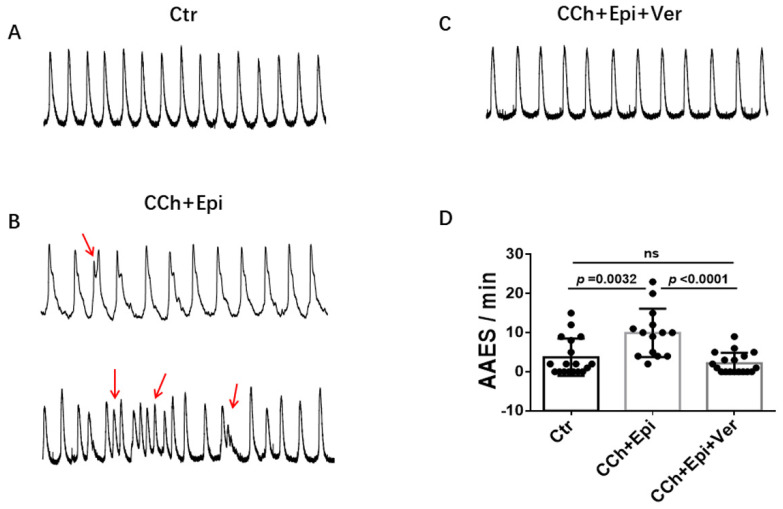
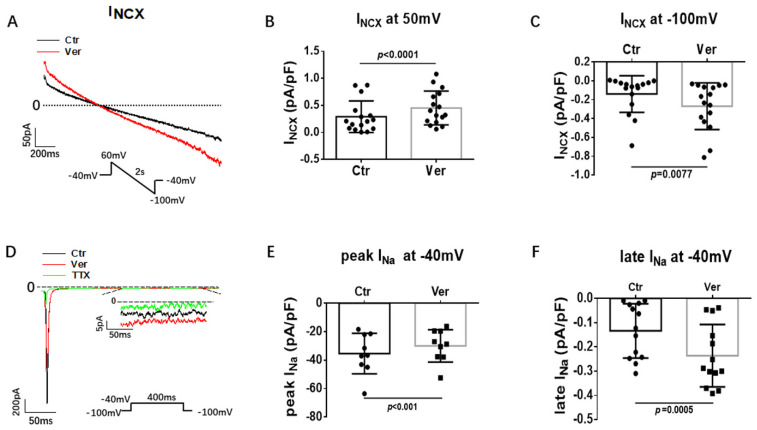
(1) Background: Short QT syndrome (SQTS) may result in sudden cardiac death. So far, no drugs, except quinidine, have been demonstrated to be effective in some patients with SQTS type 1 (SQTS1). This study was designed to examine the potential effectiveness of vernakalant for treating SQTS1 patients, using human-induced pluripotent stem cell-derived cardiomyocytes (hiPSC-CMs) from a patient with SQTS1. (2) Methods: Patch clamp and calcium imaging techniques were used to examine the drug effects. (3) Results: Vernakalant prolonged the action potential duration (APD) in hiPSC-CMs from a SQTS1-patient (SQTS1-hiPSC-CMs). In spontaneously beating SQTS1-hiPSC-CMs, vernakalant reduced the arrhythmia-like events induced by carbachol plus epinephrine. Vernakalant failed to suppress the hERG channel currents but reduced the outward small-conductance calcium-activated potassium channel current. In addition, it enhanced Na/Ca exchanger currents and late sodium currents, in agreement with its APD-prolonging effect. (4) Conclusions: The results demonstrated that vernakalant can prolong APD and reduce arrhythmia-like events in SQTS1-hiPSC-CMs and may be a candidate drug for treating arrhythmias in SQTS1-patients.
(1) 背景:短QT综合征(SQTS)可能导致心源性猝死。到目前为止,除了奎尼丁外,尚无药物被证明对某些1型短QT综合征(SQTS1)患者有效。本研究旨在利用来自一名SQTS1患者的人诱导多能干细胞衍生心肌细胞(hiPSC-CMs),研究维纳卡兰治疗SQTS1患者的潜在有效性。(2) 方法:采用膜片钳和钙成像技术检测药物效果。(3) 结果:维纳卡兰延长了一名SQTS1患者的hiPSC-CMs(SQTS1-hiPSC-CMs)的动作电位时程(APD)。在自发搏动的SQTS1-hiPSC-CMs中,维纳卡兰减少了由卡巴胆碱加肾上腺素诱导的类心律失常事件。维纳卡兰未能抑制hERG通道电流,但减少了外向小电导钙激活钾通道电流。此外,它增强了钠/钙交换电流和晚钠电流,与其延长APD的作用一致。(4) 结论:结果表明,维纳卡兰可延长SQTS1-hiPSC-CMs的APD并减少类心律失常事件,可能是治疗SQTS1患者心律失常的候选药物。