Lan Huan, Xu Qiang, El-Battrawy Ibrahim, Zhong Rujia, Li Xin, Lang Siegfried, Cyganek Lukas, Borggrefe Martin, Zhou Xiaobo, Akin Ibrahim
Key Laboratory of Medical Electrophysiology of Ministry of Education and Medical Electrophysiological Key Laboratory of Sichuan Province, Institute of Cardiovascular Research, Southwest Medical University, Luzhou, China.
First Department of Medicine, Faculty of Medicine, University Medical Centre Mannheim (UMM), University of Heidelberg, Mannheim, Germany.
Front Pharmacol. 2020 Oct 12;11:554422. doi: 10.3389/fphar.2020.554422. eCollection 2020.
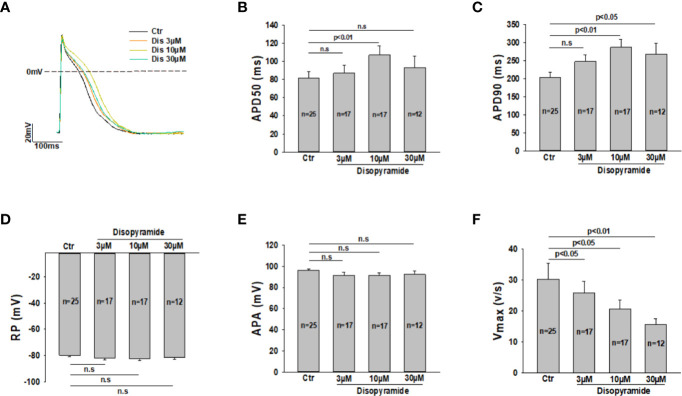
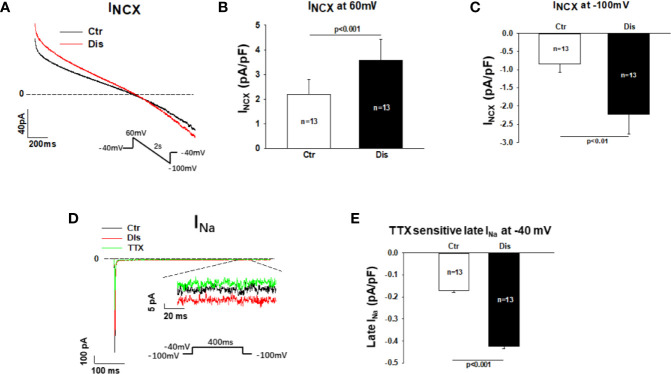
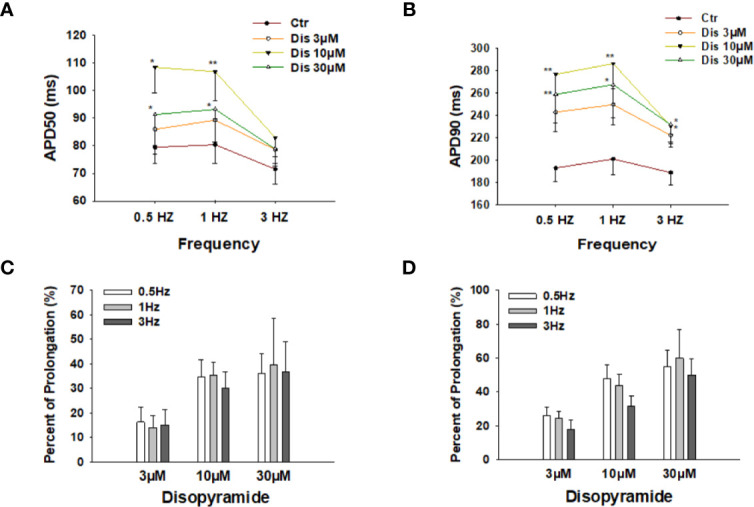
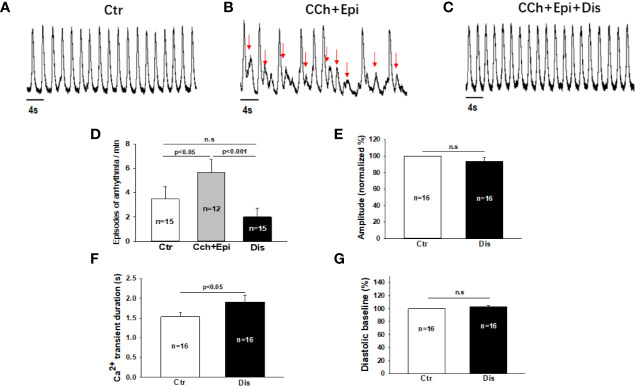
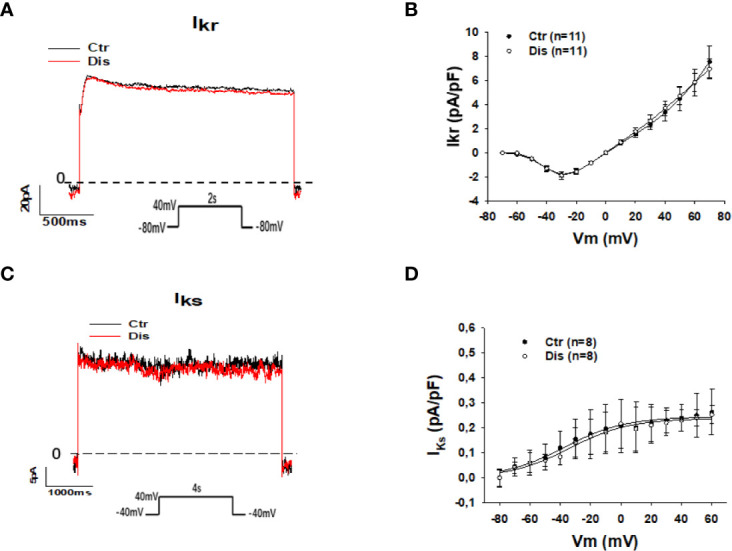
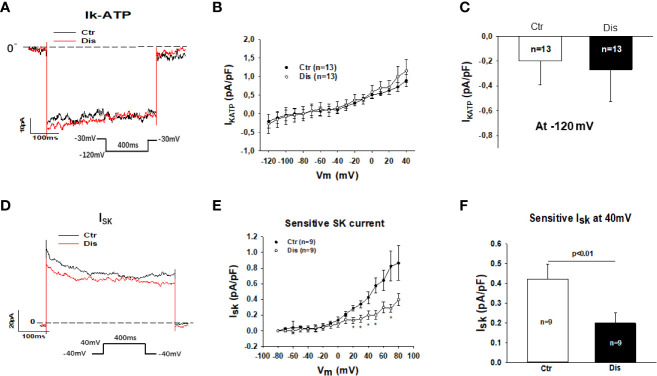
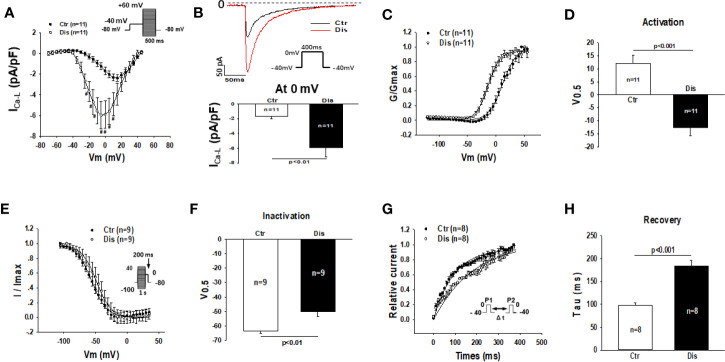
Short QT syndrome (SQTS) is associated with tachyarrhythmias and sudden cardiac death. So far, only quinidine has been demonstrated to be effective in patients with SQTS type 1(SQTS1). The aim of this study was to investigate the mechanisms of disopyramide underlying its antiarrhythmic effects in SQTS1 with the N588K mutation in HERG channel. Human-induced pluripotent stem cell-derived cardiomyocytes (hiPSC-CMs) from a patient with SQTS1 and a healthy donor, patch clamp, and calcium imaging measurements were employed to assess the drug effects. Disopyramide prolonged the action potential duration (APD) in hiPSC-CMs from a SQTS1-patient (SQTS1-hiPSC-CMs). In spontaneously beating SQTS1-hiPSC-CMs challenged by carbachol plus epinephrine, disopyramide reduced the arrhythmic events. Disopyramide enhanced the inward L-type calcium channel current (I), the late sodium channel current (late I) and the Na/Ca exchanger current (I), but it reduced the outward small-conductance calcium-activated potassium channel current (I), leading to APD-prolongation. Disopyramide displayed no effects on the rapidly and slowly activating delayed rectifier and ATP-sensitive potassium channel currents. In hiPSC-CMs from the healthy donor, disopyramide reduced peak I, I, I, and I but enhanced late I and I. The results demonstrated that disopyramide may be effective for preventing tachyarrhythmias in SQTS1-patients carrying the N588K mutation in HERG channel by APD-prolongation enhancing I, late I, I, and reducing I.
短QT综合征(SQTS)与快速性心律失常和心源性猝死相关。迄今为止,仅奎尼丁已被证明对1型短QT综合征(SQTS1)患者有效。本研究的目的是探讨丙吡胺对携带HERG通道N588K突变的SQTS1患者抗心律失常作用的机制。采用来自一名SQTS1患者和一名健康供体的人诱导多能干细胞衍生心肌细胞(hiPSC-CMs)、膜片钳和钙成像测量来评估药物作用。丙吡胺延长了来自SQTS1患者的hiPSC-CMs(SQTS1-hiPSC-CMs)的动作电位时程(APD)。在受到卡巴胆碱加肾上腺素刺激的自发搏动的SQTS1-hiPSC-CMs中,丙吡胺减少了心律失常事件。丙吡胺增强了内向L型钙通道电流(I)、晚钠通道电流(晚I)和钠/钙交换电流(I),但减少了外向小电导钙激活钾通道电流(I),导致APD延长。丙吡胺对快速和缓慢激活的延迟整流钾通道电流以及ATP敏感性钾通道电流无影响。在来自健康供体的hiPSC-CMs中,丙吡胺降低了I、I、I和I的峰值,但增强了晚I和I。结果表明,丙吡胺可能通过延长APD、增强I、晚I、I并减少I,对预防携带HERG通道N588K突变的SQTS1患者的快速性心律失常有效。