Kong Min Sun, Koh Won-Gun, Lee Hyun Jong
Department of Chemical and Biological Engineering, Gachon University, 1342 Seongnam-daero, Seongnam-si 13120, Korea.
Department of Chemical and Biomolecular Engineering, Yonsei University, 50 Yonsei-ro, Seodaemun-gu, Seoul 03722, Korea.
Gels. 2022 Apr 1;8(4):214. doi: 10.3390/gels8040214.
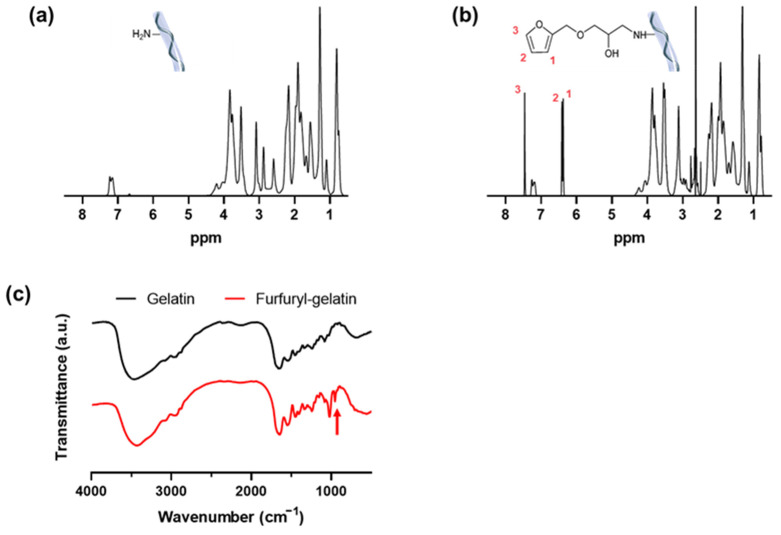
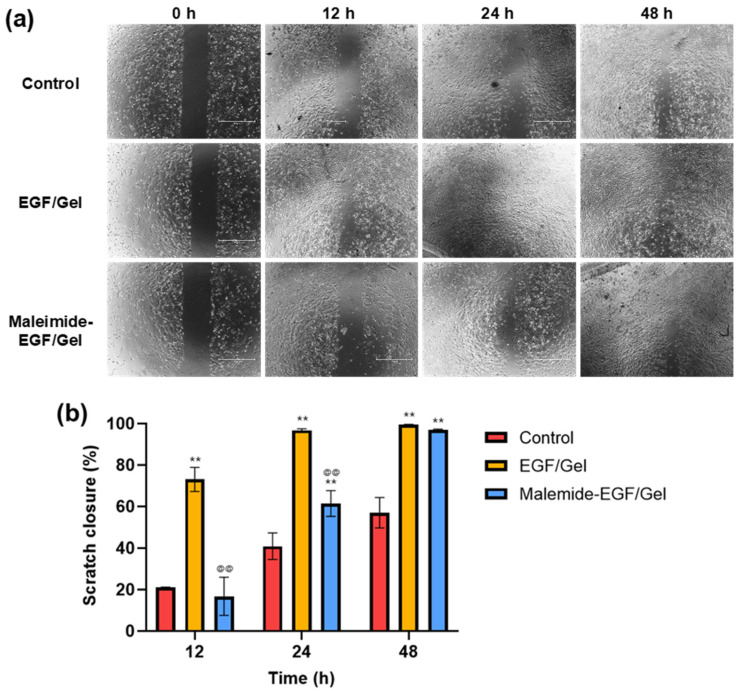
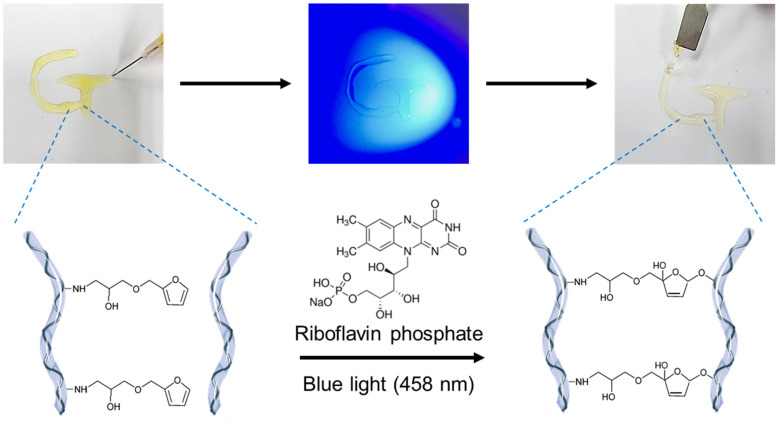
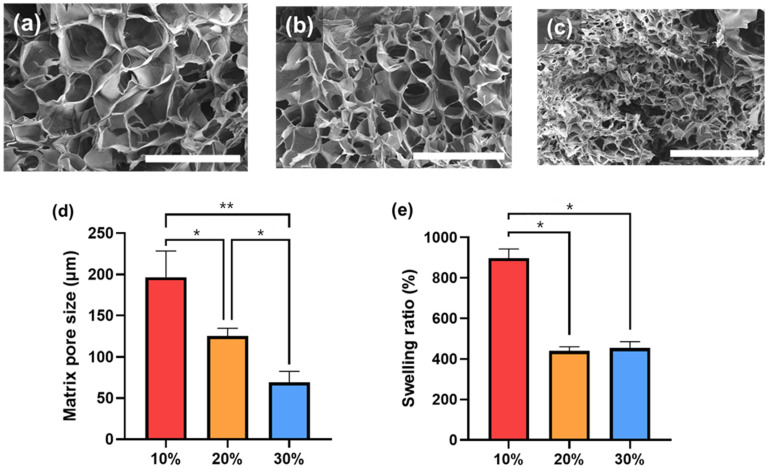
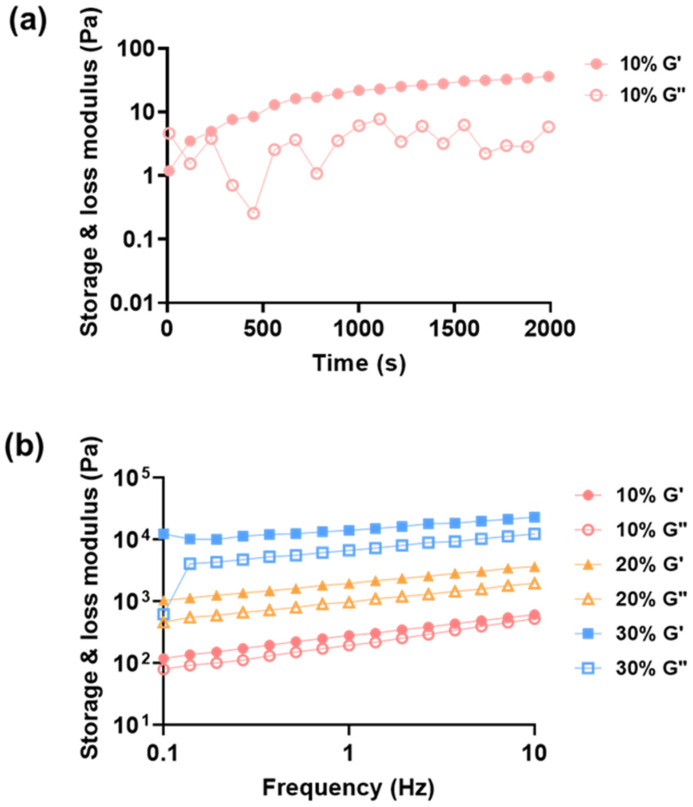
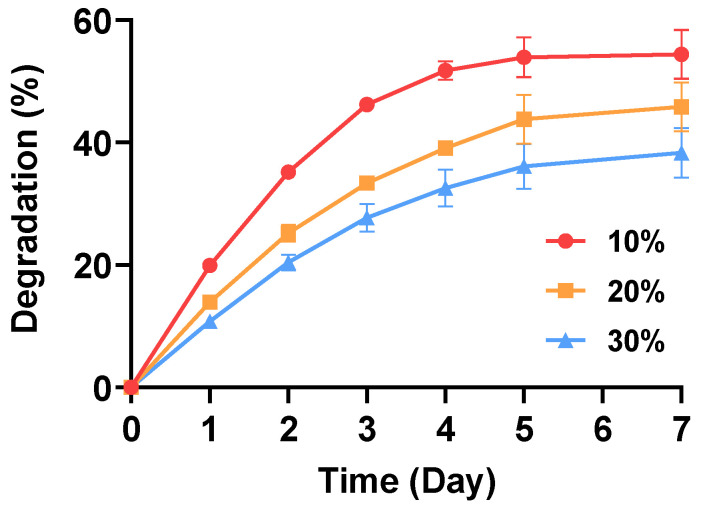
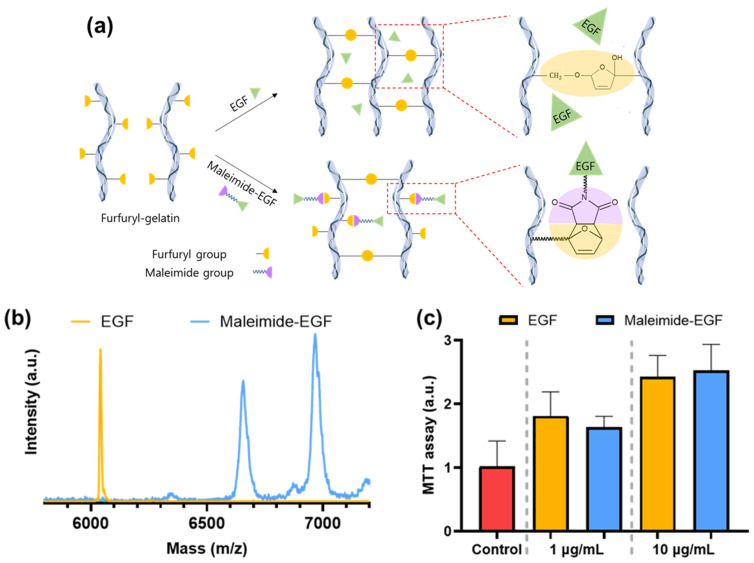
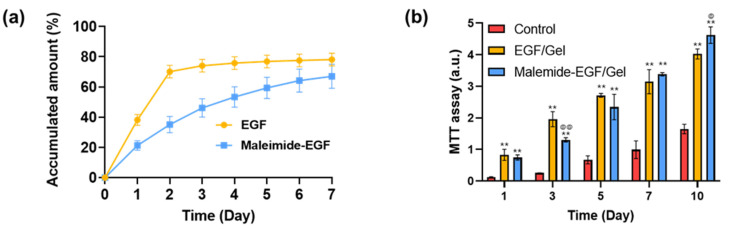
Hydrogels are widely used in tissue engineering as materials that regulate cell proliferation, migration, and differentiation. They also act as promising biomaterials that can provide a variety of stimuli by influencing the surrounding microenvironment, which can be achieved by modulating their mechanical properties, thereby aiding soluble factor delivery. Here, we developed a gelatin-based injectable hydrogel that has controllable mechanical properties and demonstrates sustained drug release without the need for invasive surgery. Gelatin was modified with furfuryl groups, and riboflavin phosphate was used as a photoinitiator to crosslink the hydrogel using visible light. A hydrogel-with a storage modulus in the range of 0.2-15 kPa was formed by maintaining the concentration of furfuryl-gelatin within 10-30% . Consequently, their mechanical properties can be tailored for their applications. The furfuryl-gelatin hydrogel was loaded with maleimide-modified epidermal growth factor (EGF) as a model drug to achieve a controlled-release system. The sustained release of maleimide-EGF due to gelatin hydrogel matrix degradation was observed. Cell proliferation and scratch assays were performed to verify its effect on fibroblasts. When EGF was physically entrapped in the hydrogel matrix, the released EGF considerably affected cell proliferation and scratch closure of fibroblasts at the beginning of the culture. By contrast, maleimide-EGF was released sustainably and steadily and affected cell proliferation and scratch closure after the initial stage. We demonstrated that the release of soluble factors could be controlled by modulating the mechanical properties. Thus, the injectable hydrogel formed by in situ visible light-induced crosslinking could be a promising biomaterial for tissue engineering and biomedical therapeutics.
水凝胶作为调节细胞增殖、迁移和分化的材料,在组织工程中得到广泛应用。它们还可作为有前景的生物材料,通过影响周围微环境提供多种刺激,这可通过调节其机械性能来实现,从而有助于可溶性因子的递送。在此,我们开发了一种基于明胶的可注射水凝胶,其具有可控的机械性能,且无需进行侵入性手术即可实现药物的持续释放。用糠基对明胶进行修饰,并使用磷酸核黄素作为光引发剂,通过可见光使水凝胶交联。通过将糠基明胶的浓度保持在10%至30%之间,形成了储能模量在0.2至15 kPa范围内的水凝胶。因此,其机械性能可根据应用进行定制。将马来酰亚胺修饰的表皮生长因子(EGF)作为模型药物负载到糠基明胶水凝胶中,以实现控释系统。观察到由于明胶水凝胶基质降解导致马来酰亚胺-EGF的持续释放。进行细胞增殖和划痕试验以验证其对成纤维细胞的作用。当EGF物理包裹在水凝胶基质中时,在培养开始时,释放的EGF对成纤维细胞的增殖和划痕闭合有显著影响。相比之下,马来酰亚胺-EGF可持续稳定地释放,并在初始阶段后影响细胞增殖和划痕闭合。我们证明了通过调节机械性能可以控制可溶性因子的释放。因此,通过原位可见光诱导交联形成的可注射水凝胶可能是组织工程和生物医学治疗中有前景的生物材料。