Ensinck Marjolein M, De Keersmaecker Liesbeth, Ramalho Anabela S, Cuyx Senne, Van Biervliet Stephanie, Dupont Lieven, Christ Frauke, Debyser Zeger, Vermeulen François, Carlon Marianne S
KU Leuven, Pharmaceutical and Pharmacological Sciences, Leuven, Belgium.
KU Leuven, Development and Regeneration, Leuven, Belgium.
ERJ Open Res. 2022 Apr 19;8(2). doi: 10.1183/23120541.00716-2021. eCollection 2022 Apr.
Cystic fibrosis (CF) is a severe monogenic disorder caused by mutations in the cystic fibrosis transmembrane conductance regulator () gene. Several types of CFTR modulators (correctors/potentiators) have been developed to overcome protein dysfunction associated with these mutations. CFTR modulator therapy is now available for the major CF-causing mutations; however, 10% of people with CF remain without causal treatments. By combining investigational and market-approved CFTR modulators, we aimed to maximise functional rescue of iva-, luma- and tezacaftor refractory mutants G85E and N1303K.
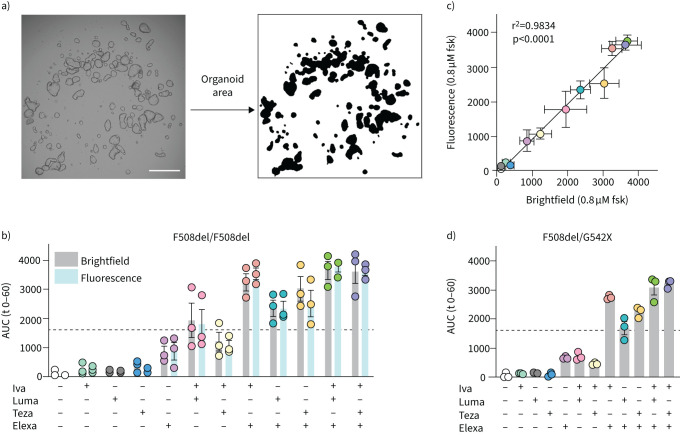
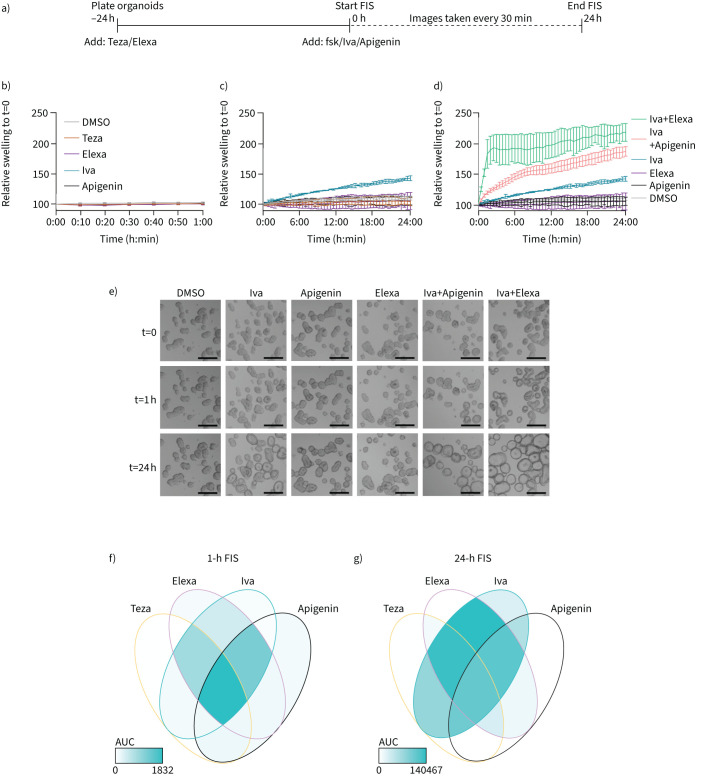
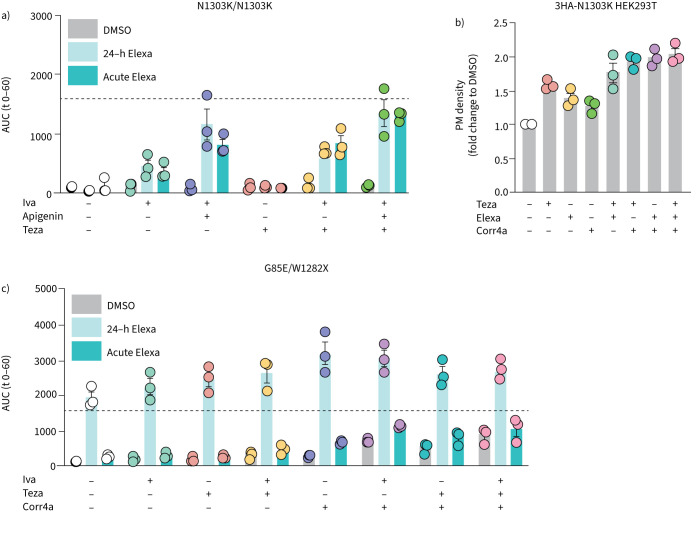
We used the well-established forskolin-induced swelling (FIS) in primary rectal organoids to assess responses to different CFTR corrector and potentiator types. The FIS analysis was performed with brightfield microscopy, allowing both 1-h and 24-h follow-up. Corrector and potentiator activity of elexacaftor was investigated.
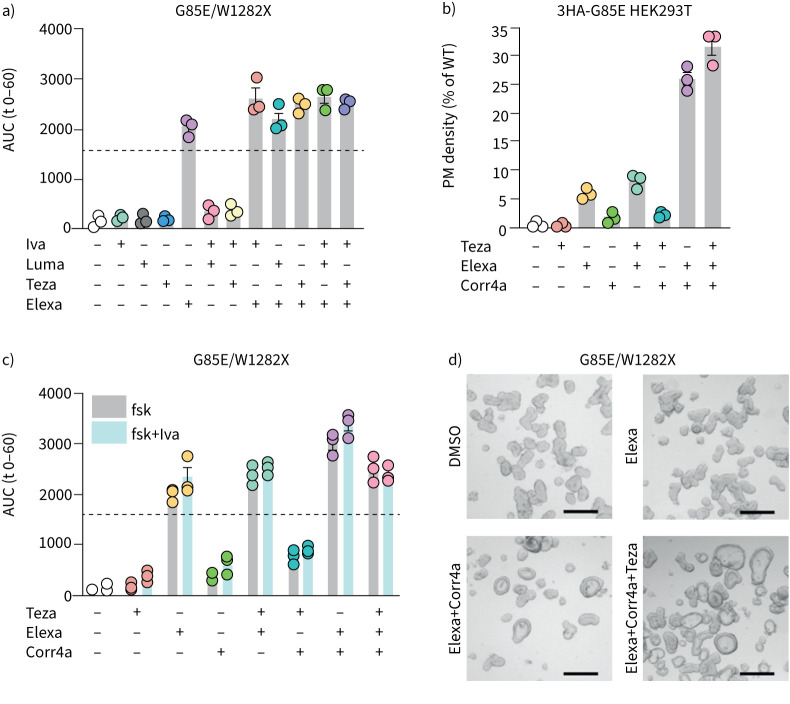
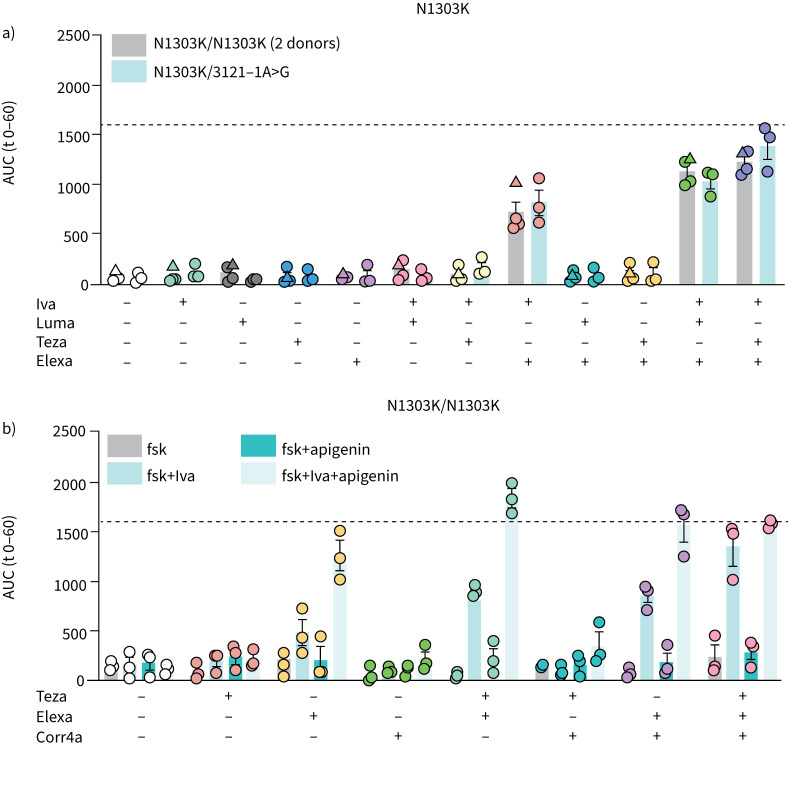
For G85E, maximal rescue was observed by a combination of elexacaftor and corr4a. For N1303K, the quadruple combination teza-elexa-ivacaftor with apigenin was required to obtain a rescue similar to that of luma-ivacaftor rescued F508del. Elexacaftor rescued G85E and N1303K by different mechanisms, with chronic corrector effects on G85E and acute potentiation of N1303K only in the presence of ivacaftor. Synergy in N1303K rescue for iva-elexacaftor and apigenin suggests at least three potentiator mechanisms for this mutant. 24-h FIS identified ivacaftor as the main CFTR modulator for N1303K and elexacaftor and apigenin as co-potentiators.
Novel combinations of CFTR modulators can further improve functional rescue of G85E and N1303K in rectal organoids, although for N1303K, more effective CFTR modulators are still needed.
囊性纤维化(CF)是一种由囊性纤维化跨膜传导调节因子(CFTR)基因突变引起的严重单基因疾病。已开发出几种类型的CFTR调节剂(校正剂/增强剂)来克服与这些突变相关的蛋白质功能障碍。CFTR调节剂疗法目前可用于治疗导致CF的主要突变;然而,10%的CF患者仍未得到有针对性的治疗。通过联合研究性和已获市场批准的CFTR调节剂,我们旨在最大限度地恢复对依伐卡托、鲁马卡托和替扎卡托难治的G85E和N1303K突变体的功能。
我们在原发性直肠类器官中使用成熟的福斯可林诱导肿胀(FIS)来评估对不同CFTR校正剂和增强剂类型的反应。FIS分析通过明场显微镜进行,可进行1小时和24小时的随访。研究了依列卡托的校正剂和增强剂活性。
对于G85E,依列卡托和corr4a联合使用可观察到最大程度的恢复。对于N1303K,需要替扎卡托-依列卡托-依伐卡托与芹菜素的四联组合才能获得与鲁马卡托-依伐卡托挽救F508del相似的挽救效果。依列卡托通过不同机制挽救G85E和N1303K,对G85E有慢性校正作用,而仅在存在依伐卡托的情况下对N1303K有急性增强作用。依伐卡托-依列卡托和芹菜素对N13K的挽救协同作用表明该突变体至少有三种增强机制。24小时FIS确定依伐卡托是N1303K的主要CFTR调节剂,依列卡托和芹菜素是协同增强剂。
CFTR调节剂的新组合可进一步改善直肠类器官中G85E和N1303K的功能恢复,尽管对于N1303K,仍需要更有效的CFTR调节剂。