Eddie David, Price Julianne L, Bates Marsha E, Buckman Jennifer
Recovery Research Institute, Center for Addiction Medicine, Massachusetts General Hospital, Harvard Medical School.
Department of Kinesiology and Health, Center of Alcohol and Substance Use Studies, Rutgers University.
Curr Addict Rep. 2021 Sep;8(3):431-439. doi: 10.1007/s40429-021-00379-3. Epub 2021 Aug 9.
Addiction and excessive substance use contribute to poor mental and physical health. Much research focuses tightly on neural underpinnings and centrally-acting interventions. To broaden this perspective, this review focuses on bidirectional pathways between the brain and cardiovascular system that are well-documented and provide innovative, malleable targets to bolster recovery and alter substance use behaviors.
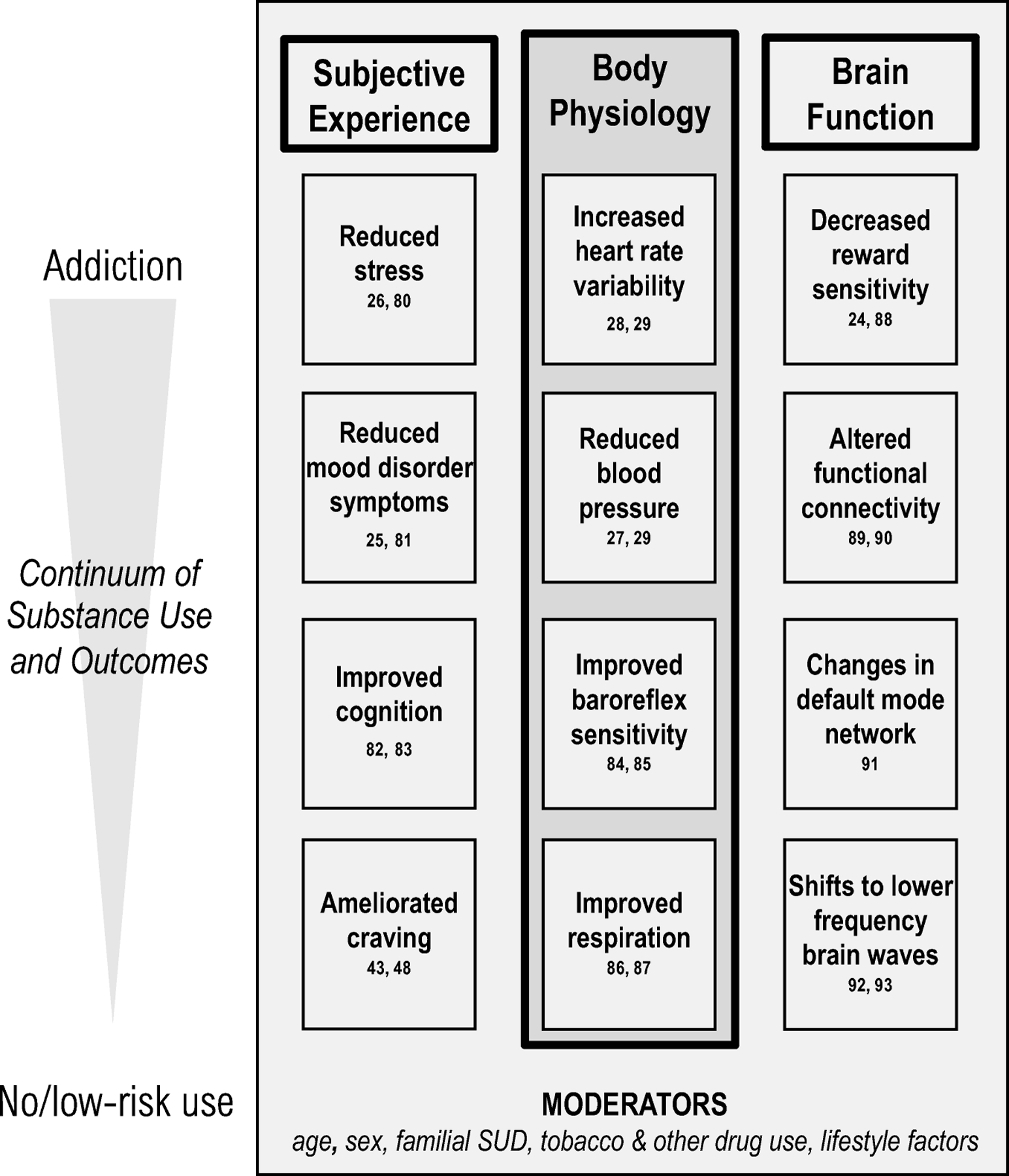
Cardiovascular signals are integrated via afferent pathways in networks of distributed brain regions that contribute to cognition, as well as emotion and behavior regulation, and are key antecedents and drivers of substance use behaviors. Heart rate variability (HRV), a biomarker of efficient neurocardiac regulatory control, is diminished by heavy substance use and substance use disorders. Promising evidence-based adjunctive interventions that enhance neurocardiac regulation include HRV biofeedback, resonance paced breathing, and some addiction medications.
Cardiovascular communication with the brain through bidirectional pathways contributes to cognitive and emotional processing but is rarely discussed in addiction treatment. New evidence supports cardiovascular-focused adjunctive interventions for problematic substance use and addiction.
成瘾和过度使用物质会导致身心健康不佳。许多研究紧密聚焦于神经基础和中枢作用干预措施。为拓宽这一视角,本综述重点关注大脑与心血管系统之间的双向通路,这些通路有充分记录,并提供了创新的、可调节的靶点,以促进康复并改变物质使用行为。
心血管信号通过分布在大脑区域网络中的传入通路进行整合,这些区域有助于认知以及情绪和行为调节,并且是物质使用行为的关键前因和驱动因素。心率变异性(HRV)是有效神经心脏调节控制的生物标志物,大量使用物质和物质使用障碍会使其降低。有前景的基于证据的增强神经心脏调节的辅助干预措施包括HRV生物反馈、共振式同步呼吸和一些成瘾药物。
通过双向通路与大脑进行的心血管通讯有助于认知和情绪处理,但在成瘾治疗中很少被讨论。新证据支持针对问题性物质使用和成瘾的以心血管为重点的辅助干预措施。