Pacific Derm, The Department of Dermatology and Skin Science, University of British Columbia, Vancouver, British Columbia, Canada.
J Cosmet Dermatol. 2022 Jun;21(6):2379-2386. doi: 10.1111/jocd.15013. Epub 2022 May 13.
Data suggest that hyaluronic acid (HA) fillers using VYC technology have a higher incidence of delayed-onset nodule development at facial injection sites than earlier HA products.
To assess the incidence of delayed-onset nodules with VYC products based on a single experienced injector.
Patients with delayed-onset nodules after injections with VYC-20L, VYC-17.5L, and VYC-15L were identified by retrospective chart review.
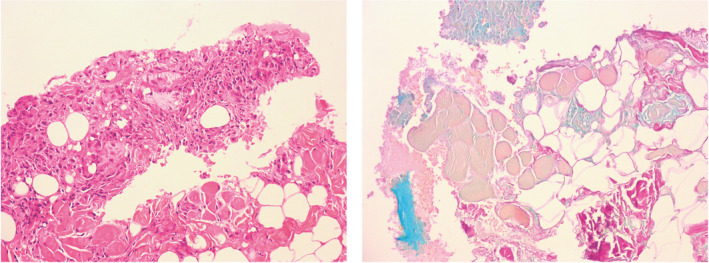
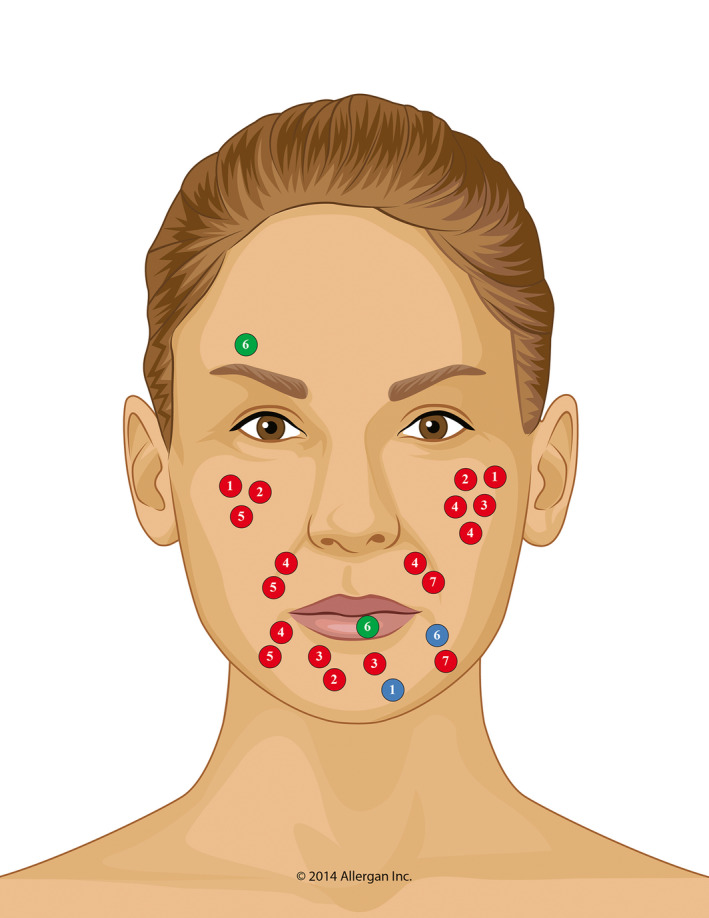
Since 2010, 2139 patients received injections from the same physician with combinations of VYC-20L (57.6% of patients; 2.4 syringes/patient), VYC-17.5L (23.9%; 1.5), or VYC-15L (18.5%; 1.5). Seven female patients (mean age, 62 years) developed delayed-onset nodules for an overall incidence of 0.33%. A potential inflammatory trigger (reported by 6 patients) occurred 1-168 days prior to nodule development. Nodule biopsy in 1 patient confirmed a foreign-body granuloma. The most effective treatment incorporated prednisone with or without hyaluronidase, and in 2 patients, nodules resolved spontaneously. The incidence of delayed-onset nodules was not associated with injection technique or amount of product used.
VYC-associated incidence of delayed-onset nodules (0.33%) was lower than earlier estimates from previous studies. In the current analysis, VYC-15L had a rate of delayed reactions comparable with non-VYC products.
数据表明,使用 VYC 技术的透明质酸(HA)填充剂在面部注射部位发生迟发性结节形成的发生率高于早期的 HA 产品。
评估基于单一经验丰富的注射者使用 VYC 产品发生迟发性结节的发生率。
通过回顾性病历审查,确定接受 VYC-20L、VYC-17.5L 和 VYC-15L 注射后出现迟发性结节的患者。
自 2010 年以来,同一位医生为 2139 名患者进行了注射,其中 VYC-20L(57.6%的患者;2.4 支/患者)、VYC-17.5L(23.9%;1.5 支)和 VYC-15L(18.5%;1.5 支)组合使用。7 名女性患者(平均年龄 62 岁)发生迟发性结节,总发生率为 0.33%。1-168 天前出现潜在炎症触发因素(6 名患者报告)。1 名患者的结节活检证实为异物肉芽肿。最有效的治疗方法包括泼尼松加或不加透明质酸酶,2 名患者的结节自行消退。迟发性结节的发生率与注射技术或使用的产品量无关。
VYC 相关的迟发性结节(0.33%)发生率低于先前研究中的早期估计。在本次分析中,VYC-15L 的迟发性反应发生率与非 VYC 产品相当。