Shiraiwa Mariko, Kitakaze Tomoya, Yamashita Yoko, Ukawa Yuichi, Mukai Katsuyuki, Ashida Hitoshi
Department of Agrobioscience, Graduate School of Agricultural Science, Kobe University, Nada-ku, Kobe 657-8501, Japan.
Graduate School of Life & Environmental Sciences, Osaka Prefecture University, Osaka 599-8531, Japan.
Antioxidants (Basel). 2022 Mar 30;11(4):675. doi: 10.3390/antiox11040675.
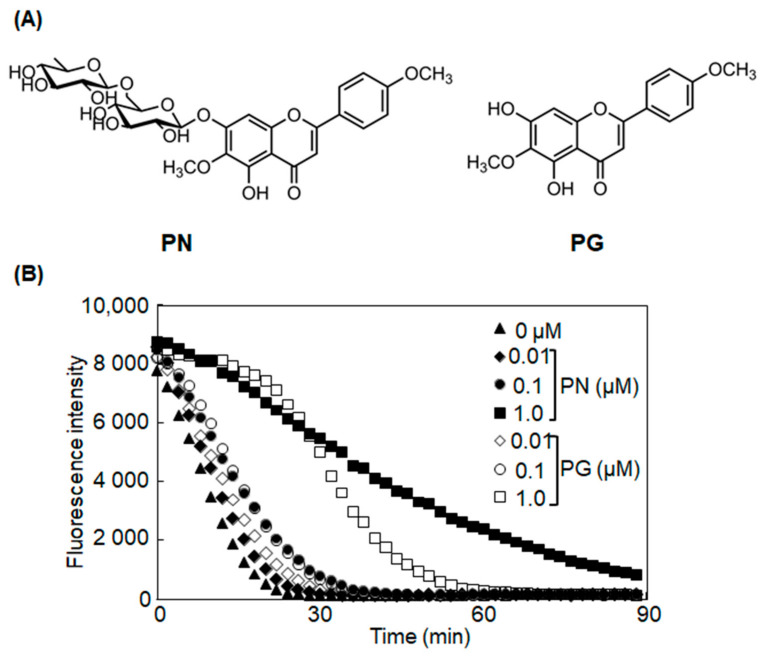
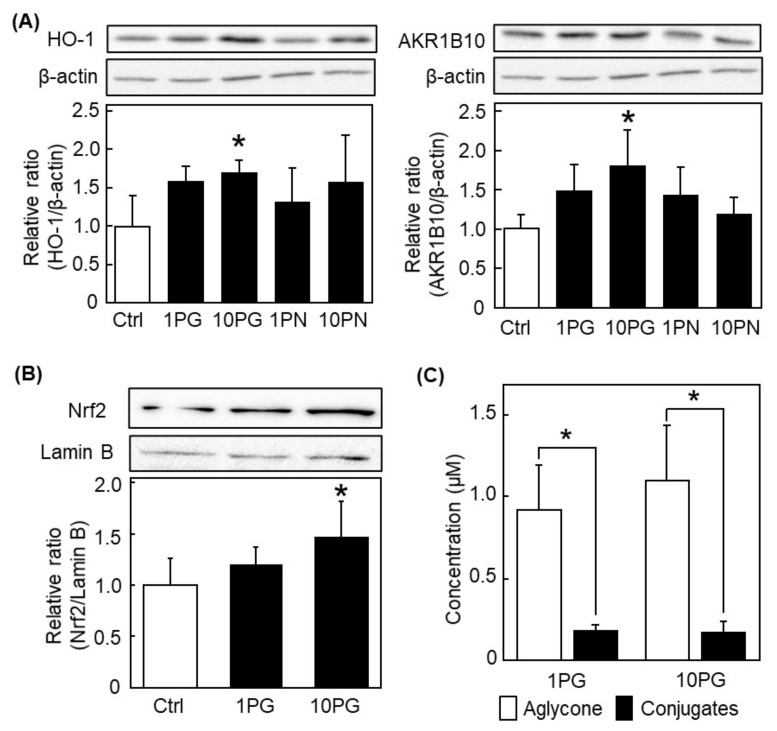
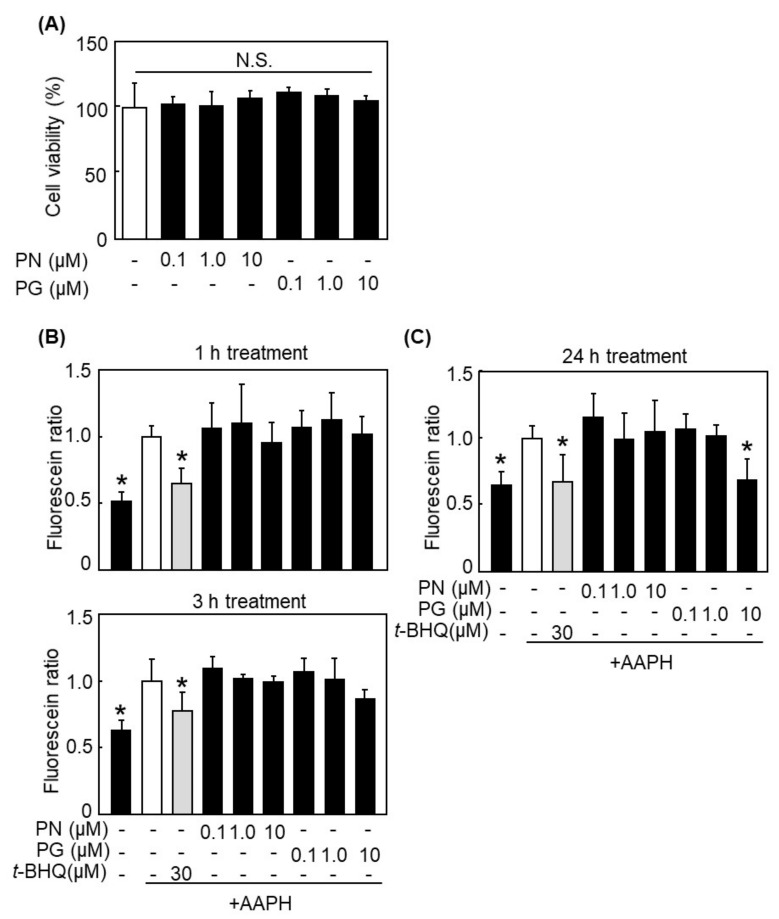
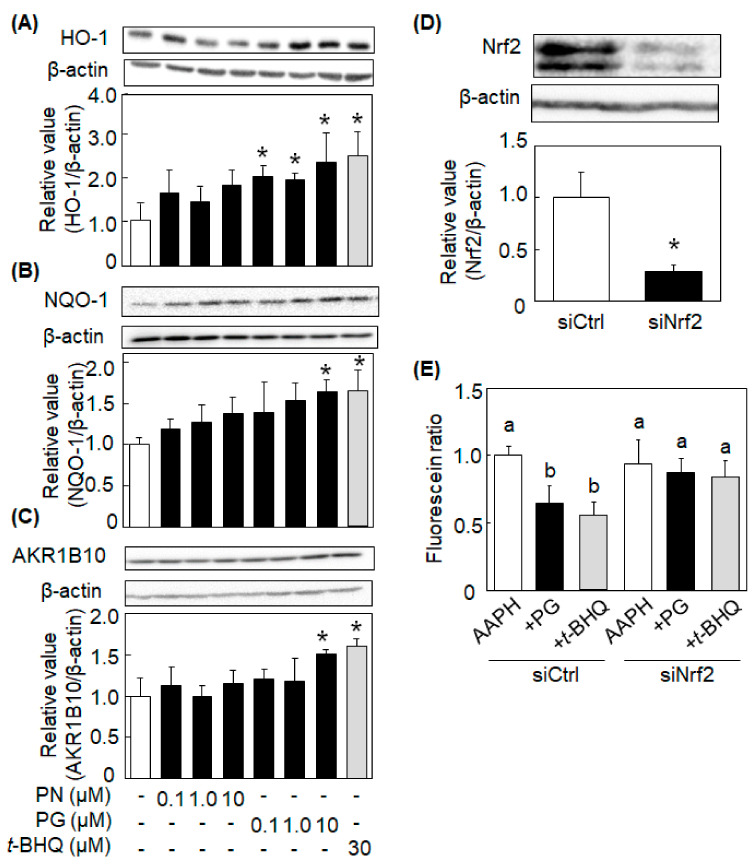
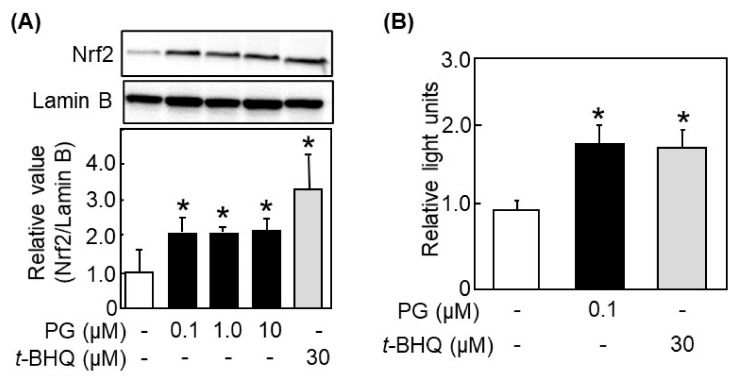
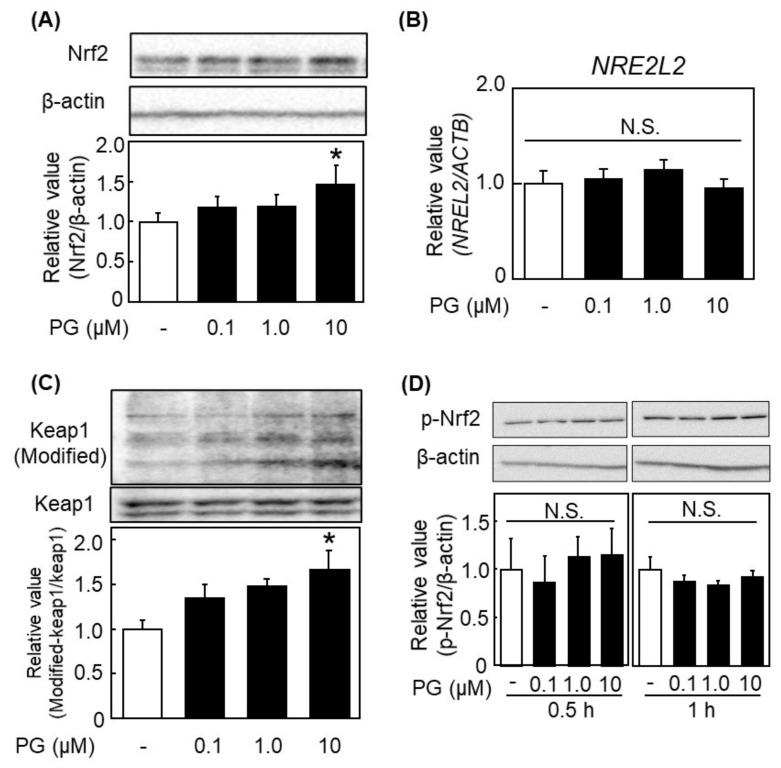
Pectolinarigenin (PG) and its glycoside pectolinarin (PN) were reported to have various health beneficial functions such as anti-inflammatory and anti-carcinogenic activities. It has also been reported that PG and PN have radical scavenging ability as direct antioxidant activity. However, the indirect antioxidant activity of PG and PN by inducing antioxidant enzymes in hepatocytes is not fully understood yet. In this study, we investigated whether PG and PN increase expression of antioxidant enzymes through the nuclear factor-erythroid-2-related factor 2 (Nrf2)-mediated pathway in human hepatoma HepG2 cells and the liver of male ICR mice. PG, but not PN, induced antioxidant enzymes, namely heme oxigenase-1, NAD(P)H:quinone oxidoreductase 1, and aldo-keto reductase family 1 member B10, in HepG2 cells. As for the induction mechanism of these enzymes, PG-induced nuclear accumulation of Nrf2 increased antioxidant response element (ARE)-mediated transcriptional activity and suppressed degradation of Nrf2 through modification of Kelch-like EXH-associated protein 1. Oral administration of PG also induced nuclear accumulation Nrf2 and expression of antioxidant enzymes in the liver of mice. Therefore, PG, but not PN, exhibits the indirect antioxidant activity by inducing antioxidant enzymes through the Nrf2/ARE pathway and may protect liver from oxidative stress.
据报道,芹菜素(PG)及其糖苷芹菜苷(PN)具有多种有益健康的功能,如抗炎和抗癌活性。也有报道称,PG和PN具有作为直接抗氧化活性的自由基清除能力。然而,PG和PN通过诱导肝细胞中的抗氧化酶所产生的间接抗氧化活性尚未完全了解。在本研究中,我们调查了PG和PN是否通过核因子红细胞2相关因子2(Nrf2)介导的途径增加人肝癌HepG2细胞和雄性ICR小鼠肝脏中抗氧化酶的表达。在HepG2细胞中,PG而非PN诱导了抗氧化酶,即血红素加氧酶-1、NAD(P)H:醌氧化还原酶1和醛酮还原酶家族1成员B10。至于这些酶的诱导机制,PG诱导的Nrf2核积累增加了抗氧化反应元件(ARE)介导的转录活性,并通过修饰Kelch样ECH相关蛋白1抑制了Nrf2的降解。口服PG也诱导了小鼠肝脏中Nrf2的核积累和抗氧化酶的表达。因此,PG而非PN通过Nrf2/ARE途径诱导抗氧化酶表现出间接抗氧化活性,并可能保护肝脏免受氧化应激。