Butti Niccolò, Castagna Annalisa, Montirosso Rosario
0-3 Center for the at-Risk Infant, Scientific Institute, IRCCS Eugenio Medea, Bosisio Parini, 23842 Lecco, Italy.
PhD Program in Neural and Cognitive Sciences, Department of Life Sciences, University of Trieste, 34127 Trieste, Italy.
Children (Basel). 2022 Apr 13;9(4):551. doi: 10.3390/children9040551.
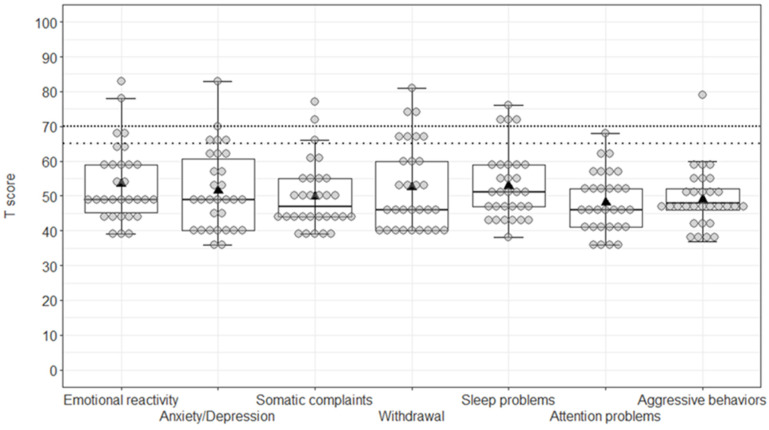
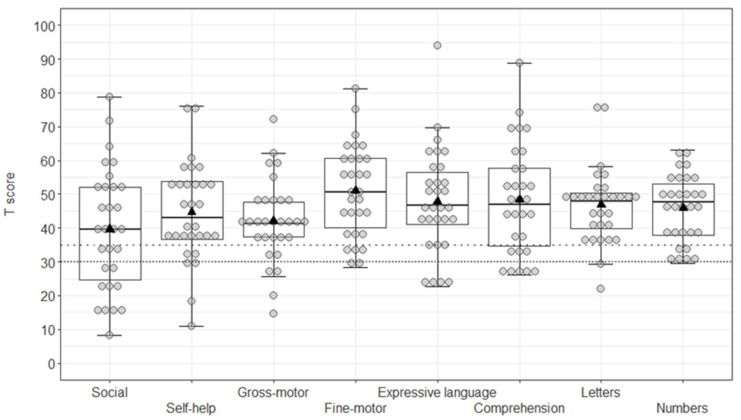
Beckwith-Wiedemann syndrome (BWS) is a rare overgrowth disease and is not usually associated with intellectual delay. Living with a chronic illness condition such as BWS, however, might affect emotional-behavioral functioning and psychosocial development. To investigate this issue, parents of 30 children with BWS between 1.5 and 6 years old compiled standardized questionnaires assessing the presence of emotional-behavioral and developmental problems. The group mean scores in each scale of behavioral problems fell within the average range. Nevertheless, 23% of the sample presented scores beyond the risk threshold for social withdrawal. As regards psychomotor development, a lower mean score was reliable in the social domain compared to other developmental scales, and in the gross-motor compared to fine-motor functions. Moreover, scores in the at-risk band were reliable in almost half of the children for social development. Notably, older age was overall associated with higher emotional-behavioral and developmental difficulties, while no other socio-demographic or clinical variables accounted for the scores obtained in the questionnaires. These findings ask for a wider consideration by health and educational professionals of the psychosocial functioning of children with BWS, so as to early detect at-risk conditions and eventually promote adequate interventions.
贝克威思-维德曼综合征(BWS)是一种罕见的过度生长疾病,通常与智力发育迟缓无关。然而,患有BWS这种慢性疾病可能会影响情绪行为功能和心理社会发展。为了研究这个问题,30名年龄在1.5至6岁之间的BWS患儿的家长填写了标准化问卷,以评估情绪行为和发育问题的存在情况。行为问题各量表的组平均得分均在平均范围内。然而,23%的样本得分超过了社交退缩的风险阈值。在心理运动发育方面,与其他发育量表相比,社交领域的平均得分较低,与精细运动功能相比,大运动方面的得分较低。此外,近一半儿童在社交发育方面的得分处于风险区间。值得注意的是,总体而言,年龄较大与更高的情绪行为和发育困难相关,而问卷得分并未受到其他社会人口统计学或临床变量的影响。这些发现要求健康和教育专业人员更广泛地关注BWS患儿的心理社会功能,以便早期发现风险状况并最终促进适当的干预措施。