Popescu Alin, Craina Marius, Pantea Stelian, Pirvu Catalin, Radu Daniela, Marincu Iosif, Bratosin Felix, Bogdan Iulia, Hosin Samer, Citu Cosmin, Bernad Elena, Neamtu Radu, Dumitru Catalin, Mocanu Adelina Geanina, Gluhovschi Adrian
Department of Obstetrics and Gynecology, "Victor Babes" University of Medicine and Pharmacy, 300041 Timisoara, Romania.
Department of General Surgery, "Victor Babes" University of Medicine and Pharmacy, 300041 Timisoara, Romania.
Healthcare (Basel). 2022 Mar 28;10(4):639. doi: 10.3390/healthcare10040639.
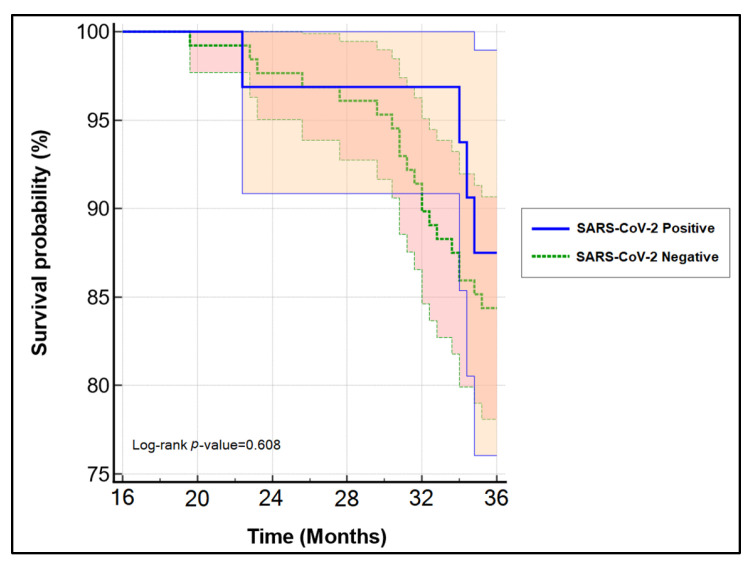
Being one of the most common malignancies in young women, cervical cancer is frequently successfully screened around the world. Early detection enables for an important number of curative options that allow for more than 90% of patients to survive more than three years without cancer relapse. Unfortunately, the COVID-19 pandemic put tremendous pressure on healthcare systems and access to cancer care, determining us to develop a study on the influence the pandemic had on surgical care of cervical cancer, and to assess changes in its management and outcomes. A retrospective study design allowed us to compare cervical cancer trends of the last 48 months of the pre-pandemic period with the first 24 months during the COVID-19 pandemic, using the database from the Timis County Emergency Clinical Hospital. New cases of cervical cancer presented to our clinic in more advanced stages (34.6% cases of FIGO stage III during the pandemic vs. 22.4% before the pandemic, -value = 0.047). These patients faced significantly more changes in treatment plans, postponed surgeries, and postponed radio-chemotherapy treatment. From the full cohort of cervical cancer patients, 160 were early stages eligible for curative intervention who completed a three-year follow-up period. The disease-free survival and overall survival were not influenced by the surgical treatment of choice, or by the SARS-CoV-2 infection (log-rank -value = 0.449, respectively log-rank -value = 0.608). The individual risk factors identified for the three-year mortality risk were independent of the SARS-CoV-2 infection and treatment changes during the COVID-19 pandemic. We observed significantly fewer cases of cervical cancer diagnosed per year during the first 24 months of the COVID-19 pandemic, blaming the changes in healthcare system regulations that failed to offer the same conditions as before the pandemic. Even though we did not observe significant changes in disease-free survival of early-stage cervical cancers, we expect the excess of cases diagnosed in later stages to have lower survival rates, imposing the healthcare systems to consider different strategies for these patients while the pandemic is still ongoing.
宫颈癌是年轻女性中最常见的恶性肿瘤之一,在全球范围内经常能成功进行筛查。早期检测能带来大量的治愈选择,使超过90%的患者存活超过三年且无癌症复发。不幸的是,新冠疫情给医疗系统和癌症护理的可及性带来了巨大压力,促使我们开展一项关于疫情对宫颈癌手术护理影响的研究,并评估其管理和结果的变化。一项回顾性研究设计使我们能够利用蒂米什县急诊临床医院的数据库,比较疫情前最后48个月与新冠疫情期间前24个月的宫颈癌趋势。在我们诊所就诊的宫颈癌新病例处于更晚期阶段(疫情期间FIGO III期病例占34.6%,而疫情前为22.4%,P值 = 0.047)。这些患者面临的治疗计划变更、手术推迟和放化疗治疗推迟显著更多。在整个宫颈癌患者队列中,160例为早期可进行治愈性干预的患者,他们完成了三年的随访期。无病生存率和总生存率不受所选手术治疗或新冠病毒感染的影响(对数秩检验P值分别为0.449和0.608)。确定的三年死亡风险的个体危险因素与新冠疫情期间的新冠病毒感染和治疗变化无关。我们观察到在新冠疫情的前24个月中,每年诊断出的宫颈癌病例显著减少,这归咎于医疗系统法规的变化,未能提供与疫情前相同的条件。尽管我们未观察到早期宫颈癌无病生存率的显著变化,但我们预计晚期诊断出的病例过多会导致生存率较低,这使得医疗系统在疫情仍在持续时要为这些患者考虑不同的策略。